
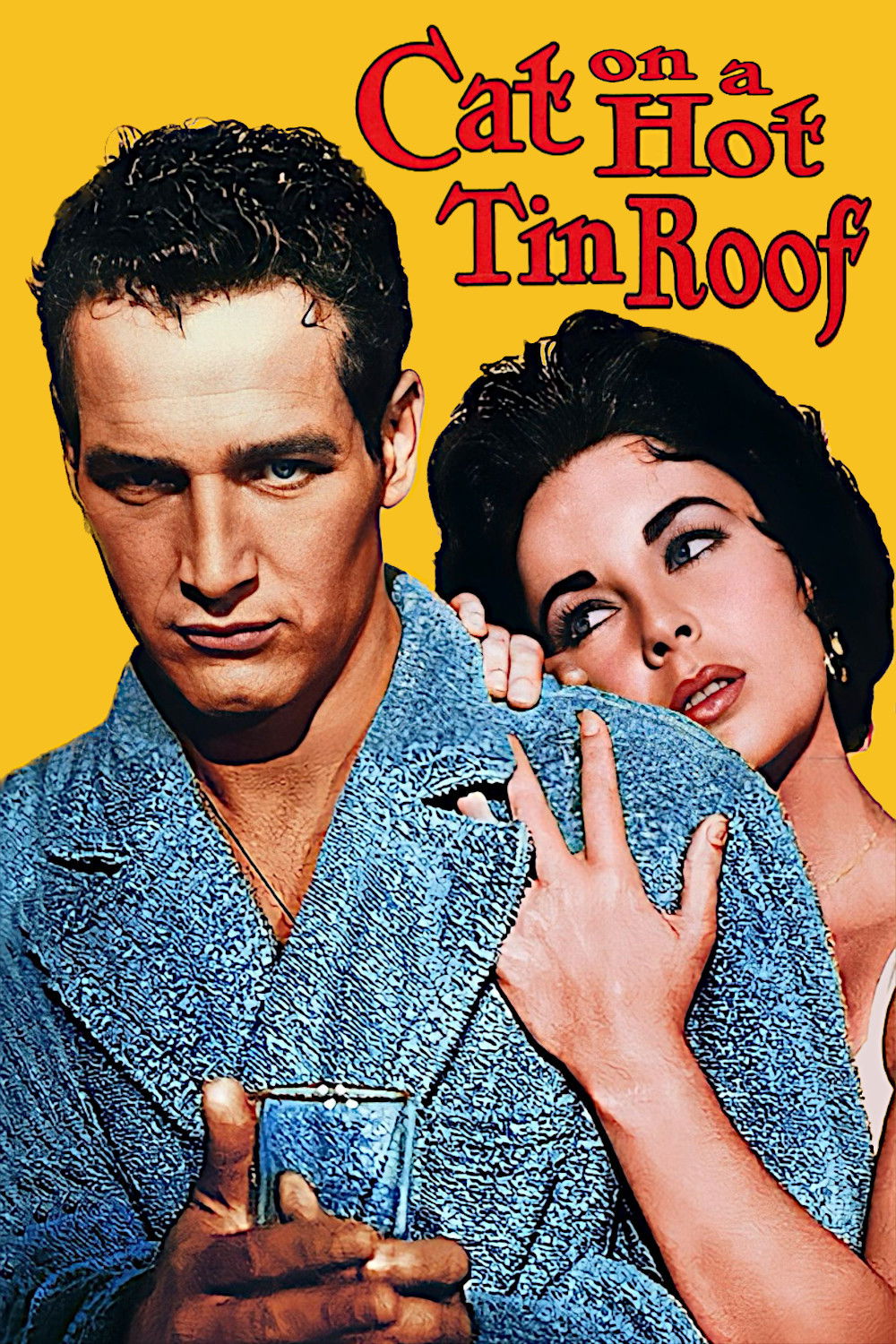
What the Film Is About
When I first watched “Cat on a Hot Tin Roof,” I realized I was witnessing not just a piece of classic cinema, but an intensely personal and uncomfortable confrontation with human frailty. The film’s humid, claustrophobic atmosphere and its endlessly fraught dialogues made me feel as if I, too, was trapped—with no cool air, no escape, nothing to shield me from the truths and lies unfurling in the Pollitt home. Tennessee Williams’ words, filtered through the screen, struck me with the force of an urgent confession. I found myself drawn in by Elizabeth Taylor’s unyielding performance as Maggie and Paul Newman’s brittle, haunted turn as Brick. But what sustained my interest past the plot was the raw, trembling nerve—the way the film dances around grief, secrets, and the desperate ache for validation and love.
On the surface, the plot circles Big Daddy Pollitt’s 65th birthday, bringing together a Southern family wound tight by property, inheritance, and long-suppressed secrets. But I quickly realized the film cares little for the particulars of the occasion. Instead, what unfolds is a crucible for human emotion—truth and denial pressed together until they boil over. For me, “Cat on a Hot Tin Roof” isn’t about whether Brick or Maggie will inherit wealth, or if Big Daddy will face his own mortality, but whether anyone in this family can find their way through the thickets of pain, shame, and longing toward genuine communication. The static, almost theatrical set became a pressure cooker for these interactions—a fitting stage for dissecting human anguish.
Core Themes
While watching the Pollitts stumble through their collective denial, I couldn’t help but recognize the recurring Tennessee Williams obsession with mendacity—the lie, dressed up and paraded around, outmuscling the truth at every turn. But it is not simply about lying to others, as I see it; the film is obsessively preoccupied with the lies we tell ourselves, the way we turn from who we have become to clutch at a safer, more palatable story.
- Mendacity and Denial: I felt the characters’ exhausting attempts to keep up appearances—Big Daddy and his delusions of health, Brick’s numbed refusal to face sorrow, Maggie’s breathless performance of marital harmony. The house is clogged with denial, and this became, for me, a metaphor for familial and cultural lies—the stories we clutch to survive. This is no simple matter of deception; it’s about self-preservation at its most destructive.
- Desperate Need for Love: Beyond the venom and surly silences, what truly cut me was the ache for love. Maggie’s loneliness, Brick’s abandonment of desire, Big Daddy’s hunger for an honest connection—they all reverberate with an unfulfilled need. I recognized the terrifying vulnerability in admitting what one truly wants, and I saw how most of the characters stagger away from it, even as they hunger for affection. For me, these emotional shortfalls are more threatening than any external antagonist.
- Repression of Sexuality and Identity: Though the film version had to soften Williams’s pointed exploration of Brick’s possible homosexuality, the tension remains. I felt Brick’s suffocating isolation, a man withdrawing not simply from grief, but from an aspect of himself that polite society (and the film censors of the time) wouldn’t allow him to voice. This resonates today—how the cost of repressing a vital part of oneself can twist life into a permanent purgatory.
- Family and Inheritance: The prospect of Big Daddy’s death transforms love into a resource to be hoarded, weaponized, and traded. I watched as family loyalty was repeatedly subordinated to the prize of inheritance. The question of who truly loves Big Daddy vs. who just wants his money offers, through the lens of this Southern dynasty, a naked look at the ways families fracture under the strain of mortality and greed.
Yet, for me, the central dilemma is less about the property or inheritance and more about the inheritance of pain—how trauma, dishonesty, and longing travel through generations, unspoken but always felt.
Symbolism & Motifs
This film is saturated with images and motifs that hum with significance for me. The titular metaphor, adapted and repeated through the story, dominates—at every turn, I found myself picking apart what it means to inhabit the space of discomfort, to exist in skin that feels scalded by dissatisfaction or unresolved longing.
- The “Hot Tin Roof”: When Maggie says she feels like a cat on a hot tin roof, I understand it as a lived metaphor for restless yearning, anxiety, and the impossibility of comfort in impossible situations. I found myself thinking about how she will do anything to hold on, “staying on that hot tin roof as long as she can.” It perfectly renders the rawness of survival in an emotionally inhospitable place.
- Crutches and Alcohol: Brick’s physical crutch is no mere prop, in my eyes; it symbolizes the emotional dependencies we lean on when we are unable, or unwilling, to stand on our own. His drinking, similarly, represents both an escape and a self-imposed isolation—a barrier against intrusion and intimacy. I found myself empathizing with the impulse to silence the clamor of pain, even as it becomes its own prison.
- The Echo of the Storm: The storm raging outside, persistent and almost oppressive, mirrors the family’s emotional upheaval. It is inescapable, ever-present, arguing that nature itself rebels against repression and dishonesty. I came to see the storm as the world’s intervention, refusing to allow the Pollitts’ lies to settle undisturbed.
- The Bed: The marital bed—center stage in Maggie and Brick’s room—is not a place of rest or union, but a symbol of all the unsaid things between them, the yawning emotional gulf that separates partners who share space but not intimacy. For me, it stands as a monument not only to the absence of physical love but also to emotional estrangement.
The film’s layers of symbolism force me to consider its story on terms both universal and intensely specific. So much of what these characters crave and fear is spoken in silence, in the objects and weather circling the house.
Key Scenes
Key Scene 1
For me, the most enthralling scene is the long, fevered nighttime confrontation between Brick and Big Daddy. The air is thick with resentment, and at every turn, the conversation slips toward and recoils from the truth. The room feels almost unbearably close. As I watched, I could feel the years of avoidance and bitterness pressing in—Brick, hunched and drinking, Big Daddy bellowing for honesty. The desperation for real connection, for an honest reckoning of love, grief, and expectation, pulses under every line. I experienced the exchange as a kind of purging—the closest any character comes to catharsis. Issues of love, loss, mortality, and repression all swirl together; Big Daddy’s attempts to smash through Brick’s defenses match his own struggle against the lies that have preserved his family. This scene refuses neat resolution: both men stagger away more exposed, yet still clutching their defenses.
Key Scene 2
Another moment that lingers with me is Maggie and Brick’s late-night bedroom confrontation. Here, Maggie reaches time and again for connection, while Brick remains emotionally barricaded. As she tries to seduce him and goad him and eventually beg him, I feel both exhausted and aching for her—her love, so raw and urgent, meets only the smooth wall of Brick’s grief and shame. The room, stifling and static, becomes a cage. Their dialogue is full of interruptions and half-answers, every syllable another dance around the wounds at the heart of their marriage. I see the scene as a testament to the difficulty of confession and vulnerability. Maggie’s “cat on a hot tin roof” monologue is less a statement about her alone than a statement about the human condition—those perched in discomfort, hoping to outlast the heat.
Key Scene 3
I think often of the birthday gathering—the group scene in which the family’s performative unity unravels under the weight of what is unspoken. Big Daddy, no longer able to deny his own mortality, looks at his children not as heirs but as individuals. The relatives’ squabbling, Mae’s ambitious maneuvering, and Gooper’s desperation all surface under the guise of celebration. To me, this is where the themes of legacy, honesty, and the brutality of family are most laid bare. The dogged attempts to contain or sanitize pain seem comically futile against the roiling subtext of fear, envy, and abandonment. I feel the unspoken watching as much as the noise—the way every look hints at ancient grievances and future betrayals.
Common Interpretations
Over the years, I have heard the film interpreted in myriad ways, each lens revealing another angle of its complexity. Some, like me, find the central conflict to be about the price of dishonesty and the ache for redemption—how families can only exist so long on a diet of denial before collapse. Others focus on the sexual politics of the era, seeing Brick’s relationship with Skipper as a coded but obvious exploration of forbidden love, and Maggie’s struggle as emblematic of the sacrifices women make to fit within prescribed roles. I sometimes hear the film described as a study in Southern Gothic morbidity, but for me, its relevance is not limited to a particular region or tradition.
There are also interpretations that anchor the film within socio-economic anxieties: Big Daddy’s empire represents the crumbling edifice of wealth and privilege in the face of mortality, echoing the disintegration of old Southern aristocracy after the Great Depression and into the mid-century. The backdrop of inheritance pulls at questions of value: What do we receive from our parents, besides money, and what do we owe them?
Personally, what I return to is how the film implicates its audience in the cycle of denial. The discomfort I feel, the urge to look away from intimacy gone rancid, is the very reason Williams—and the filmmakers—poke insistently at these wounds. We are all, in some sense, cats on a hot tin roof, forced to reckon with truths we’d rather evade.
Films with Similar Themes
When I look beyond “Cat on a Hot Tin Roof,” I find its thematic siblings haunting the history of mid-twentieth-century American cinema. Arthur Miller’s “Death of a Salesman” comes to mind immediately, its own story revolving around familial lies, impossible dreams, and the painful toll of failing to live up to expectations. I see this as another portrait of the poisoned inheritance—the way legacies of disappointment trickle down generational lines.
Another film that resonates for me is “A Streetcar Named Desire,” another Tennessee Williams adaptation, with its cauldron of sexual tension, mental fragility, and the collapse of social masks. The intense, electrified conversations, roiling in the heat, bear an uncanny emotional resemblance to “Cat on a Hot Tin Roof.” When I watch either film, I am reminded of how profoundly place, class, and sexuality shape the contours of family and personal identity.
On a modern note, I am often reminded of “August: Osage County” and “The Ice Storm.” Both plunge into the chaos of familial gatherings, prying apart the crust of ceremony to reveal desperation and longing seething below. Like “Cat on a Hot Tin Roof,” they use the gathering as a crucible for unmet needs, painful honesty, and the bruising residue of secrets kept too long.
What binds these films together, in my mind, is their merciless insistence on facing down truth. The settings may change—the Southern mansion, a middle-class home in Connecticut, a prairie house in Oklahoma—but the dynamic remains: broken people orbiting one another, simultaneously fearing and craving honest connection.
For more context before choosing your next film, these perspectives may help.
🎬 Check out today's best-selling movies on Amazon!
View Deals on Amazon