
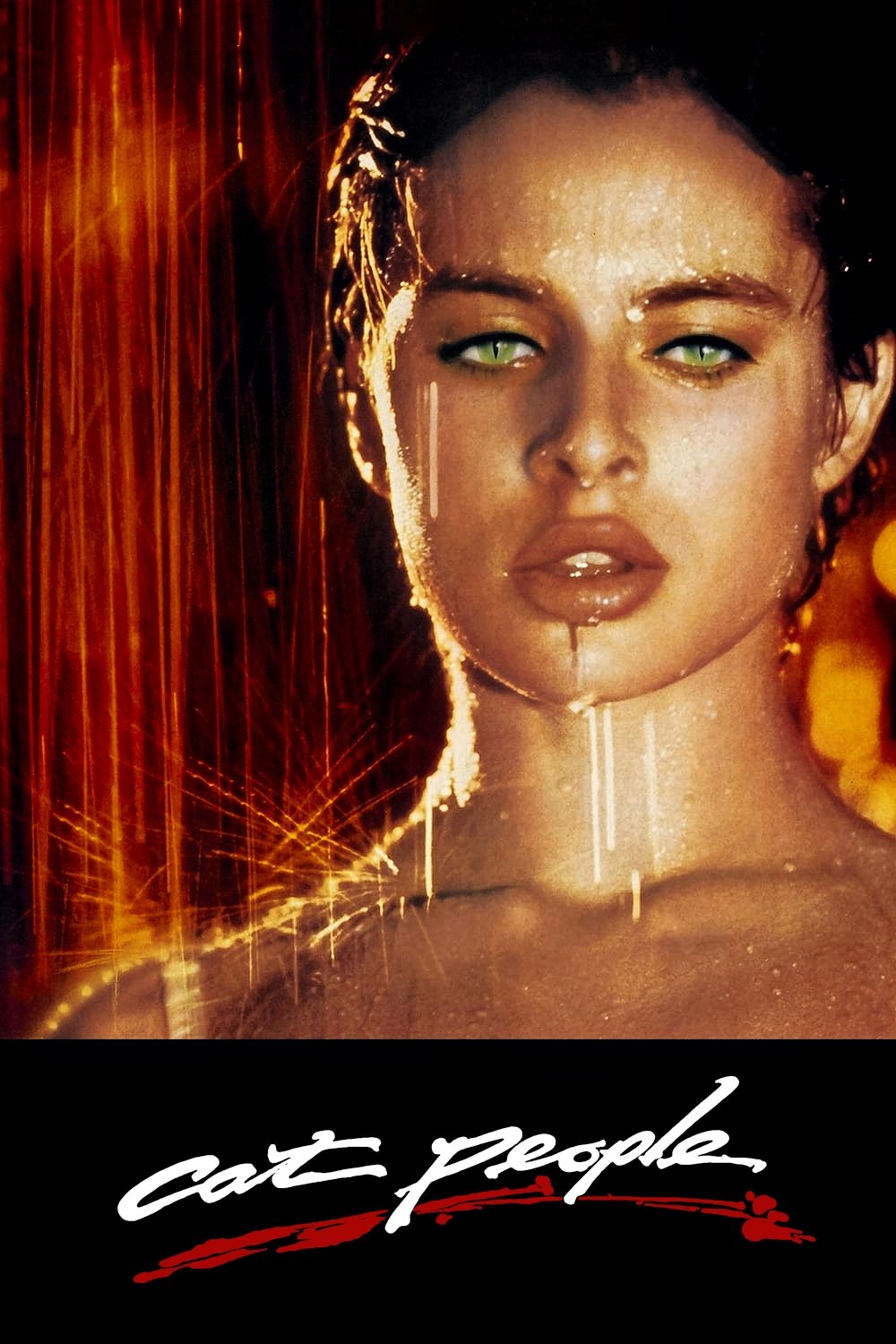
What the Film Is About
As I first sat down to watch Cat People, I didn’t expect to be swept up not in terror, but in an undercurrent of longing and dread that seemed eerily familiar. Yes, it’s considered horror, but what lingers is less the violence or supernatural overtones, and more a sensation not unlike the one I’ve felt in moments when I feared betraying my own nature or disappointing those I love. Cat People isn’t just about a woman who may or may not transform into a deadly panther – it’s about the labyrinth of one’s own identity, the fear of intimacy, and the costs, sometimes monstrous, of alienation.
The film centers on Irena, a Serbian immigrant newly married to Oliver, an American engineer. From the outset, Irena is set apart – by her foreignness, her introversion, and most resoundingly, her fear. She believes she carries an ancient curse: should she become passionate or sexually aroused, she will turn into a predatory panther. This belief, and perhaps the reality of it, shapes every relationship and every moment of her marriage. What plays out is not simply a supernatural thriller, but a story about the secrets we keep, the parts of ourselves we fear, and the destructive potential of denying or misunderstanding the depths of our beings.
Core Themes
Since my first encounter with it, I’ve found myself returning again and again to the core themes that Cat People weaves into its narrative. Central among them is the fear of otherness—not only as something projected outward, but as a quality we suspect within ourselves. Irena’s anxieties about her origins and nature reflect the immigrant’s predicament, the outsider’s permanent self-doubt. She is not just different; she is warned by legend and upbringing that her difference is dangerous, uncontrollable when the boundaries of propriety dissolve.
Equally affecting is the film’s exploration of sexual repression and desire. Irena’s terror of intimacy is tangible, the source of both her hope and her destruction. In this, I sense not just a remnant of the era’s attitudes, but an experience that transcends time and place: the fear that our passions could ruin us, or those around us. This isn’t just a metaphor for sexual awakening; it’s about how any intensity of emotion, if suspected to be a threat, can become a barricade to real connection. The tragedy is not only that Irena cannot embrace Oliver—it’s that she cannot embrace herself.
Beyond this, Cat People is a film about belief—about the reality we make for ourselves and the ways in which that reality can be both protective and destructive. Irena’s conviction in her curse shapes her actions, and those of her husband and friends. It’s not her transformation that damns her, but her refusal (or inability) to reject the myth that has defined her. Watching it through modern eyes, I find myself reconsidering the power of self-fulfilling prophecies in life: how often our biggest barriers are the ones we construct from inherited fears, myths, and half-truths.
Symbolism & Motifs
What has always stood out to me in Cat People is its inventive, almost poetic use of symbolism. The shadow is perhaps the most persistent motif. Director Jacques Tourneur, under producer Val Lewton, understood the value of what is not shown, what is only evoked by a flicker or a darkened corner. The creeping darkness on walls, the dim pools of light in hallways, and the ambiguous slinking shadows all reinforce the idea of latent danger—danger that might be real, but also could be psychological, an emanation of Irena’s inner life rather than literal transformation.
Cats themselves, and especially the panther, serve as a multi-layered symbol. The panther embodies both Irena’s untamed sexuality and the predatory, mysterious aspect that she fears and suspects lies at her heart. The animal cage, a recurring image in the film, suggests the battle between control and nature—how we all, in some way, are trying to confine or domesticate impulses we deem unacceptable.
The motif of the key recurs throughout as well—most notably in the moments when characters lock or unlock doors. These gestures are not merely practical or suspenseful, but imbued with significance: the capacity to grant or deny access, the possibility of liberation or entrapment. The key becomes not just a plot device, but a haunting representation of trust, secrecy, and the often-painful limits we set between ourselves and others.
Water and mirrors also appear repeatedly. Water, in pools or showers, reflects both cleansing and threat—a duality that encapsulates Irena herself. Mirrors, meanwhile, remind us of self-recognition and the fear of seeing a monstrous form gazing back. I know I have stood before a mirror and wondered if I’d recognize my own reflection after certain choices, certain passions. The film slyly asks: what would we see if everything we feared was revealed to us in our own faces?
Key Scenes
Key Scene 1
The swimming pool sequence is, for me, the apex of the film’s psychological power. Alice, Irena’s romantic rival, is alone in the echoing municipal pool late at night. Shadows flicker; a low growl reverberates. Alice flees into the water, circled by shifting bands of light and darkness. What’s masterful is how little we see—no panther, only menace, the sound of clawed paws, the play of shadows across tile. Swept up in Alice’s fear, I am reminded of the times I have felt hunted by my own anxieties, ringed in by invisible dangers. This scene perfectly captures how terror is often less about what is, than what might be—a function of our imagination as much as what stalks us outside of ourselves.
Key Scene 2
The psychiatrist’s office, where Irena reveals her deepest beliefs, is both claustrophobic and tender. Speaking to Dr. Judd, she confesses the history of her village, her conviction that a sexual embrace will trigger her transformation. The power in this scene, for me, comes from the interplay between faith and skepticism. Dr. Judd’s rationalism is a kind of violence, a refusal of Irena’s reality. The tension between his clinical detachment and her palpable suffering is excruciating to watch. It offers a glimpse into how easily emotional or spiritual pain can be minimized, dismissed as mere fantasy. This has stayed with me—a warning about the real-world cost of denying others the validity of their pain or experience.
Key Scene 3
Another sequence that has haunted me is Irena’s final, fatal transformation. After years of repression and fear, after being emotionally abandoned by her husband, she ultimately becomes what she most dreaded. But the film stages this less as a moment of horror, and more as a kind of tragic inevitability. There’s a dignity, almost a sorrowful peace, in Irena’s acceptance as she returns to the panther’s cage, finally unable to resist her fate. Watching her, I’m forced to ask myself: how much of who we become is shaped by love withheld, by misunderstanding, by being forever treated as untrustworthy or alien? There’s an unbearable sadness to the knowledge that what we fear most in ourselves may only emerge because we have nowhere else to go.
Common Interpretations
Over the years, I’ve read countless interpretations of Cat People—each illuminating a facet I hadn’t previously considered. Some see it as a straightforward allegory for the dangers of suppressing one’s sexuality, especially for women in the shadow of pre-war America. There’s much to support this view: Irena’s fear that sex will lead to monstrosity, the way her husband’s patience runs only as deep as her conformity, the implied threat of ‘healing’ her difference.
Others interpret the film through the lens of xenophobia and the outsider’s perspective. Irena’s immigrant status marks her from the beginning as strange, unknowable, potentially threatening—a narrative familiar to so many who have felt their difference used against them as a weapon. The story plays out not just as a personal tragedy, but as a critique of any society eager to punish what it cannot neatly define or domesticate.
There are also readings that focus on psychology—the film as a depiction of mental illness, or of trauma passed from one generation to the next. The supernatural curse is less literal, they argue, and more a metaphor for secret wounds, for the illegible pain that can invade intimacy and doom relationships. When I watch the film now, I find myself drawn to this perspective. Few films so powerfully evoke the feeling of being sabotaged from within, of knowing you may not be able to keep yourself from hurting those you love.
Finally, some critics have suggested that the ambiguity at the film’s heart is its real genius. We never explicitly see Irena transform—everything terrifying is hidden in suggestion, shadow, the reactions of others. For these viewers, Cat People is about the nature of belief itself, and how reality is so often shaped as much by what we can’t prove as what we can. This ambiguity is hauntingly familiar: how most of us live with fears that may never manifest, yet still govern our actions like law.
Films with Similar Themes
As someone who has delved into classic horror and drama for decades, I’ve found that Cat People sits at the crossroads of multiple traditions. Its themes echo in many other films—sometimes overtly, sometimes more subtly.
- Val Lewton’s own later productions—particularly I Walked with a Zombie (1943) and The Seventh Victim (1943)—share the same atmosphere of dread, ambiguity, and the unspoken power of myth.
- Alfred Hitchcock’s Rebecca (1940) touches similar ground in its portrayal of the outsider woman, haunted by her predecessor and by what she represents to the world around her.
- The Innocents (1961), based on “The Turn of the Screw,” uses uncertainty and unreliable narration to explore psychological terror—what can and can’t be known, and the horror that springs from the margins of certainty.
- Peeping Tom (1960) and Psycho (1960), both products of a later, more explicit era, nevertheless share the motif of a fractured self and the lurking presence of forbidden desire or trauma.
- More recently, films like Let the Right One In (2008) and The Babadook (2014) descend from this tradition, using supernatural metaphor to probe feelings of alienation, grief, and the burden of hidden pain.
Across genres and decades, the best of these films, like Cat People, don’t rely solely on monsters, but on the ways in which we become monsters to ourselves and each other through our refusal to comprehend the full scope of human feeling and fear.
If you’re deciding what to watch next, you might also want to see how this film holds up today or how it was originally received.
🎬 Check out today's best-selling movies on Amazon!
View Deals on Amazon