
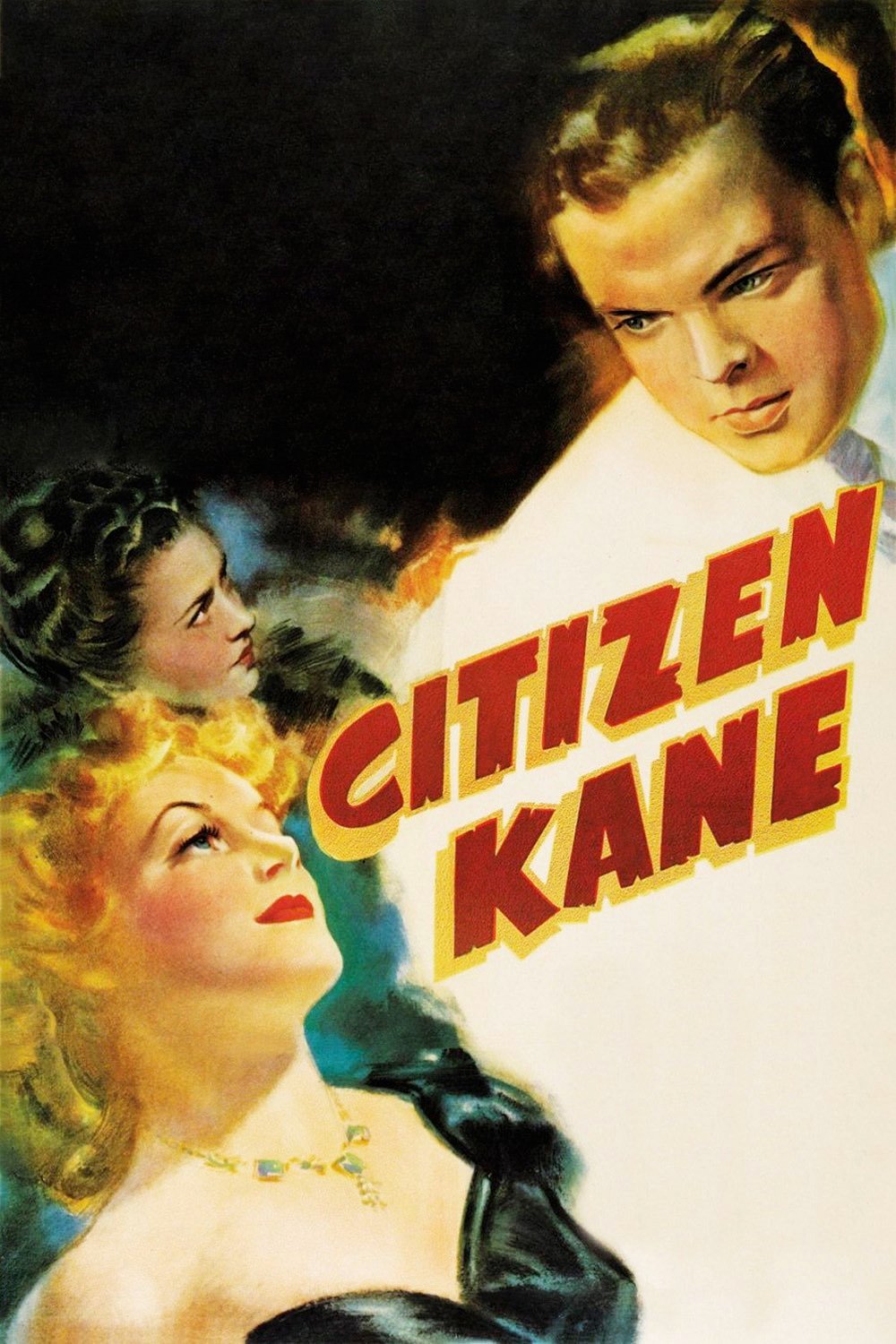
What the Film Is About
I had always heard the name “Citizen Kane” tossed around in serious film circles, invoked with a sort of reverence that seemed reserved for sacred texts rather than old celluloid. The first time I watched the film, I was barely out of college, clutching a DVD with a newspaper headline and the impenetrable face of Orson Welles staring back at me. What I didn’t anticipate was how profoundly personal this viewing would feel, how unmistakably I’d sense the ache for something lost echoing within its frames. For me, “Citizen Kane” is less the sweeping biography of an American tycoon and more a meditation on the irretrievable nature of innocence—of what slips away from us, quietly, as we move inexorably through life.
At its most basic, “Citizen Kane” tracks the rise and decline of Charles Foster Kane, a man whose life is built upon accumulation: wealth, power, headlines, and, ironically, love. Yet underneath the abundant spoils is an air of longing I couldn’t shake, the sense that all Kane’s striving is an attempt to fill a chasm left open since childhood. Because the film famously opens with his dying word—”Rosebud”—I found myself just as obsessed as the onscreen reporters: what could possibly explain the mystery of a life so full yet so profoundly empty?
The more times I’ve watched, the more conscious I’ve become that “Citizen Kane” is less about Kane’s life events than about the stories we tell about ourselves, the blurry relationship between truth and narrative, and the way our earliest traumas echo through everything we become. I can’t help but see my own life in these themes, the small yet seismic events that steer us unknowingly toward our destinies.
Core Themes
The heart of “Citizen Kane” throbs with a handful of interconnected themes, all of which continue to haunt me years after that first viewing. The most arresting, to my mind, is the idea of lost innocence and the futile pursuit of recapturing it. Each time Kane attempts to recreate the unconditional love and security of his childhood—whether through building an empire, falling in love, or filling his vast estate with treasures—I am struck by how universal this urge feels. I have, in my own way, chased after moments I thought would restore some imagined fullness to my life, only to discover, as Kane does, that past innocence can never be genuinely recovered.
Another theme that grips me is the corrosive effect of unchecked ambition and power. Kane’s desire to do good turns quickly to egotism, shaping his relationships into transactional exchanges. As I reflect on his journey, I’m reminded of times when my own ambitions have threatened to outstrip my empathy. What makes the film endlessly fascinating to me is this interplay between the personal and the political, the intimate collapse of a single soul and its reflection in broader cultural patterns—especially in the fervor and excess of early twentieth-century America.
The elusiveness of truth stands as another pillar. Throughout the film, perspectives shift, unreliable narrators abound, and I am constantly reminded that all understanding of a person (even oneself) is inherently incomplete. Each retelling of Kane’s story by those who knew him reveals less about the facts and more about their own relationship to him. I find myself considering the ways others have misperceived me or how, in recounting my own life, I emphasize certain moments while suppressing others. Truth in “Citizen Kane” feels beautifully, painfully slippery.
Loneliness, too, ripples throughout every scene. Kane is surrounded by people but essentially alone, locked in isolated grandeur. For me, the tragedy is not only in what he cannot possess, but in what he cannot give—how wanting love most, he repels it with force. Watching this, I am struck by how loneliness manifests even when we are most visible to others, and how power so often creates instead of bridges, a terrible distance between ourselves and those we wish most to reach.
Symbolism & Motifs
When I reflect on the film’s extensive use of symbolism, I find “Citizen Kane” to be a cinematic treasure trove. The notorious “Rosebud” becomes the film’s central motif, the cipher for lost time and innocence. Every time the sled flashes on the screen, I am reminded how tangible objects can contain entire universes of memory and desire. In my own life, I have pieces of my childhood—a trinket, a letter, a fading photograph—that serve as my personal Rosebuds, reminders of who I once was and the hopes I once carried.
Xanadu, Kane’s palatial mansion, stands as a monument to overreaching ambition. As I watch him fill it with art and antiquities, I feel the weight of its hollowness: a man building a fortress against the outside world, only to be ensnared by his own loneliness. The snow globe, too, lingers in my mind long after the closing credits: as an object, it captures the fragility and isolation of memory. Each time it shatters, I am brought back to how easily the worlds we build in our minds can break and how even behind the walls we construct, we remain vulnerable and incomplete.
I’m equally transfixed by the shifting use of light and shadow throughout the film. Characters are often dwarfed by their environment or cast into darkness, echoing the enigmatic, often inaccessible nature of inner lives. Watching these visuals, I re-examine the places in my own experience where I have obscured the truth from myself or felt dwarfed by forces beyond my control. In this way, the visual motifs operate on a subconscious level, linking the external and the internal with uncanny precision.
Mirrors are another recurring image that I find thematically rich. Throughout “Citizen Kane,” reflections multiply, distort, and splinter Kane’s image, suggesting a man who cannot reconcile all the versions of himself—public figure, lover, child, failure, myth. There’s something deeply human in this—the impossibility of ever integrating all our contradictions. Every time I see my own reflection, I wonder what fragments are visible to others and which remain hidden, perhaps even from myself.
Key Scenes
Key Scene 1
The scene that always lingers with me occurs shortly after Kane’s first marriage collapses. We see a silent breakfast montage between Charles and his first wife, Emily. Each vignette reveals a couple growing ever colder, the space between them expanding while the dialogue withers into silence. For me, this wordless transformation speaks volumes about how intimacy can erode not through explosive fights but through imperceptible accumulations of distance and disappointment. I recognize, with a pang, how relationships in my own life have shifted for reasons unclear at the time but heartbreaking in retrospect. The way Welles stages the couple at opposite ends of the table reflects a larger truth about emotional estrangement—it happens slowly, then all at once, until the chasm feels permanent.
Key Scene 2
Upon each rewatch, I am shaken by the scene in which Kane destroys Susan Alexander’s bedroom in a fit of rage and despair. His fury is as much directed at himself as at Susan; the devastation he unleashes is an externalization of his internal chaos. The sequence, filmed with sharp angles and heavy shadows, stirs in me the knowledge that we often lash out when confronted with our own failings or unmet needs. Kane’s violence is tragic not only in its destructiveness but in its impotence—it cannot mend what is broken, only emphasize his inability to control love or fate. I am reminded how, in my least proud moments, I have tried to force resolution where none was possible.
Key Scene 3
The quiet climax—Kane’s dying moment, clutching his snow globe and whispering “Rosebud”—never fails to move me. The sad, soft word is more than a clue for narrative detectives; it is the ultimate expression of what cannot be reclaimed. Watching this, I feel the ache of nostalgia, the longing for lost simplicity, for the safety and unblemished joy of a distant era. The snow globe slipping from Kane’s grasp is, to me, one of cinema’s most poetic images of letting go—of the impossibility of containing or rewinding our own histories. I think about the things I still hold close, the memories so vivid and yet so irretrievable, and I find myself newly attuned to the subtleties of loss in everyday life.
Common Interpretations
Over the years, I’ve encountered a wealth of critical commentary on “Citizen Kane”—from classroom discussions to graduate seminars, from old clippings to contemporary essays. Some see the film primarily as a veiled critique of William Randolph Hearst and the dangers of media power, reading Kane as a symbol of American hubris and the perils of unrestrained capitalism. Others stress its technical prowess, the innovation of Gregg Toland’s deep focus cinematography and Bernard Herrmann’s evocative score, emphasizing the film’s status as a formal revolution in storytelling. To me, while these aspects are fascinating, they are not where the heart of the film beats.
There are interpretations that view “Citizen Kane” primarily through the lens of psychological tragedy—a Freudian reading of Kane as a man burdened by childhood loss and forever reaching backward in time. I find these readings compelling, especially as I reflect on the myriad ways our earliest wounds shape our adult relationships and ambitions. Others go further, seeing the film as a meditation on the unreliability of memory and the impossibility of true biography. In this, “Citizen Kane” becomes not just the story of a man, but a story about storytelling—a hall of mirrors in which every reflection both illuminates and obscures.
Some, especially in recent years, have located the film within the broader context of American myth-making, arguing that Kane represents the contradictions of the American Dream: the capacity for self-invention coupled with the inevitability of self-destruction. I am struck, reading these interpretations, at how the film grows in meaning as I age. When I was young, it felt like a mystery to be solved; now it feels like a mystery to be inhabited—one whose answers are as elusive as happiness itself.
Films with Similar Themes
When I try to make sense of “Citizen Kane” within the tapestry of film history, I find myself drawn to works that circle similar orbits—films that examine the hollowness of success or the ache of lost innocence. “The Magnificent Ambersons,” also by Orson Welles, comes immediately to mind: a meditation on change, regret, and the longing for a vanished world. In its portrayal of generational decline, I see much of Kane’s spirit—ambition turning inward, family ties unraveling with the passage of time.
“There Will Be Blood” by Paul Thomas Anderson offers a modern counterpoint—the story of Daniel Plainview, another man whose quest for power leaves him isolated and emotionally barren. Watching that film, I am hit with déjà vu: another titan who cannot fill the void within, who is ultimately undone not by enemies but by his refusal to love or be loved. Both films probe the dark underside of the American Dream, the way its promises can curdle into nightmares when unchecked desire tramples conscience.
Francis Ford Coppola’s “The Godfather” trilogy comes to mind for its exploration of power’s corrupting influence and the price paid in personal happiness. When I see Michael Corleone withdraw into protective solitude, I witness shades of Kane’s lonely twilight, the same mournful recognition that every choice entails a loss, every victory a surrender of something precious.
Yet perhaps the closest spiritual relative is “8½” by Federico Fellini, where the protagonist wrestles with memory, desire, and the challenge of assembling a coherent self from fragments of experience. That cascading play of narrative and memory echoes not only Kane’s journey but also my own struggle to make sense of my story. I am left wondering how each of us reconciles past and present, and if, like Kane, there will always remain a word, a memory, or a lost object that no inquiry can fully explain.
For more context before choosing your next film, these perspectives may help.
🎬 Check out today's best-selling movies on Amazon!
View Deals on Amazon