
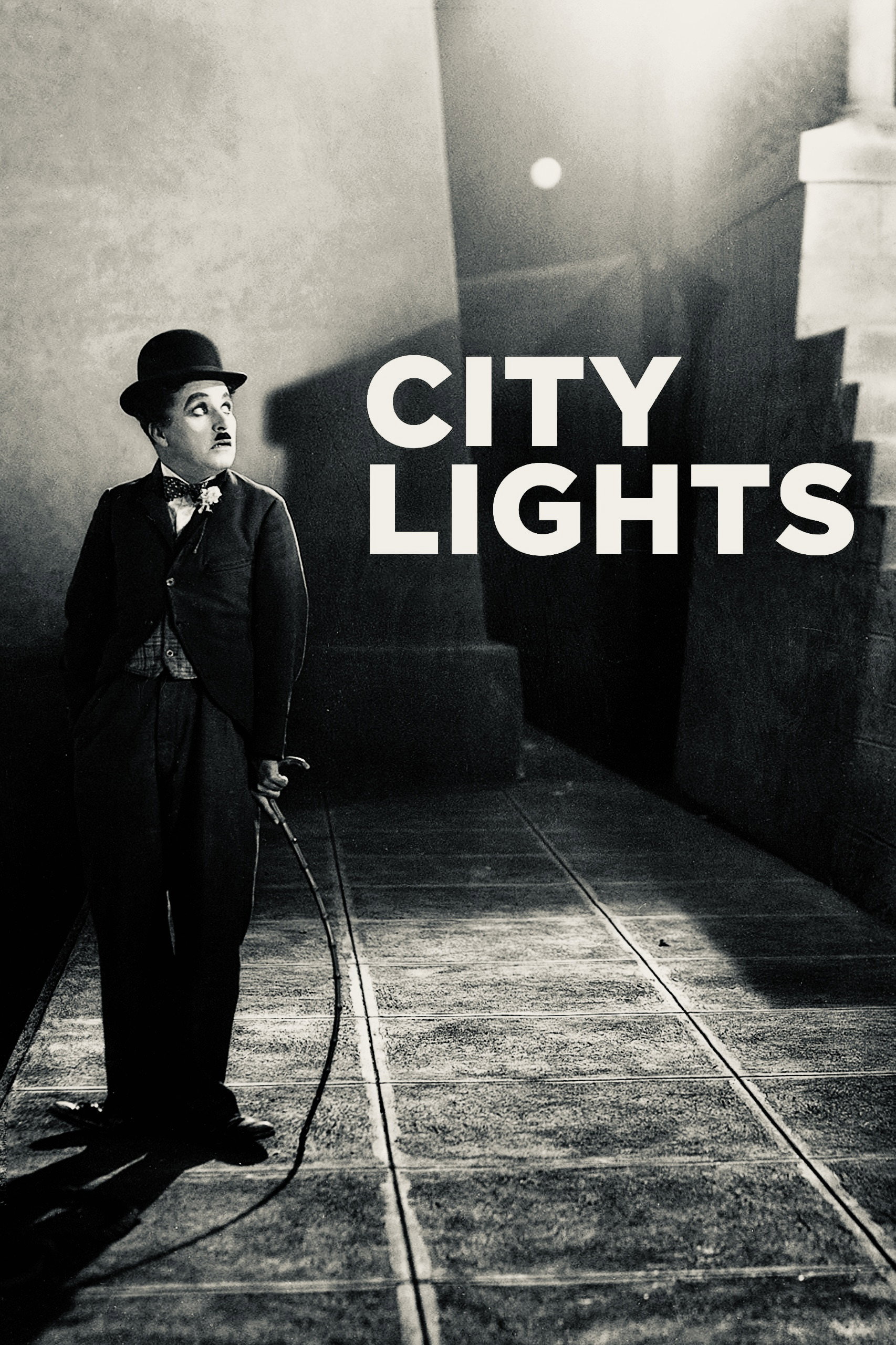
What the Film Is About
When I first encountered “City Lights” as an adult, it was not the slapstick charm or legendary pantomime that struck me, but a flicker of something vulnerable and fierce beneath the film’s humor. More than eight decades since its release, “City Lights” strikes me as an argument—one told silently through glances, gestures, and the trembling edge of hope—for the value of seeing and caring for one another in a world apathetic to suffering. To experience this film is to sit with the feeling that, no matter how invisible or foolish we may feel, acts of kindness pass between us, binding dignity to the unseen corners of society. For me, the real subject of “City Lights” lies in how its world responds to poverty, love, and the unmet need for recognition.
Despite its famous comic set-pieces, “City Lights” is far more than a series of gags. I see it as a deeply personal work by Charlie Chaplin, one that refuses to sentimentalize either suffering or generosity. Its central relationship—a mute Tramp and a blind Flower Girl—unfolds, not against a backdrop of silent-era nostalgia, but on the noisy cusp of the Great Depression, when anxieties about visibility, class, and identity swirled through modern city life. The Tramp, an outsider and a survivor, embodies the tension between striving for acceptance and clinging to one’s own integrity. The Flower Girl, with her literal blindness and the Tramp’s figurative invisibility, centers the film’s inquiry: in a city indifferent to those who falter, can love cut through circumstance’s harsh disguises?
Core Themes
The longer I spend reflecting on “City Lights,” the more I am convinced that its most profound theme is the quiet search for dignity amid neglect. I see a film preoccupied with survival when one is unseen, and with the act of giving that restores more than physical sight. Chaplin’s onscreen Tramp, as always, is defined by destitution—a rumpled, ill-suited soul adrift in an urban landscape. But it’s not mere want that moves him; rather, it’s the persistent need for connection and the tireless effort to be of value to someone else.
That, for me, is the heart of “City Lights”: the notion that compassion, especially from society’s most marginal, has a transformative alchemy. The Tramp gives what little he can to the Flower Girl, but it’s the giving itself that draws out the rarest growth. The film repeatedly pits superficial judgments against subtler truths, asking who sees whom as a worthy person. I see this dramatized both in the Flower Girl’s initial trust in the Tramp (believing him, through her blindness, to be wealthy) and later, after her sight is restored, when she recognizes his sacrifice despite his persistent poverty.
Love in “City Lights” is never transactional, despite the Flower Girl’s misunderstanding. The story distinguishes between the largesse of the Tramp’s drunken Millionaire friend—whose affection is genuine but unreliable—and the relentless constancy of the Tramp’s devotion. Here, Chaplin proposes that genuine affection does not depend on circumstance or reciprocity but is signaled through repeated acts of self-forgetting kindness. I find this willingness to see and uplift the other—despite, or perhaps because of, one’s own lack—profoundly moving, as if love is most authentic in the absence of guaranteed reward.
Another deep current running through the film is the question of identity in the face of class. The Tramp’s outsider status isn’t merely comedic camouflage; it’s the wound that defines his longing. In a modern urban space staking claims to progress and abundance, Chaplin empties the margins of society, exposing both the loneliness and creativity required to survive there. The Tramp’s misrecognition by the Flower Girl is a kind of mercy: she cannot judge what she cannot see, just as the city’s sighted rich cannot see the humanity in its poor. I’m left believing that “City Lights” is not only about personal transformation but about the radical possibility of being seen, for the first time, as irreplaceable—despite one’s station, body, or fortune.
Symbolism & Motifs
What makes “City Lights” resonate so deeply with me is how its emotional undercurrents are enriched by carefully chosen symbolism. The blindness of the Flower Girl stands out as the film’s central metaphor: blindness here is innocence, yes, but it’s also a way of illuminating the invisible threads of empathy. By denying her sight, Chaplin crafts a character who moves beyond surface judgments—until, ironically, she regains her vision and is finally able to perceive the suffering and nobility bound up in the Tramp’s care.
I see the act of giving flowers as a motif, both literal and symbolic. Flowers, in their fragility, become stand-ins for hope and beauty, offered by the Flower Girl to the city’s anonymous bustle and later returned to her by the Tramp as tokens of his devotion. Each flower exchanged is also a plea for recognition—a tiny bridge flung between the marginal and the indifferent.
The city itself is another living symbol, always glimpsed in motion, crowded, impersonal, and yet oddly full of private dramas. Its glittering lights—shamelessly referenced in the title—suggest both the promise and the alienation of modern life. In my mind, these city lights become searchlights, exposing the loneliness within crowds and making visible those who are so easily forgotten at the margins.
Finally, I’m struck by the recurring motif of mistaken identity. The Tramp is routinely misunderstood or miscast: as a wealthy benefactor by the Flower Girl, as a criminal by the authorities, as a drinking companion by the Millionaire. Each misreading is a comment on how shallow our judgments can be, how relentlessly appearance shapes status. Chaplin’s comic genius lies in using misunderstanding itself as a site for grace—by the film’s end, the truth of the Tramp’s character is illuminated not by what others perceive, but by what he has chosen to do in darkness.
Key Scenes
Key Scene 1
The first key scene that I cannot help but revisit in my mind is the moment the Tramp encounters the Flower Girl for the first time. She is, quite literally, unseen by the world around her, selling flowers on the steps as noisy city folk bustle past. For me, their exchange is a microcosm of the entire film: a dignified soul—blind to her own low status—and a clownish outsider, drawn together by mutual vulnerability. Here, Chaplin carves out a space where empathy emerges in spite of, not because of, circumstance. The Tramp’s realization that she is blind is played with breathtaking gentleness. Rather than recoiling from her difference, he steps closer. This is more than empathy; it’s an act of solidarity. I find that powerfully challenging for a world and time so divided by class and fate.
Key Scene 2
The second scene that burns in my memory is the film’s spirited boxing match. On paper, this is a set-piece engineered for laughter: the Tramp, outmatched and out-muscled, attempts to outwit his hulking opponents, creating pandemonium in the process. Yet beneath the choreography, I sense the deeper symbolism that this scene embodies. For me, the boxing ring is a stand-in for the ruthless contest of urban life. The Tramp, always vulnerable, survives not by force but by ingenuity and resilience. He dodges, feints, and embraces comedy to compensate for his weakness—much as he does outside the ring, navigating the labyrinth of poverty. It is survival as dance, suffering as farce. And though laughter rings out, I feel in it an echo of something tougher: the persistence it takes to stay alive and keep caring in a world that laughs at both frailty and kindness.
Key Scene 3
No single moment in “City Lights” is as searing for me as the final scene, when the Flower Girl—having regained her sight—finally sees the Tramp as he is. The moment hangs in the air: her startled recognition, his tentative, anxious smile, the silent agony on his face as he waits to be identified and judged. For so much of the film, love has been shielded by blindness; now, love must pass the test of sight. When she realizes that the destitute Tramp is her mysterious benefactor, the film resists melodrama. Instead, there’s a cherished, trembling moment in which the possibility of being loved—not for one’s appearance, but for one’s acts—passes like a current between them. I feel in this scene an ache that cannot be dissolved by romance or gratitude; it is about the risk we take in letting ourselves be fully known, when love means exposing both our poverty and our hope.
Common Interpretations
Over the years, I have encountered various interpretations of “City Lights,” and each has deepened my appreciation for the film’s textured ambiguities. Some viewers understand the film as a simple fable about charity and self-sacrifice, positioning the Tramp as a Christlike figure whose redemption comes through giving. Others read it as a darker commentary on the invisibility of the poor, where kindness is both a survival strategy and an act of quiet defiance against indifference. In discussions with friends and critics, I often return to the notion that the film is, at heart, about being truly seen by another—a process that demands vulnerability and acceptance beyond the limits of class or physical ability.
For me, the most challenging interpretations examine the relationship between the Tramp and the Flower Girl as a meditation on power, misrecognition, and mutual need. The Tramp’s acts of giving, while noble, also arise from a desire to be loved on terms that mask his own lack. The Flower Girl, initially dependent, regains control through vision, and her final acknowledgment may not be unproblematic forgiveness but the start of a more complicated empathy. Some see this ambiguity as Chaplin wrestling with his own relationship to fame and artistic creation—a man performing for those who are blind to his inner struggles, yearning for acknowledgment yet terrified of being truly known.
One perspective I find illuminating considers the historical context: released in 1931, after the onset of the Great Depression, “City Lights” can be seen as a quiet protest against systems that punish the vulnerable and elevate the callous. Chaplin’s choice to make a silent film in a talking era is also, in my view, a statement about the universality of compassion. Words are unnecessary, because the language of hope, kindness, and longing is shared by all.
Films with Similar Themes
“City Lights” has the peculiar quality of feeling both unique and widely influential—its DNA can be traced in so many stories of forsaken dignity and invisible kindness. Whenever I revisit this film, I am compelled to compare it with other works that treat love, poverty, and recognition with humility and grace.
- “The Kid” (1921) — Another Chaplin film, this time focusing on the relationship between a tramp and an abandoned child. I find the same concern for survival, difference, and the transforming power of affection.
- “The Bicycle Thieves” (1948) — Vittorio De Sica’s Italian neorealist masterpiece echoes the desperation and resilience of ordinary people, and its final scenes share with “City Lights” a devastating recognition of poverty’s impact on the soul.
- “Ikiru” (1952) — Akira Kurosawa’s tale of a bureaucrat’s search for meaning also dwells on how a single act of kindness can be redemptive not only for others, but for oneself. I see the same yearning for dignity and connection in Kanji Watanabe’s journey.
- “Stroszek” (1977) — Werner Herzog’s story of outsiders desperate for belonging in an inhospitable world captures for me the bittersweet humor and tragedy of lives lived on the margins, echoing Chaplin’s affection for the lost and wandering.
- “Paris, Texas” (1984) — Wim Wenders crafts a portrait of longing and miscommunication, where seeing the other—as in “City Lights”—becomes the hardest and most necessary task of all.
Each of these films, like “City Lights,” leaves me believing that there is extraordinary value in recognizing the discarded, in tracing the lines of grace that cross the most unlikely landscapes. Chaplin’s masterpiece remains, for me, a sustained meditation on the risks and rewards of looking beyond appearances, of finding something priceless in the act of truly seeing and being seen.
For more context before choosing your next film, these perspectives may help.
🎬 Check out today's best-selling movies on Amazon!
View Deals on Amazon