
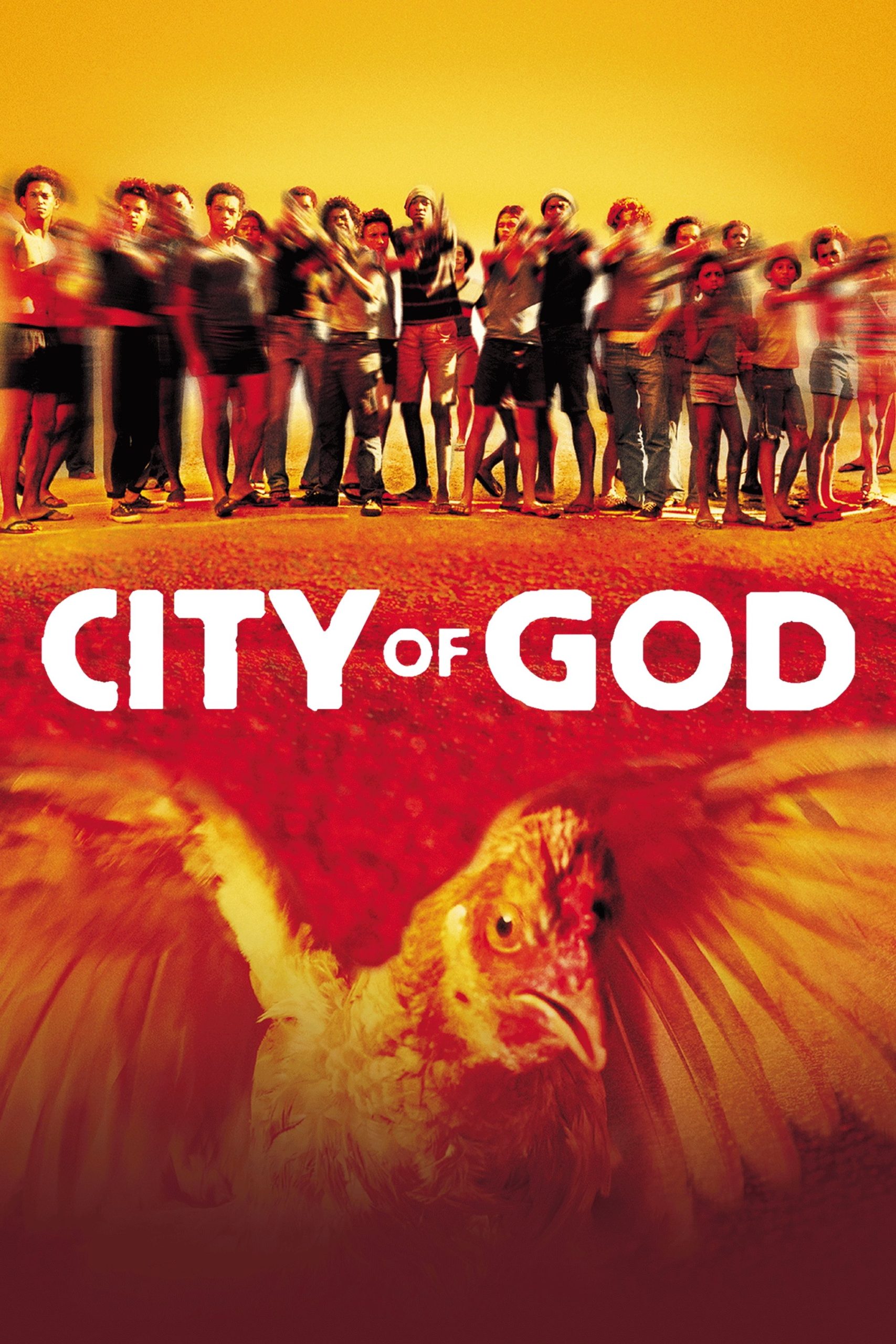
What the Film Is About
Whenever I reflect upon my lifelong love affair with cinema, few films cut as deep or linger as ominously in my memory as “City of God,” directed by Fernando Meirelles and co-directed by Kátia Lund. My first encounter with this searing Brazilian masterpiece was not as a casual viewer, but as someone searching for meaning in images I couldn’t shake. Set in the lawless favelas of Rio de Janeiro, “City of God” paints a world that is both intimately familiar in its human struggles and utterly alien in its relentless violence. Yet for me, the essence of the film isn’t just rooted in shocking gunfire or the tragic destinies of children forced to grow up too soon. Rather, it’s about the corrosive effects of poverty on morality, agency, and the very notion of hope—interwoven with the personal odyssey of its protagonist, Rocket, who seeks to document everything without being consumed by it.
The film is ostensibly the trajectory of several young characters coming of age amid gang wars starting in the late 1960s and escalating into the 1980s. But to me, the plot is less about the rise and fall of individuals than about the inescapable gravitational pull of the environment itself—a world where choices are not so much made as inherited. As I watched Rocket juggle his aspirations to become a photographer with the pull of his childhood friends, the shattering violence that encircles him, and encroaching systemic rot, I realized “City of God” is about survival at the edge of an abyss where innocence has an alarmingly short half-life.
Core Themes
Whenever someone asks me what the heart of “City of God” is, I think in layers rather than clear answers. The most bruising thrust of the film is its unrelenting meditation on how environment shapes destiny. I cannot watch these young, vibrant faces hardening into criminal archetypes without feeling the subtle accusation that society itself birthed this brutality. It’s a warning and a mirror, suggesting that deprivation, neglect, and barricaded opportunity will always twist the spirit, especially for those whose dreams are repeatedly torn away.
Another theme that breathes through the film is the ambiguity of morality inside chaos. No one, not even the film’s most monstrous figures like Li’l Zé, is simply evil. Instead, Meirelles’s lens draws me into the frightening grey zone where the difference between victim and oppressor, friend and betrayer, becomes a matter of perspective or survival instinct. Rocket, aiming for a path outside violence, is never truly outside it—he is defined by it, haunted by it, and sometimes, though desperate to remain morally intact, forced to benefit from its fallout.
Cycles of violence, too, pulse throughout “City of God.” Each new generation of gangsters—the Tender Trio, Li’l Zé, Benny, Knockout Ned—represents not catharsis, but deadly repetition. As I watched, I felt submerged in fatalism; bullets breed only more bullets, grudges create only deeper vendettas, and the city devours each would-be survivor in time. The entire structure seems rigged to perpetuate itself, with few ever dreaming of escape, let alone achieving it. Hope is a scarce commodity in these streets, and the rare moments of optimism are fragile, almost delusional in a world unmoved by individual wishes.
The film also meditates, in its quieter moments, on the role of memory and storytelling. Rocket’s acts of photographing and narrating the events is an assertion of selfhood—a refusal to become invisible. For me, watching his journey is a lesson in the power and limitations of bearing witness. Doubling as both a participant and observer, he embodies the filmmaker’s dilemma: can one simply document the horror, or does the act of documentation implicate oneself in the story? “City of God” left me questioning the boundaries between complicity and passivity.
Symbolism & Motifs
Symbols in “City of God” rarely function as straightforward markers; they are slippery, omnipresent, and intertwined with the daily grind of favela life. When I revisit the film, what always strikes me first is its oppressive, sun-bleached palette—a world shimmering almost to the point of hallucination, where heat seems to etch violence into the skin. The city itself becomes a character: its tangled alleys visually trap the characters as effectively as poverty does economically.
One recurring motif I find especially poignant is the use of guns as both literal and figurative instruments. To the children of “City of God,” firearms are not only tools of violence, but tokens of belonging, rites of initiation. The infamous scene of the “Runts”—young boys bullied into violence—chills me more each time, reminding me how easily power becomes permission, and permission morphs into inevitability. Guns are less weapons than passports—the only tickets to respect and security the city offers. The cyclical handoff of guns between generations in the film resonates with me as a metaphor for inherited trauma and systemic failure.
Another enduring symbol is Rocket’s camera, which is as much shield as it is a window. I see it as a device by which Rocket seeks authorship over his own narrative, refusing to be a statistic or a body in media sensationalism. Photographing life grants him a thin but crucial separation from the danger that engulfs him. That camera becomes emblematic of both survival and the dream of art as salvation. But it also begs an uneasy question: can art, or documentation, truly change the world it records, or is it just another form of escape? I often find myself wrestling with this after the credits roll.
Key Scenes
Key Scene 1
Perhaps the most psychologically scarring sequence in my memory is the one involving the two young boys forced by Li’l Zé to shoot one another. The scene is squalid and almost unbearable in its tension—a microcosm of cruelty perpetrated by children upon children, often simply for credibility in the eyes of their peers. When I watched this, I wasn’t just observing violence; I felt cornered by it, as if the world was so depleted of alternatives that a child’s only hope of survival was through a demonstration of brutality.
This scene lays bare the horrifying process by which innocence is mutilated. It’s not simply a display of savagery, but a sick ritual by which children are initiated into a world where empathy and mercy are fatal weaknesses. Each frame struck me as a condemnation of societal neglect—the Brazilian military dictatorship’s abandonment of urban poor in the 1960s and 70s echoes in every trigger pulled. The sequence is a forceful lesson in how quickly and efficiently environments can manufacture monsters while remaining largely invisible to outsiders.
Key Scene 2
The death of Benny, Li’l Zé’s close friend and the gang’s “cooler head,” marks a devastating turning point in the film. I remember wincing in anticipation when he tried to leave his life of crime for love and a chance at normalcy, only to become collateral in the chaos he hoped to escape. Benny’s accidental killing, and the shockwaves it sends through both criminal and non-criminal circles, embodies for me the impossibility of exit from systemic violence. His murder is not only a shocking narrative pivot but also feels deeply emblematic of the city’s refusal to let go of any of its denizens, especially those who try to break its cycle.
This scene touched me personally, as Benny was the rare character who wielded power with charisma rather than terror. His futile bid for a different life is both hopeful and heartbreaking, embodying the tragedy at the core of “City of God”: that even the most resourceful, compassionate, or lucky are one bullet away from annihilation. Watching Rocket capture these moments with his camera as Benny bleeds out, I found myself haunted by the price of proximity—how observation does not always shield us, and sometimes only deepens our sense of impotence.
Key Scene 3
The film’s final moments, with the “Runts” marching out to plan the next chapter of violence, express the terrifying continuity of the cycle. For me, this scene lands viciously; after all the bloodshed and shattered aspirations, the film makes it disturbingly clear that nothing has fundamentally changed. The new child gangsters are even younger, even more eager to assert a brutal claim over their world. The narrative isn’t dignified with a redemptive closure, but instead, I am left with the chilling realization that these cycles are far larger and more enduring than any individual life depicted.
Watching the “Runts” disappear down the alley’s labyrinth as Rocket turns away, I was gutted by the absence of heroic resolution. The city’s problems, woven into institutions and daily existence, are not dramatically solved or even meaningfully mitigated by the stories of the people who live through them. I often reflect on how this honesty is both the film’s most audacious trait and the source of its lingering despair—and why, after years, I still return to wrestle with its unresolved ache.
Common Interpretations
Over the years, I have encountered several readings and conversations around “City of God” that in themselves feel like a collective attempt to process the overwhelming brutality of the film. Many who analyze the film see it as a direct indictment of systemic inequality, a cinematic scream against the abandonment of Brazil’s underclass. To a large extent, I agree with this reading—the city depicted here isn’t merely violent because of the individuals who inhabit it, but because of the structural and historical forces that enforce social exclusion, from institutionalized police corruption to chronic neglect of social services.
There’s also a significant thread of interpretation focused on the ethics of representation. Some viewers—myself included—are left troubled by the vicarious spectacle of violence. Rocket’s journey as an aspiring photographer becomes a stand-in for the audience’s own complicity: are we simply witnessing horror, or are we participants, consumers, perpetuators? I often find myself questioning what it means to bear witness to suffering at a distance, and whether empathy or helplessness is the more honest response.
Others focus on the film’s use of style and storytelling, seeing it as a radical reshaping of the gangster genre—a genre often dominated by glamourized violence and retributive arcs. Yet, “City of God” refuses to romanticize its antiheroes or grant them mythic stature. Its brisk editing, fractured timeline, and frenetic camera work mirror the chaos and non-linearity of trauma itself. Interpretation, in this light, becomes a process of feeling rather than decoding. Whenever I revisit the film, its discomfort lies precisely in how it destabilizes my relationship to the people on screen—never merely villains or heroes, but composites of circumstances, dreams, and brutal awakenings.
Films with Similar Themes
Exploring “City of God” opened up for me a broader conversation with films that tackle similar subjects—narratives molded by place, shaped by systems, obsessed with fate over free will. I am often reminded of “La Haine” (1995), which follows disaffected youth in the banlieues of Paris, echoing the same sense of socio-political abandonment and the slippage between victimhood and perpetration. Like “City of God,” it pulsates with urgency and ends without moral easy answers.
Another film that haunts me in similar ways is “Gomorrah” (2008), Matteo Garrone’s grim immersion into the mafia-dominated slums of Naples. Its narrative fragmentation and chilling realism push the viewer to confront the banality of evil born from deprivation. Both films shun catharsis and redemption, instead allowing the circumstances to dictate the fates of their characters far more than any calculated ambition or malice.
Closer to Brazil, “Pixote” (1981) paved the way for “City of God” with its unflinching look at street children surviving within and against unforgiving institutions. The connection between institutional failure and the abandonment of the young is glaring in both films, and each delivers less a call to action than a cold inventory of suffering. I also think of “Slumdog Millionaire” (2008), whose stylistic exuberance and narrative propulsion sometimes mask the similar currents of child exploitation, systemic poverty, and the search for dignity in hostile surroundings. Yet where “Slumdog” leans on fate and chance, “City of God” grinds down hope with inexorable realism.
All of these films, to varying degrees, force me to confront my own viewing position—how easy it is, from a place of comfort or remove, to witness but not experience. “City of God” remains, for me, the most ruthless in its refusal to shield viewers from that discomfort. It demands empathy without granting reprieve from complicity, honesty without the palliative of closure.
If you’re deciding what to watch next, you might also want to see how this film holds up today or how it was originally received.
🎬 Check out today's best-selling movies on Amazon!
View Deals on Amazon