
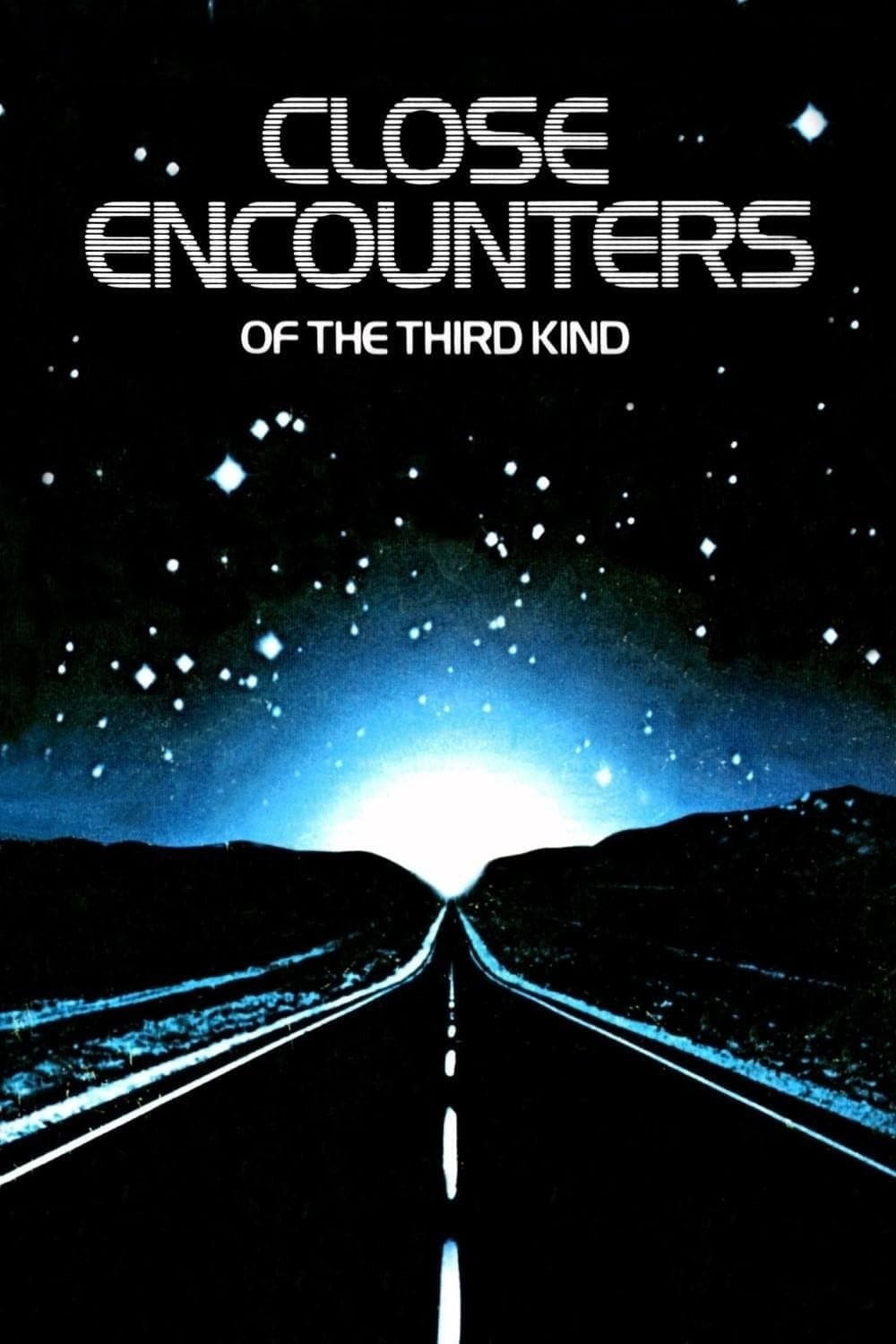
What the Film Is About
I remember my initial experience with “Close Encounters of the Third Kind” not as a spectator swept up in an epic alien spectacle, but as a lone participant in an intimate meditation on wonder and the unknown. What struck me was not a story about extraterrestrials swooping down to conquer or obliterate, but a search for contact—something that reached past the edges of our planet and into the neglected parts of our personal lives. When the film opens with inexplicable phenomena and people driven to distraction by unseen forces, I was drawn into a narrative that isn’t about solving a cosmic riddle, but about learning to hear what calls to us from outside our comfort zones. For me, “Close Encounters” is about ordinary people, especially Roy Neary, suddenly compelled to follow a deep yearning for connection—first with something seemingly irrational, and ultimately with a new way of seeing reality. It reimagines the classic alien encounter as a journey that is as much internal as interstellar.
Core Themes
As I have revisited this film throughout my adult life, several powerful themes persistently emerge, resonating deeper with each viewing. The most significant, to my mind, is the power and necessity of communication. Here, language isn’t merely about words; it’s music, images, and the desperate attempts people make to bridge the gaps between one another and the unknown. The film offers language as both a barrier and a bridge. The characters are literally and figuratively speaking past each other: family members who don’t understand, scientists who struggle to interpret mysterious signals, and, ultimately, humans and extraterrestrials who must invent a new, shared vocabulary.
Obsession is another theme that the movie explores with unsettling honesty. I see a reflection of the human condition: the willingness to lose almost everything in pursuit of truth. Roy’s journey is uncomfortable not because he is wrong, but because his need for meaning is so raw and so total. His mounting compulsion—the shaping of mashed potatoes, the relentless sculpting—mirrors how inspiration and madness share a common border. This is a film that trusts the viewer to sympathize with irrational longing, to accept that seeking out something beyond ourselves might demand the sacrifice of all that’s familiar.
Finally, there’s the theme of transcendence, or the possibility that what lies beyond our comprehension is not necessarily malevolent, but beautiful and inviting. “Close Encounters of the Third Kind” confronts the viewer with questions that transcend genre: What does it mean to truly make contact with someone—or something—utterly alien to our experience? And what are we willing to risk to reach that connection? For me, the film suggests that meaning lies in the courage to step beyond boundaries, to listen when something calls to us from beyond the static of our ordinary lives.
Symbolism & Motifs
Certain images and recurring motifs in “Close Encounters” have always haunted me, lingering in my memory long after the credits roll. The shape of Devils Tower, for instance, is much more than a real geological marvel—it becomes an obsession, a symbol of the mysterious beacon within each of us that guides our most inexplicable urges. I have always found it remarkable how Spielberg transforms this ordinary landmark into iconography loaded with personal meaning for Roy and, by extension, for all those compelled by something larger than themselves.
The use of music as both motif and symbol is equally potent. The five-note sequence becomes, in my view, the purest manifestation of the film’s recurring plea for connection. It’s a motif that reflects the universality of hope and a recognition that beneath differences lies the possibility of harmony. I keep returning to the way these notes emerge first as an unintelligible code and ultimately as a shared language, expressing a faith that there is always a way to reach across the gap between self and other.
Light, too, is at the core of the film’s visual vocabulary. The blinding searchlights, the radiant spaceship, the household lamps—all these sources of illumination point to a deeper symbolism. I interpret them as expressions of revelation or enlightenment, but they are also unsettling, ambiguous, sometimes terrifying. This is a world where the unknown arrives in blinding flashes, and where illumination and confusion are often indistinguishable. The motif of light suggests to me that clarity and chaos occupy the same emotional territory.
Key Scenes
Key Scene 1
One moment that never loses its emotional gravity for me is when Roy, engulfed in an inexplicable mania, shapes his mashed potatoes into the form of Devils Tower at his dinner table. On the surface, it is a simple, almost comedic gesture—a man lost in thought at dinner, pursuing a strange obsession to the concern of his family. But I see in this scene a profound portrait of a mind unable to contain the collision between the ordinary and the extraordinary. The act is childlike, methodical, unsettling. Watching Roy break down in front of his family, I recognize a universal worry: what does it cost us to heed an inner voice that no one else can hear? This moment distills the terror and allure of following one’s compulsion toward mystery, even in the face of incomprehension or ridicule.
Key Scene 2
The climactic musical conversation at Devils Tower, with humans and aliens communicating through tones and lights, stands as the film’s philosophical and emotional apex. This sequence is more than a technical marvel; I see it as a metaphor for the process of communicative struggle, an overcoming of fear through the patient, hopeful repetition of signals and responses. The wonder that pervades this scene is not simply excitement at new life, but a reverence for the first genuine act of understanding between two entirely different worlds. As I watch the interplay of colored lights and booming musical phrases, I am reminded of the many ways we attempt connection in our everyday lives, rarely knowing whether the message has gotten through, but persevering nonetheless out of the belief that understanding is possible.
Key Scene 3
The sequence in which Jillian, another abductee, searches desperately for her missing child is for me one of the most harrowing in the film. Her panic, grief, and eventual resolve represent, I believe, the cost of contact: the possibility of loss as well as discovery. This scene elevates the idea that encounters with the unknown are both terrifying and transformative. What I find particularly affecting is Jillian’s resilience—the way she, too, is changed by her pursuit of something unexplainable. Her journey parallels Roy’s, reinforcing the film’s portrayal of the personal toll and profound enrichment that accompanies the search for meaning.
Common Interpretations
Over the years, I have encountered a wide range of readings of “Close Encounters of the Third Kind”—some arguing that it is a simple celebration of scientific curiosity, others believing it to be a cautionary tale about obsession. Many viewers see it as Spielberg’s paean to childlike wonder, urging us to recapture the awe lost in adulthood. There’s validity in these readings, but for me, the most resonant interpretations revolve around the film’s insistence that the pursuit of the unknown is as essential as it is perilous.
Some have suggested that “Close Encounters” is a kind of secular religious experience: Roy’s journey resembles a calling or pilgrimage, complete with visions, ecstatic obsession, loss, and eventual revelation. There are unmistakable echoes of biblical narrative—the chosen one following signs, the massing at the foot of a sacred mountain, the final ascension into a new reality. I identify with this idea, not as religious dogma, but as recognition of the need we humans have to find meaning beyond the mundane. The film’s ambiguous ending—Roy boarding the spacecraft, leaving family behind—is often discussed in terms of abandonment and sacrifice, and I am still not sure whether I see his choice as tragic or transcendent. But this uncertainty is, I think, part of the film’s enduring power: it refuses to provide an easy answer, instead leaving us in the discomfort and possibility of mystery.
Another interpretation that has stayed with me is the idea that the aliens themselves reflect not so much an external force, but the unknown within ourselves. Their arrival is both literal and metaphorical—the in-breaking of something radical, something we must learn to face with humility instead of hostility. Watching the film, I still feel the tension between awe and fear that Spielberg evokes, and I am reminded that every close encounter—human or otherwise—is ultimately about the willingness to be changed.
Films with Similar Themes
My fascination with “Close Encounters of the Third Kind” has often led me to seek out films exploring similar questions: the possibility of communication across deep divides, the sacrifice entailed by seeking the unknown, the transformative effects of contact. Several classics come to mind, each offering its own perspective on these enduring themes.
- 2001: A Space Odyssey (1968) stands out as perhaps the most philosophical of the bunch, presenting a cosmic journey that, like “Close Encounters,” blurs the line between scientific exploration and spiritual awakening. Kubrick’s film also employs enigmatic imagery, leaving viewers to wrestle with questions of meaning, evolution, and transcendence.
- Arrival (2016) is a more recent entry in this lineage—a film in which language and the challenge of communicating with aliens becomes a metaphor for the limitations, and possibilities, of human understanding. Like Spielberg’s work, Denis Villeneuve’s film treats the encounter as a transformative event, one that requires both intellectual and emotional openness.
- Contact (1997) offers another parallel, focusing on a scientist driven by obsession and grief who comes to view her search for alien life as a quest for personal meaning. Robert Zemeckis’s film echoes “Close Encounters” both in its presentation of the personal cost of seeking and its ambiguous, open-ended depiction of discovery.
- Even The Day the Earth Stood Still (1951) approaches the idea of contact with the extraterrestrial as an opportunity for self-reflection and change, though it places greater emphasis on the risks of misunderstanding and fear. Where “Close Encounters” leaves space for hope, this earlier classic foregrounds the dangers of failing to listen.
- Finally, Starman (1984) and Interstellar (2014) return to the theme of connection across vast distances—both literal and emotional—emphasizing the idea that what binds us, more than anything, is the constant longing to reach out, to be understood, and to make sense of our place in the cosmos.
Each of these films, in its own way, seems to me to engage with the legacy of “Close Encounters of the Third Kind”—a legacy rooted not in spectacle, but in a sustained, searching inquiry: What if our greatest discoveries arrive not with answers, but with new questions? What if the profoundest sense of connection comes from learning to listen, again and again, to the mystery just beyond the edge of certainty?
For more context before choosing your next film, these perspectives may help.
🎬 Check out today's best-selling movies on Amazon!
View Deals on Amazon