
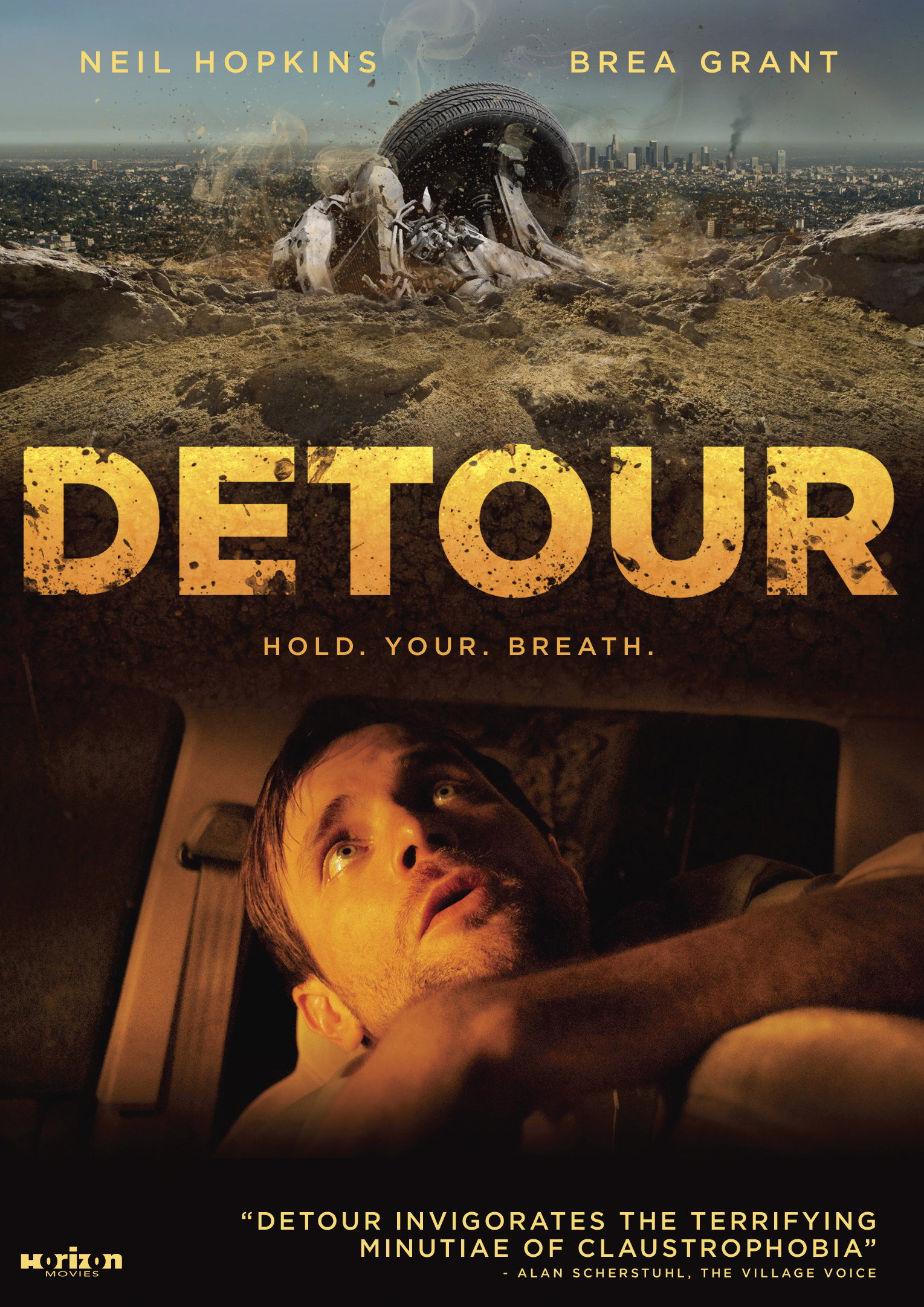
What the Film Is About
When I first watched “Detour,” I was instantly struck by how little it cared for the usual comforts of storytelling. There are no safety nets here, no reassuring sense that justice will prevail or that the world at large is guided by a benevolent logic. The film, at its core, is a relentless outcry against the delusion that we can control our destinies. From the outset, I was enveloped by its narrative haze: a man hitchhiking across America, swept up by circumstances that spiral far beyond his grasp. “Detour” isn’t interested in the journey so much as the pulverizing sense of helplessness that descends when fate puts its thumb on the scales against us. The film’s protagonist, Al Roberts, isn’t simply unlucky—he’s prey to an existential quicksand that pulls him under, no matter how valiantly or foolishly he flails.
What “Detour” is truly about, for me, is the terrifying idea that it takes only the smallest slip for life to pivot from hope to horror. It’s about the ease with which everyone is capable of making a bad decision when cornered and how, sometimes, remorse or contrition simply isn’t enough. I find myself returning to its central anguish again and again: that mixture of guilt, impotence, and the haunting suspicion that our choices might never have mattered at all. This film, more than most, refuses to let its characters—or us—off the hook.
Core Themes
As I unraveled “Detour,” I found its central theme to be the inexorability of fate. There is a hopelessness that clings to Al’s journey, and with every scene, I am confronted with the grim possibility that we can be both complicit and innocent—architects of our disaster yet powerless to change course. The film’s outlook is one of tragic determinism, where agency is but an illusion, and the world’s logic is as arbitrary as a roll of loaded dice. When I think about Al, I don’t see just an unlucky man; I see every person who’s ever felt the walls closing in, who’s chosen between two impossible options and found themselves condemned by both.
The theme of moral ambiguity reverberates throughout the film. Rarely have I seen a character oscillate so fluidly between victim and perpetrator, innocence and guilt. Al Roberts, to me, is the quintessential noir protagonist because he embodies the tragic futility of running from oneself. No matter how he tries to rationalize his actions, the consequences remain. I appreciate that the film never assures me whether Al is truly doomed by circumstance or by his own failings. Every line, every anxious explanation, seems like an echo in an empty room: we may explain ourselves endlessly, but who is listening?
There is another, more corrosive theme: the venomous role of chance. I’m haunted by how “Detour” strips bare the American myth of self-determination. In Al’s world, as in life, it’s not just hard work or virtue that decide our fate; it’s the random flick of a coin, the unexpected storm. The film confronts me with the uncomfortable realization that luck, for better or worse, is indifferent to merit or meaning.
Symbolism & Motifs
“Detour” works like a fever dream precisely because it is soaked in rich, discomfiting symbols. Every time I revisit it, I notice how its iconography tightens the noose around Al—and, by extension, around the viewer. The motif of the road stands out. The highways and byways, stretching blankly into the distance, encapsulate the false promise of escape. Supposedly open and boundless, the road in “Detour” is actually claustrophobic, a corridor narrowing in on fate. When Al hitchhikes, it feels less like freedom and more like surrender, his agency dissolving in the glare of headlights and the hum of tires on asphalt.
The motif of the telephone has always fascinated me. When a character in “Detour” picks up the receiver, it’s never to connect, to reconcile, or to save. Instead, it’s a harbinger of doom. I see each phone call as a thread tying Al further into the web of his own downfall—never to liberate, always to ensnare. It reminds me how, sometimes, the means we use to reach out only serve to draw the net tighter.
Add to this the persistent presence of rain and darkness. Noir uses weather like punctuation, and in “Detour”, the elements serve as metaphors for confusion and moral murk. I sense that every droplet of rain, every dip in the headlights, speaks to Al’s foggy state of mind. Nature itself seems complicit in setting the film’s tone of foreboding fatalism, making it feel as if the universe conspires in the unraveling of the protagonist.
Key Scenes
Key Scene 1
The first key scene that imprinted itself onto my mind is the accidental death of Charles Haskell. If there’s a single moment that encapsulates the film’s bleak philosophy, this is it. Al, trying to help an ailing stranger on the side of the road, inadvertently kills him—or at least, finds him dead. It is a perfect study in how responsibility can be thrust upon us without invitation, how catastrophe can erupt from our most mundane actions. I’m struck, even now, by the desperate calculus that follows: cover up the accident and flee, or face certain conviction. The world of “Detour” tolerates no easy exits.
This sequence is especially meaningful to me because of the way it blurs the line between fate and intent. I think about how chillingly easy it is for one life to be destroyed simply by being in the wrong place at the wrong time. It feels as if the entire universe, embodied in a single limp body on the road, has set a trap, and all Al can do is walk blindly into it.
Key Scene 2
The arrival of Vera is another watershed for me. When Al picks up the hitchhiking Vera, the film transforms from a tale of tragic luck into a fevered power struggle. Vera, for all her venom and cunning, strikes me as more than just a femme fatale. She is fate made flesh, a catalyst who drives Al further into disaster and, in many ways, a warped mirror of his own private guilt. Watching them together, I’ve always felt trapped between empathy and revulsion—their connection is a nightmare, blurring complicity and manipulation into an inseparable fog.
This scene reaches its disturbing zenith as Vera discovers Al’s secret. The flash of recognition, the tightening of her grip, was profoundly unsettling for me because it transforms Al’s inner fears into external threats. Every time I see her smirk, I am reminded that sometimes we face our worst selves, not in solitude, but reflected back at us by others who stand to profit from our degradation.
Key Scene 3
The hotel room confrontation, culminating in Vera’s tragic end, is a moment I find impossible to shake. Their relationship, fraught with suspicion and desperation, combusts in a scene that makes me question whether justice—or even truth—can possibly survive in this universe. When Vera dies, accidentally, during their heated struggle, it is not only the literal death of a character but the spiritual death of hope.
The way the film presents this, as neither melodrama nor moral lesson, chills me. Al is left with nothing but his own unraveling sanity and the certainty that escape is impossible. This scene, more than any other, cements the nihilistic core of “Detour”; no matter which path Al walks, it is lined with calamity. I can’t help but think, every time, about how easily our most feverish anxieties may come to pass—not due to evil intention, but through sheer, inescapable chance.
Common Interpretations
My ongoing engagement with “Detour” has exposed me to a tapestry of interpretations, many of which inform—and sometimes challenge—my understanding of it. For some, this film is a product of its era: a postwar reflection on male anxiety, economic dislocation, and the collapse of prewar certainties. I am especially interested in the argument that Al’s helplessness mirrors the malaise of post-Great Depression America, as though the country itself were staggering along a highway with no destination.
Others see “Detour” as a parable of guilt and confession. Al’s voiceover narration, fevered and pleading, could be read as a desperate exorcism—the criminal’s internal courtroom. I often ask myself whether Al’s account is even reliable. Is he rationalizing, bending the memory of events to win my sympathy, or is he genuinely desperate to be believed? This ambiguity unsettles me and makes every rewatch a new labyrinth of suspicion.
Yet perhaps the broadest interpretation is the film’s relationship to existentialism. “Detour” gives face to the idea that life is inherently chaotic, ungovernable by fairness, and that meaning must be salvaged, if at all, from the debris of what’s left behind. Watching the film is like witnessing a cosmic joke at humanity’s expense. I find appeal in the thought that Al’s torment is not uniquely his; it is the human condition, writ large beneath the flickering neon of mid-century America.
Films with Similar Themes
Tracing the thematic lineage of “Detour,” I find myself repeatedly drawn to other film noirs and existential dramas that echo its fatalistic pulse. “Double Indemnity” offers a similarly grim obsession with guilt and the irrevocability of bad choices. Both films wrap their protagonists in webs woven from desire and impulse, daring me to find sympathy even as I recoil from their decisions.
Another companion in spirit is “The Postman Always Rings Twice,” whose protagonists, too, tumble into misfortune through a mix of bad luck and worse judgment. The same bleak alchemy—chance, desire, regret—dominates its worldview. I can’t help but notice how these films, like “Detour,” strip away the patriotic luster of their era, exposing a world where the American Dream curdles into nightmare.
Movies of more recent vintage, such as “A Simple Plan” and “Blood Simple,” tap into the same anxieties. They force me to confront the terrifying ease with which disaster can unfold, the spiral of cover-ups and self-destruction, and the persistent, gnawing question: Am I ever truly in control?
I am convinced that “Detour” stands apart in its raw, merciless economy, but its themes radiate outward through decades of filmmaking. Every story of ordinary people pushed into extraordinary ruin, every narrative driven by chance and regret, bears the fingerprints of Ulmer’s haunted masterpiece. Each time I see another variation on this fatalistic melody, I’m reminded of my first, unforgettable encounter with “Detour.”
For more context before choosing your next film, these perspectives may help.
🎬 Check out today's best-selling movies on Amazon!
View Deals on Amazon