
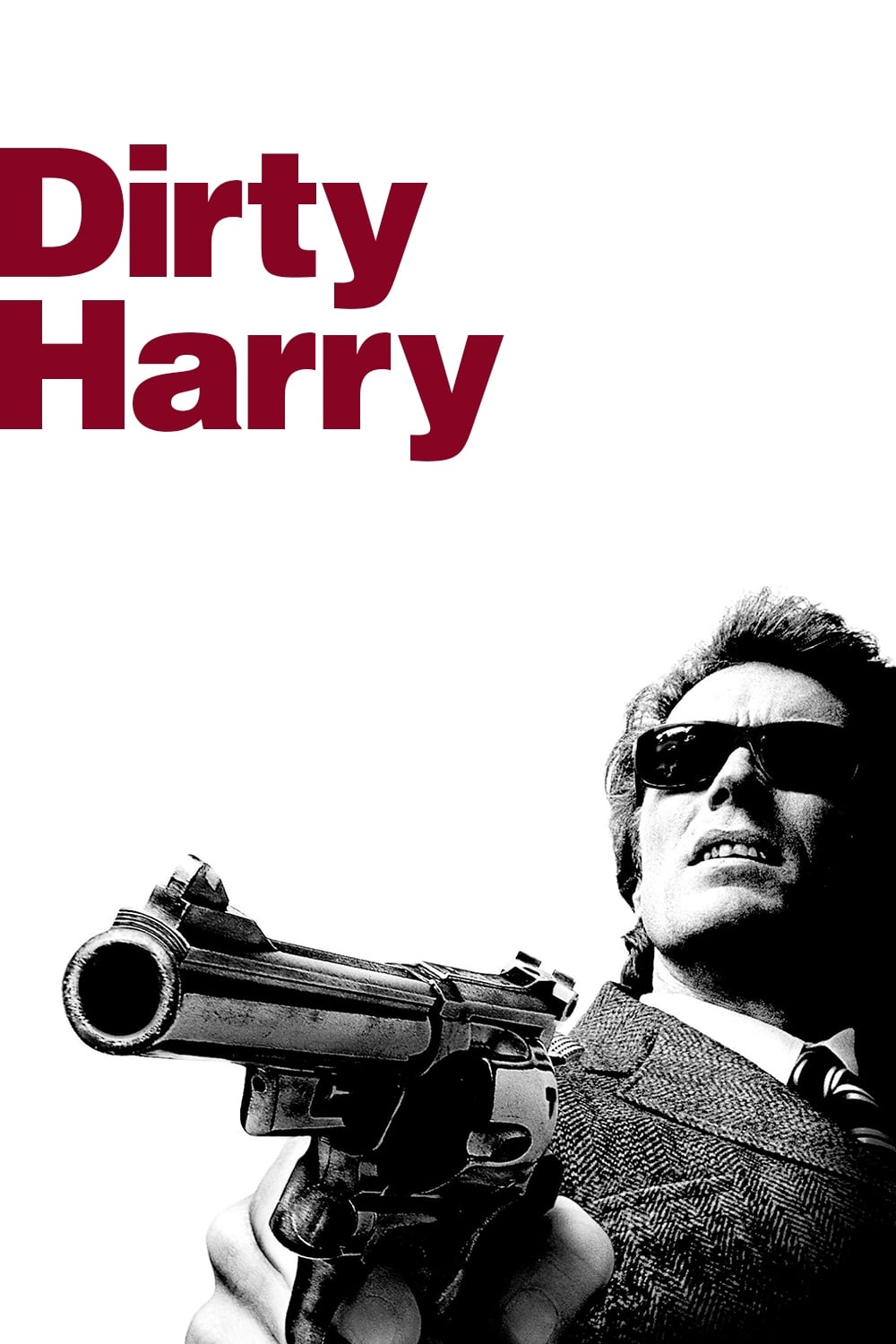
What the Film Is About
From the very first time I watched “Dirty Harry,” I found myself unsettled and provoked in ways few films have managed. Here I was, pulled into the streets of 1970s San Francisco, riding shotgun with Inspector Harry Callahan. The film, pulpy and iconic, hinges less on the procedural hunt for a serial killer than on how Harry confronts the boundaries between law, justice, and vigilantism. Rather than offering just another crime thriller, “Dirty Harry” demanded that I continually question whose rules society lives by—what justice means when institutions seem helpless or hamstrung. For me, it’s a raw, visceral excavation of the eternal tension between order and chaos, personal morality and public duty. I never walked away from this film with easy answers, only a restless interrogation of my own beliefs about right, wrong, and the spaces in between.
On the surface, the film is an action-driven cat-and-mouse tale—a police inspector hunting the deranged Scorpio killer through the fog and granite of a modern American city. But each rewatch for me uncovers a maze of anxieties lurking underneath: about power, decency, and the role of authority. Clint Eastwood’s Harry Callahan is not just a cop; he’s a totem of the era’s fraying trust in social structures and a challenge to my own comfort, surfacing questions of how much violence and compromise it really takes for the world to feel safe.
Core Themes
What strikes me most deeply about “Dirty Harry” is its unflinching probe into moral ambiguity. The film has haunted viewers for generations precisely because it won’t let us relax into familiar positions. The movie forces me to interrogate the foundations upon which I build my own sense of justice. Am I comforted by Harry’s certainty, or am I disturbed by his willingness to discard the rulebook? The tension here is profound, and it’s more deeply personal than many critics allow.
The primary thematic tension is between individual agency and institutional limitation. San Francisco’s cityscape, all corrosion and corrosion-resistant resolve, works as more than a backdrop. For me, it becomes a character—a city weary and battered, reflecting a community desperate for safety after the tumultuous 1960s. The law, meant to be impartial and universal, constantly collides with the messy, urgent reality that Harry faces. Time and again, I’m challenged to consider: When does adherence to process become an obstacle to justice? And if the law fails, who among us—if anyone—is equipped to take justice into our own hands?
I have always found the theme of power running through every exchange and bullet. Harry represents not just the arm of the law but its fist: unyielding, at times reckless, often unorthodox. The film understands the seductive appeal of this kind of certainty—especially during uncertain times. Watching the film through the lens of today’s conversations about police authority, I see new shades emerge. Harry doesn’t just mete out violence; he does so with a principled bravado that’s difficult to condone, but often just as difficult to condemn. “Dirty Harry,” for me, is never about advocating brutality—it’s about laying bare the psychic costs such choices demand of a person, and ultimately, of a society.
Violence and justice are not just themes but battlegrounds. I’m always left asking: is violence justified if it prevents greater horror? Does Harry’s refusal to cede ground to bureaucracy make him a hero, or a liability? The film resists closure here, which is, I think, its greatest strength. The meaning isn’t in the answers but in the way it makes me, personally, wrestle with the questions.
Symbolism & Motifs
My appreciation for “Dirty Harry” deepened when I began tracking how specific motifs and symbols repeat and evolve throughout the film. The .44 Magnum, for instance, looms over the story—not just as a weapon but as an extension of Harry’s very philosophy. To me, the gun is both a blunt and pointed instrument: it’s the tool Harry wields to cut through red tape, but it’s also a symbol of America’s conflicted relationship with power and lethal force. Each time the weapon appears, I’m reminded of the existential gamble involved in dispensing justice without hesitation.
The city of San Francisco itself is a living, breathing presence—a maze of high places and shadowed alleys, pristine vistas and grimy danger. By shooting mostly on location rather than on studio sets, the film grounds its anxieties in reality. I see the Golden Gate Bridge and the rooftops as markers of both aspiration and precariousness. The labyrinthine urban spaces amplify the threat of Scorpio but also the isolation of Harry, who stalks these streets as both predator and prey, a lone wolf trying to impose order on a disordered world.
The motif of surveillance and observation is also deeply embedded. I get the sense that in every scene, someone is watching or being watched—whether it’s the sniper’s target scope, the television coverage of the city’s terror, or Harry’s constant scanning of his surroundings. The film’s camera aligns me, uncomfortably, with Harry’s gaze, implicating me in the act of moral judgment. Surveillance here is both protection and violation; it’s about controlling chaos, but at enormous ethical cost.
Even the recurring threat of Scorpio, with his ciphers and coded messages, conjures images of the real-life Zodiac Killer. The threat transcends the individual and becomes symbolic of evil that cannot be reasoned with or legislated away—a persistent reminder of the limits of good intentions and the blind spots of bureaucracy.
Key Scenes
Key Scene 1
The legendary “Do you feel lucky?” scene stands out in my mind not just as a classic moment in cinema, but as an encapsulation of the film’s moral stakes. Here, Harry confronts a wounded bank robber and taunts him about whether his gun is still loaded. The scene is exhilarating and discomforting at once—Harry is in total command, but he’s also gambling with the value of human life. In this moment, I’m forced to confront what I really think about justice served at gunpoint. The improvised, heart-pounding dialogue doesn’t simply make for a quotable sequence; it lays bare the existential gamble at the heart of Harry’s approach. I’m always caught between admiring his composure and cringing at his recklessness. The scene functions like a thesis statement for the entire film’s argument about the costs of certainty when lives are on the line.
Key Scene 2
Another moment that continues to gnaw at me is the rooftop scene, where Harry, hunting Scorpio, transcends any pretense of procedure. The raw, almost animal violence as he catches up with his quarry leads directly into the deeply uncomfortable aftermath, where Harry is rebuked for violating the killer’s rights. I am always left with more questions than closure: What price do we pay, as a society and as individuals, for crossing lines that were meant to protect us all? Watching Harry shut down as his hard-won victory is undermined by the letter of the law, I feel the immense psychological burden carried by those who enforce justice in the real world. The rooftop becomes a battleground not only between cop and criminal, but between idealism and pragmatism, emotion and ethics.
Key Scene 3
Finally, the closing sequence, with Harry tossing his badge into the water, leaves a stain on my conscience. It’s neither triumphant nor redemptive, but rather a visual punctuation mark on the harrowing moral journey of the film. I interpret this act as Harry’s repudiation not of the law itself, but of a system that he feels forces good men to become what they abhor. In this image, I see resignation, protest, and exhaustion mingled in the same gesture. I often return to this image when pondering the ongoing debate over policing and power. That Harry feels compelled to discard his badge suggests that the line between the protector and the threat can vanish so easily, and the personal cost of walking that razor’s edge is devastating.
Common Interpretations
Across decades of discussion and debate, I’ve found “Dirty Harry” rarely leaves viewers indifferent. Some see the film as glorifying vigilante justice, propping up the myth of the righteous lone wolf who does what needs to be done when bureaucracy fails. Others interpret it through the lens of political reaction, reading the film as a backlash to the social upheaval of the 1960s and early 1970s, when urban crime and perceived permissiveness led to fears of social collapse. For me, both readings capture something of the cultural moment in which the film emerged—but both also seem incomplete.
My own interpretation hinges not on what Harry does, but on the corrosive effect his choices have—on his soul, and mine, as I watch. I think the film is more tragedy than triumph. It’s a lament for what is lost when individuals are driven to transcend the law in order to serve it. The story speaks to a profound yearning for order and safety, which I myself can recognize, but it also throws cold water on the idea that the ends ever fully justify the means. I see it as a deeply ambivalent work—a warning as much as an endorsement, a confession of the temptations of unchecked authority and the loneliness facing those who walk close to the limits of morality.
The character of Harry, for me, is effective precisely because he isn’t pure. He embodies a flawed but deeply human struggle, one that carries a heavy personal toll. The film’s ambiguous ending resists giving me closure; instead, it leaves me in a state of questioning, which is, I think, the point.
Films with Similar Themes
When I reflect on films that echo the themes of “Dirty Harry,” several instantly spring to mind. Martin Scorsese’s “Taxi Driver,” for example, explores the same landscape of individual morality buckling under the weight of a fractured social contract. In both films, protagonists are isolated by their convictions; both are shaped, and sometimes warped, by a world that resists easy answers. I often pair “Dirty Harry” with “Serpico,” where Frank Serpico must navigate a corrupt police force and decide whether integrity is even possible in such a compromised system.
“Death Wish” also comes to mind, investigating vigilantism but with a more explicit alignment with reactionary impulses. “L.A. Confidential” and “Heat” both return to the question of moral ambiguity within law enforcement, presenting damaged yet compelling figures forced to contend with what the world truly asks of them. Watching these films in dialogue with “Dirty Harry” helps me contextualize the 1970s as a cinematic era that constantly worried about boundaries, both personal and societal.
More recently, “Sicario” and “Prisoners” take up these themes anew, tracking the violence that erupts when systems fail and people step outside the boundaries, willingly or otherwise. I see in all these works not simple endorsements of vigilantism but urgent questions about the dignity—and danger—of taking the law into one’s own hands. Each time I revisit “Dirty Harry,” I find myself newly aware of how fragile the boundary is between justice and its opposite.
For more context before choosing your next film, these perspectives may help.
🎬 Check out today's best-selling movies on Amazon!
View Deals on Amazon