
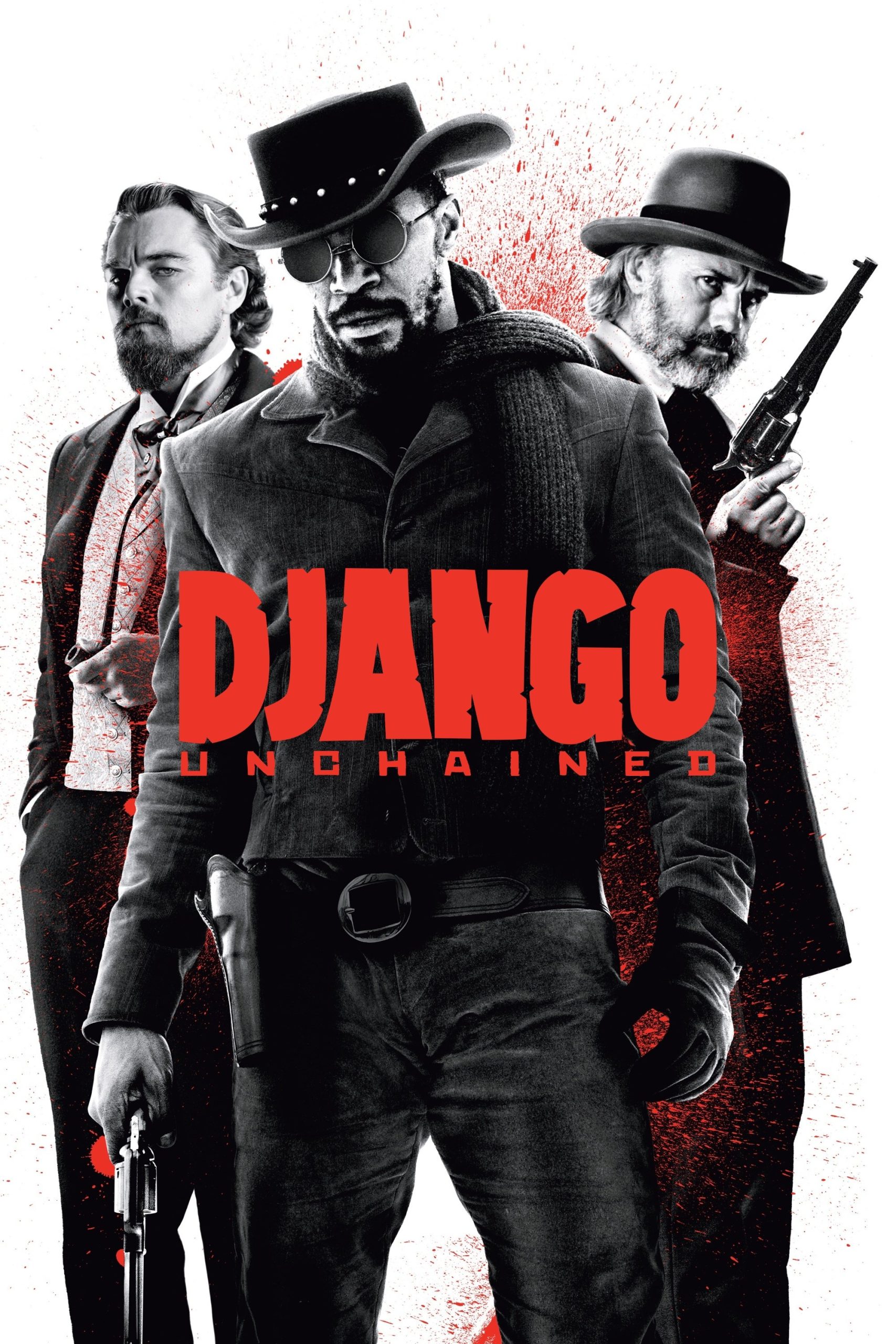
What the Film Is About
When I first watched “Django Unchained,” I didn’t simply view it as another Quentin Tarantino spectacle filled with vibrant genre-references and kinetic storytelling. More than anything, I felt a personal resonance seeping through its audacious, stylized rendering of antebellum America—a bold odyssey of a Black man’s quest through the depths of American cruelty to reclaim his wife and his dignity. The very premise felt like a reclamation not just for Django, but for the many voiceless figures who had their stories buried, distorted, or ignored in the tapestry of American cinema.
The film follows Django, an enslaved Black man who is freed by Dr. King Schultz, a German bounty hunter. Their partnership, rooted initially in necessity, evolves into an alliance forged by shared purpose. Together, they navigate the hostile, morally tumultuous South, facing plantation masters, brutal overseers, and the chillingly genteel Calvin Candie. At its heart, however, the film isn’t content to offer a straightforward tale of rescue. Rather, it radiates with an almost mythic, counterfactual energy. I found myself captivated by the way Tarantino used the trappings of the Western and the revenge saga to rewrite, challenge, and reimagine narratives historically sanitized or silenced by Hollywood.
Core Themes
As I reflected on “Django Unchained,” the overwhelming theme that leapt out at me was that of freedom—not simply as a motif, but as a profound interrogation. Django’s freedom isn’t given; it’s extracted through blood, negotiation, and subversive performance. The film resoundingly asks: What does freedom mean when the world is architected to deny you every aspect of it?
Throughout, I sensed a duality between vengeance and justice. Django and Schultz’s quest is fueled by necessity and righteous anger, but as the narrative widens, the line blurs; is Django simply seeking revenge, or is he taking back something stolen from him by centuries of cruelty? For me, the film becomes a meditation on agency and retribution in an environment obsessively structured to withhold humanity from Django and those like him. Rather than position Django as a passive recipient of history, Tarantino’s camera grants him the power of myth—the ability to define his terms, take his own risks, and shoulder the consequences of his choices. That alone felt revolutionary to me, given Hollywood’s historical treatment of Black characters in period pieces.
Another theme that lingered was the spectacle of violence. While Tarantino’s work often dances on the edge of self-awareness regarding violence, here I felt it stood for something deeper: a cathartic, symbolic undoing of a sanitized narrative. The brutality is raw and, at times, horrifying, yet there exists an undercurrent of poetic justice—particularly when Django turns the tools of his oppressors against them. For me, this reverses the power dynamic endemic to both the Western and the slave narrative, shaking up a landscape where, for too long, the oppressed have rarely been allowed to mete out retribution on their own terms.
The role of performance—both dramatic and literal—also pervaded my reading of the film. Characters consistently wear false faces, from Schultz’s cultivated civility to Django’s feigned obedience to survive. In the antebellum South, mastery of performance could mean life or death, and Tarantino uses this idea to interrogate the very nature of power, personhood, and agency. When I think about Django navigating white-supremacist violence with a deft blend of humility and subterfuge, I see a complex negotiation of identity, selfhood, and dignity that resists reduction to vengeance alone.
Symbolism & Motifs
Something that has always struck me about “Django Unchained” is its dense lattice of symbols and recurring motifs, each lovingly crafted to resonate beyond surface-level entertainment. The film’s use of chains and shackles is both literal and metaphorical, recurring throughout the story as markers of bondage and humiliation, but also as reminders of resistance and breaking free.
The presence of horses serves as a dual symbol: freedom and prestige on the one hand, but also the class stratification and violence embedded in the Old South on the other. Seeing Django ride a horse, clad in fine attire, silhouetted in the Southern sun, filled me with a sense of possibility—a quietly radical emblem of dignity and autonomy in a world built to deny him both.
The mask, both actual and symbolic, emerges frequently. The bag-headed raiders parody the Klan while highlighting the cowardice underlying their ideology. But so, too, do the masks of civility worn by characters like Calvin Candie and Stephen, whose genteel exteriors mask malevolence and calculated self-interest. It is in the spaces between façade and reality that Tarantino explores how race, status, and violence entwine. For me, this motif underscores how, in brutal systems, survival often depends on performance and disguise—an idea that is all too relevant in histories of oppression.
German folklore subtly infuses the narrative as well, anchored in Schultz’s references to the legend of Siegfried and Broomhilda. I see this as a vehicle to give Django’s journey a mythological veneer, re-inscribing his rescue of Broomhilda as a valiant quest worthy of epic poetry. In the context of America’s history, it feels subversive—reframing the African-American protagonist not as victim or background character, but as the hero whose story is worth being sung.
Key Scenes
Key Scene 1
One of the scenes that has burned itself into my memory is the elegant, wintry sequence in which Schultz frees Django from his shackles and offers him partnership. Unfolding under stark, moonlit trees, this moment expands gently, underscoring the tentative trust between the two men. What I found extraordinary was its quietness—nothing bombastic, just a deliberate, careful acknowledgment of Django’s humanity. To me, it’s the first instance where Django is invited to participate not as property, but as a moral equal.
Within this scene, I sense a profound shift: Django is no longer just surviving, he’s beginning to imagine. The gift of the horse, the opportunity to choose his own clothing, even the basic joy of conversation—all become symbols of earned autonomy. It is these small ruptures in the routines of oppression that seem to accumulate through the film, suggesting to me that freedom is a process, often constructed in moments of shared choice rather than dramatic spectacle.
Key Scene 2
The dinner sequence at Calvin Candie’s sprawling plantation, Candyland, consistently unsettles me—not simply for its verbal dueling, but for the way it vibrates with suppressed violence. What is vividly apparent to me is the way Tarantino turns the genteel trappings of hospitality into a theater of psychological warfare. The air is thick with performance: Candie displays erudition and charm, masking an undercurrent of sadism; Stephen, the house slave, orchestrates suspicion with sly power plays; and Django and Schultz navigate the space with brittle poise, leveraging subterfuge for survival.
The infamous moment when Candie forces Schultz to inspect a slave’s skull, pontificating on alleged racial science, felt especially grotesque to me. The scene weaponizes the trappings of enlightenment and civilization, exposing the rot at the core of slaveholding society. I found myself reflecting on how easily the elegant veneer of the South could be mobilized in service of dehumanization, as well as how Tarantino refuses to let viewers rest comfortably in the aesthetics of the period. Here, civility is a weapon, and every word exchanged at that table becomes an existential gambit.
Key Scene 3
The crescendo of violence that marks the film’s climax—Django’s return to Candyland, now completely in control—struck me as both cathartic and deeply unsettling. Django dispatches his adversaries with almost mythical prowess, embodying the spaghetti Western archetype in Black skin. This is more than spectacle; for me, it’s a radical usurpation of the genre script. The Black avenger, denied agency and justice in so many Hollywood Westerns, finally claims the center of the stage. Yet, even amid the euphoria of revenge, there exists a prickly awareness that violence doesn’t fully heal trauma or right the original wrongs. The emotional aftermath remains—and I find the film’s refusal to neatly resolve this tension to be one of its most honest choices.
Moreover, Django’s refusal to let Stephen escape retribution crystallizes the complexity of betrayal and complicity within systems of oppression. There’s no tidy morality here, and I’m left pondering how the legacies of both resistance and accommodation reverberate over generations. In the end, Django rides out not into a sanitized future, but with the knowledge that the world he’s vanquished is only a piece of a much vaster history.
Common Interpretations
In the conversations I’ve encountered and the criticism I’ve read, “Django Unchained” is often approached through several interpretive lenses, each foregrounding different anxieties and aspirations.
- One prevailing interpretation sees it as a cathartic fantasy: a rewriting of the “slavery Western” that finally grants its Black hero vengeance, dignity, and narrative centrality. I sometimes feel exhilarated by this reading—it recognizes the need for cultural correction in a genre defined by omission and distortion.
- Others view the film as an explosive metacommentary on America’s failure to fully reckon with slavery’s legacy. In this sense, the film’s excesses—the violence, the language, the stylization—are not gratuitous, but necessary affronts. When I hear these arguments, I sense a desire for cinema to shock, provoke, and keep history uncomfortably alive.
- Some critique Tarantino’s approach as exploitative or reductionist, noting that the director—a white filmmaker—traffics in genre pastiche and shock in ways that risk trivializing suffering for the sake of entertainment. I wrestle with this perspective, especially when considering how trauma and comedy intermingle in the film’s most memorable moments. The friction, for me, is part of the dialogue the film demands: Who owns the right to tell these stories, and on what terms?
- Finally, “Django Unchained” is sometimes read as an act of myth-making—inscribing an anti-slavery superhero into the Western canon and, by extension, offering an alternate genealogy for the American cinema itself. I often return to this viewpoint when I consider how the film refuses to reduce Django to a victim. Instead, he emerges as a symbol of survival, adaptability, and hope, even when the facts of history insist otherwise.
Films with Similar Themes
As I reflect on other works that resonate with the thematic threads of “Django Unchained,” several films come to mind—each interrogating history, representation, and retributive fantasy in their own distinct ways.
- “Blazing Saddles” (1974): While primarily broad satire, this Mel Brooks classic lampoons the racism of the Western genre with sharp, subversive wit. Like “Django,” it acknowledges the erasure of Black characters in Westerns and gleefully upends established tropes.
- “12 Years a Slave” (2013): Steve McQueen’s searing adaptation eschews stylization in favor of stark realism, delving into the dehumanizing machinery of slavery. Watching both films in proximity, I am struck by their differing tactics—one mythic, the other documentarian—in grappling with similar historical horrors.
- “Mandingo” (1975): This film, often dismissed as exploitation, actually anticipates some of the excess and provocation that Tarantino deploys. Both use melodrama and grotesquerie to unsettle viewers and unmask the anxieties at the heart of slavery narratives.
- “Glory” (1989): Chronicling the Union’s first all-Black volunteer company during the Civil War, “Glory” explores themes of dignity, violence, and sacrifice in the face of systemic racism. Although less fantastical than “Django,” its focus on agency and self-emancipation feels thematically resonant to me.
- “Inglourious Basterds” (2009): Another Tarantino work, this film offers a revisionist revenge fantasy aimed at the horrors of Nazi Germany. The kinship between the two films lies in their shared willingness to rewrite history in ways that foreground the agency of the marginalized and the power of narrative catharsis.
Reflecting on these films, I recognize that “Django Unchained” occupies a complicated but essential space—equal parts provocation, revision, and plea for deeper engagement with the wounds of history.
For more context before choosing your next film, these perspectives may help.
🎬 Check out today's best-selling movies on Amazon!
View Deals on Amazon