
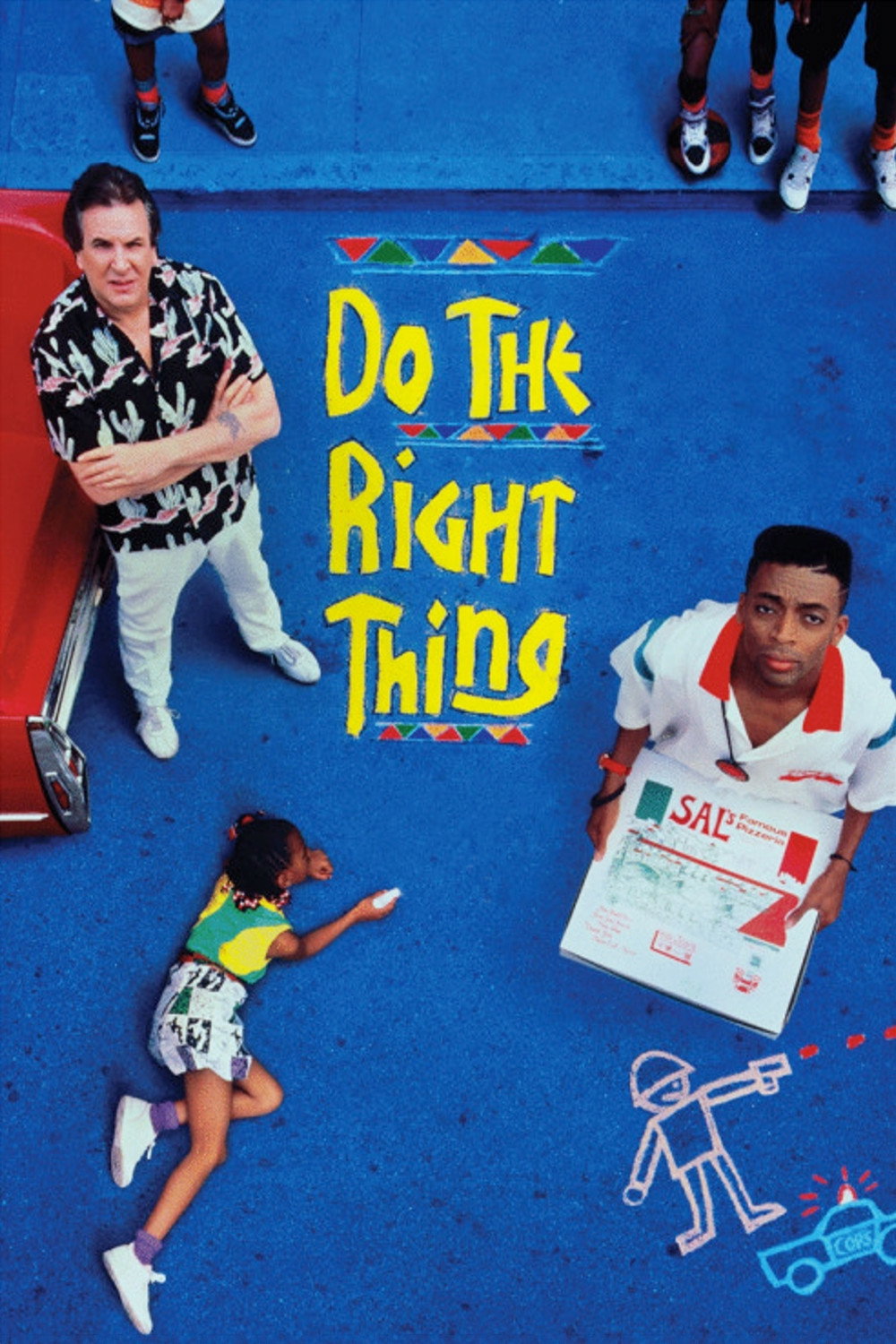
What the Film Is About
When I reflect on “Do the Right Thing,” Spike Lee’s searing 1989 drama, I’m always pulled first not to plot, but to an almost physical recollection: the sensation of oppressive heat. Before characters collide or the streets of Bed-Stuy erupt, the film envelops me in a kind of sticky intensity—an emotional and intellectual temperature that rises with every frame. On a surface level, the story focuses on one sweltering day in the life of a Brooklyn neighborhood as its residents move, clash, and try to live with each other. There’s Sal’s Famous Pizzeria, where Mookie (played by Lee) delivers pizzas while bouncing between loyalties. But what the film is truly about, at least for me, runs much deeper. It’s an exploration of community frictions, entrenched racism, love, pride, and—above all—the near impossibility of defining what it means to “do the right thing” under pressure.
For years, I struggled to wrap my head around moral clarity, especially when tempers flare and tradition weighs heavy. Watching this film, I felt as if the characters’ choices pressed questions against my own skin: Where do I draw my lines? Whose stories am I not hearing? How do small daily actions build up—a verbal jab, a microaggression, a half-hearted apology—until, finally, they combust? “Do the Right Thing” doesn’t offer easy answers. Instead, it demands that I, and all of us, sit uncomfortably with tension and contradiction. That’s what pulls me back to it again and again.
Core Themes
To examine the film’s themes is to interrogate the roots of American life: racism that simmers under the surface, community bonds that strain and snap, and the uncertain boundaries between justice and vengeance. For me, the heat isn’t just meteorological; it’s the temperature of smoldering resentments and unseen history. The film positions its characters, especially Mookie, at crossroads that mirror so many real-world divides—between personal loyalty and collective struggle, between legality and morality, between outrage and restraint. The ambient pressure pushes me as a viewer to wonder what I would do, were I living in that block, that summer.
The tension between violence and nonviolence is a current beneath every action. The film closes with two quotes—one from Martin Luther King, Jr. and one from Malcolm X—that punctuate the question, but refuse to resolve it. Throughout, I see people striving to be seen: Buggin’ Out wanting Black heroes on Sal’s wall, Radio Raheem’s boombox as both shield and voice, Sal himself clinging to traditions he believes in. The drive for recognition—too often denied by society—creates friction that demands expression. No single perspective is valorized or easily condemned. That refusal to assign clear labels is what, for me, gives the film its enduring urgency. It mirrors the messiness of actual life; it refuses to let anyone off the hook, not the characters and certainly not the audience.
The community in “Do the Right Thing” is not simplistic or monolithic. There’s tenderness—between Da Mayor and Mother Sister, Mookie and his son, even between Sal and his son Pino, whose bigotry clashes with his father’s complicated affections. Yet these connections are always under threat, as old grievances fester and new wounds open. What I find especially powerful is how the film doesn’t treat racism as solely individual animus. It is a structure, a habit, a collection of cumulative injuries—some done by words, some by silence or inaction. Each interaction builds on the next, setting the stage for collective tragedy or, perhaps, the possibility of healing.
Symbolism & Motifs
When I revisit “Do the Right Thing,” I’m always struck by how much meaning Lee packs into visual and sonic details. The film’s color scheme—sun-drenched reds, yellows, and oranges—does more than evoke heat. It suggests anger, warning, even impending rupture. The physical walls of Sal’s Pizzeria, and the controversy over the Wall of Fame, become stand-ins for social and psychological barriers. Buggin’ Out’s protest isn’t just about photographs; it’s about cultural erasure, historical reckoning, and the right to belong.
Radio Raheem’s boombox is another laden symbol. The sound is omnipresent, blasting Public Enemy’s “Fight the Power,” undeterred by disapproval. In my own experience, music has sometimes let me shield myself or declare allegiance, and here, it signifies defiance and, ultimately, vulnerability. Radio Raheem’s brass rings, etched with “Love” and “Hate,” allude directly to the ongoing battle within every human soul. His retelling of the classic sermon on these dual forces is delivered like a street epic, a miniature cosmos of American struggle distilled onto two fists.
Heat itself is a motif bordering on character status. During my own worst arguments or moments of social anxiety, I’ve felt my body temperature rise involuntarily. In the film, the weather escalates tension; its omnipresence is a reminder that tempers naturally flare under pressure, that empathy becomes harder to access when discomfort reigns. Other motifs—the omniscient trio of old-timers on the corner, the ice-cold water that fails to cool the community, even Mookie’s pizza deliveries—tie the web of connections ever tighter, building toward the film’s devastating climax.
Key Scenes
Key Scene 1
One scene I dwell on every time is Buggin’ Out’s confrontation with Sal over the Wall of Fame. This isn’t just a squabble about decor. For me, Buggin’ Out’s insistence brings sharp focus to the pain of not seeing yourself reflected—or respected—in institutions that claim to serve you. Growing up, I recall walking into spaces where I was subtly or overtly out of place, my story missing from the photos and memorabilia. The Wall, then, becomes a battleground for representation. Sal’s attachment to his tradition feels human, but Buggin’ Out’s frustration is equally valid. The clash is less about Italian or Black pride than it is about who gets to define belonging, and who gets to voice grievance within a community-in-the-making. Their inability to find common ground throws into relief how easily needles of exclusion can escalate into outright conflict.
Key Scene 2
Another scene that never loosens its grip on me is Radio Raheem’s monologue about “Love and Hate.” He holds up his fists and recounts the story of a battle as ancient as humanity itself. The storytelling is hypnotic, urgent; the camera lingers, compelling me to confront the bitter dialectic not only in the city streets, but in myself. For years after my first viewing, I would recall that speech whenever I found myself on the edge—of action, of cruelty, of forgiveness. Raheem’s philosophy isn’t simple optimism or resignation. Instead, it’s a recognition that both forces, love and hate, are ever-present, locked in tension not only in grand historical moments but in each small decision I make throughout any given day. Choosing love is, the film suggests, neither automatic nor easy; it’s a struggle that must be waged again and again.
Key Scene 3
The eruption of violence outside the pizzeria—the film’s harrowing climax—is another moment I return to in contemplation. Mookie’s decision to hurl the trash can through Sal’s window remains one of the most debated acts in American film. When I watch it, I feel the accumulated pressure of pettiness, bigotry, and silence shatter alongside the glass. Was it an act of principle? Of self-preservation? Of desperation? The ambiguity is what devastates me and lingers after the credits roll. In my own life, I’ve wondered what moment might push someone, anyone, past the breaking point. Lee refuses to judge; instead, he asks us to look hard at the world that created these conditions. Was Mookie’s act the culmination of an impossibly tense situation that needed relief? Was it a diversion to deflect the crowd’s rage from Sal and his sons? Every interpretation is both plausible and incomplete. The aftermath, full of grief, anger, regret, and paradoxical tenderness (Sal and Mookie’s quiet exchange of money), forces me to recognize that no single gesture can erase history or mend all wounds. But to do nothing would also have been a choice, one fraught with its own consequences.
Common Interpretations
I’ve spent countless hours wrestling with the film’s open-endedness, both alone and in conversation. Among critics and friends, there’s debate: Was Mookie doing the “right thing,” as the title instructs? Some read his act as pure rebellion—catalyzing the community’s outrage into property destruction rather than further loss of life. Others see it as senseless violence, a pointless escalation. I lean toward ambiguity. Like life, the film refuses to designate clean heroes or irredeemable villains. Sal, despite his affection for Black customers, cannot see his own prejudices. Mookie, despite his attachment to Sal, ultimately sides with his community at a decisive moment. The film asks more questions than it answers: Can any single act constitute justice? When does anger serve, and when does it consume? Even the closing quotations—one advocating nonviolence, the other justifying self-defense—act as intellectual bookends, offering context, but not conclusion.
Some interpretations focus on the generational divides: how younger characters’ frustration with the status quo (represented by Sal, the police, and even Da Mayor) mirrors broader societal impatience with half-measures and incremental change. Others argue the film is more interested in the structure of racism than the flaws of individuals. This emphasis on systemic roots is meaningful to me, because it aligns with how I’ve learned to see history—not as a procession of isolated incidents, but as the lived outgrowth of rules, customs, and power. The film, in this light, becomes both a warning and a lament: unless those structures change, the same cycle will forever repeat, summer after summer.
Films with Similar Themes
Part of what I value most about watching and reflecting on “Do the Right Thing” is tracking its echoes in other films. Lee himself would go on to explore community unrest and unresolved trauma in works like “Clockers” and “Jungle Fever.” But he is hardly alone. Whenever I watch John Singleton’s “Boyz n the Hood,” I’m struck by its portrait of young Black men navigating the minefields of racism and violence, struggling to define themselves amid overwhelming pressures. The raw energy and layered outrage of Lee’s film also live in Matthieu Kassovitz’s “La Haine,” which transposes similar questions about police brutality and urban alienation to the housing blocks of Paris. Like Lee, Kassovitz employs a ticking clock, mounting tension, and an ambiguous finale to force the audience into confrontation with its own expectations.
Other American titles—”Fruitvale Station,” “Blindspotting,” “Crash”—explore community divides, sudden violence, and the complexity of choosing how to respond to injustice. Even earlier, Sidney Lumet’s “12 Angry Men” (1957) gave me a window into the difficulties of finding consensus in the face of deep-seated prejudice, albeit in the confined space of a jury room rather than the sun-bleached Brooklyn pavement. I also think of classic Italian neorealism, with its insistence on the dignity and struggle of ordinary people: “Bicycle Thieves” may seem far from Bed-Stuy, but its portrait of daily frustration, invisible barriers, and moral ambiguity resonates across context and culture.
What unites these films, for me, is not just their political awareness but their formal boldness and refusal to offer false comfort. Watching “Do the Right Thing” always reminds me that art’s highest achievement might be to leave us unsettled—not numbed or vindicated, but restored to the discomfort that underlies real change. In an age desperate for certainty, Lee’s unwillingness to grant it feels radical, even now.
If you’re deciding what to watch next, you might also want to see how this film holds up today or how it was originally received.
🎬 Check out today's best-selling movies on Amazon!
View Deals on Amazon