
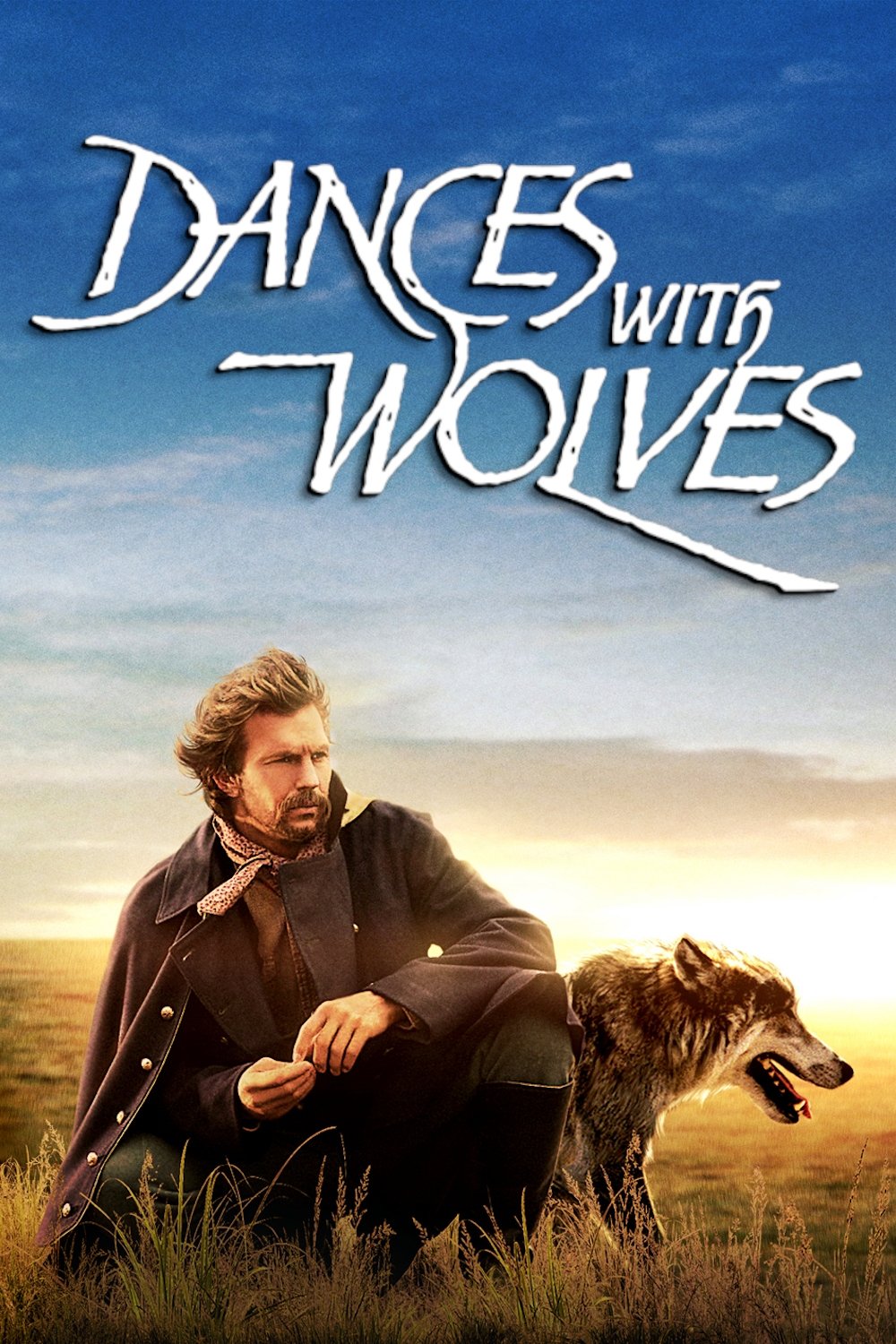
Sitting in the hush of a late-night screening, I found myself absorbed in “Dances with Wolves” in an almost meditative way. Somehow, the film does not just invite me into a story but immerses me in a sensory and emotional journey where boundaries—between cultures, languages, and even individual identities—begin to blur. It is neither nostalgia nor mere admiration for a cinematic spectacle that makes “Dances with Wolves” linger in my mind. Rather, it is how the film interrogates the nature of belonging, the ache of displacement, and the possibility of redemption through understanding. What I witness is not simply a Western epic, but a film grappling with the very roots of coexistence, empathy, and cultural transformation. From the first frame to the last echo of a distant drum, the film demands that I confront my own presuppositions about self and other, civilization and wilderness, the observer and the observed.
What the Film Is About
At its surface, “Dances with Wolves” traces the odyssey of Union Army lieutenant John Dunbar, played by Kevin Costner, as he leaves behind the turbulence of the American Civil War and ventures into what was then called the Western frontier. While one might expect a straightforward tale of adventure or man versus wilderness, I see the film as a confrontation with the concept of otherness. Dunbar’s transformation—from a man steeped in the solitary, regimented world of a soldier, to a figure entwined in the communal rhythms of the Lakota Sioux—serves as an emblematic axis for exploring how identity can shift in the presence of empathy and shared experience. His interactions are not mere plot mechanics, but invitations for the viewer—including myself—to reconsider assumptions about the richness and vulnerability of human connection across boundaries. Every scene challenges, “What does it mean to truly see and be seen by those who are different?”
The grandeur of the Western landscape—vast, untamed, and often intimidating—mirrors the film’s deeper exploration of the unknown within every individual. For me, watching Dunbar’s journey is less about witnessing historical events and more about feeling the humbling realization: we are always, in some way, crossing into unfamiliar territory. The film gives weight to the psychological frontier as much as the physical one, and in doing so, asks me to reflect on my own personal journeys into unfamiliar cultures, ideologies, or ways of being. Here, “Dances with Wolves” becomes less a saga about a man conquering land, and more a tale about a man’s surrender to it, and to the people who call it home.
Core Themes
My experience of “Dances with Wolves” is shaped primarily by its exploration of deep, resonant themes that extend far beyond any single historical moment. Above all, the film wrestles with the meaning of identity—how it’s constructed, threatened, and redefined in contact with the unknown. Watching Dunbar shift from an isolated soldier to a valued member of the Lakota community, I am reminded that identity is not a fixed artifact, but a living, mutable thing.
Another theme that stands out in sharp relief is empathy as a force for transformation. The genuine connections formed between Dunbar and the Lakota are not the result of quick assimilation, but of patient, deliberate listening and collaborative ritual. It’s a patient process, depicted with a care that signals the slow building of trust—one that I believe is a striking response to the rapid, often reckless progress of colonization. In this way, the film is both an elegy for a vanishing way of life and a subtle indictment of the violence, misunderstanding, and dehumanization underpinning Manifest Destiny.
Loss and displacement reverberate through nearly every scene, a haunting reminder of the fates awaiting so many indigenous peoples throughout American history. Yet, what I find profoundly moving is the film’s refusal to traffic in easy cynicism or nostalgia. Instead, it sits comfortably with ambiguity—offering moments of hope enmeshed with regret, connection laced with irrevocable loss. I am compelled to ask: how does one grieve for a world slipping away, even as new bonds, with all their fragility, are being forged?
Finally, “Dances with Wolves” confronts the viewer with the challenge and possibility of mutual respect—the awareness that to truly see the other is to risk being changed oneself. It is a lesson about humility, about crossing the boundaries of language and custom, and about the radical act of letting oneself be touched by those once considered alien.
Symbolism & Motifs
Much of the film’s emotional intensity is carried not through dialogue, but through its evocative use of symbolism and motif. The recurring presence of the wolf itself, for example, is more than just a totemic animal or a familiar from the wilderness. To my eyes, the wolf is a metaphor for otherness: wary, hunted and yet capable of trust. Dunbar’s relationship with the wolf, which the Lakota name “Two Socks,” is a counterpoint to his evolving relationship with the Sioux. Both interactions are quiet, attentive, and marked by mutual curiosity rather than imperial domination. When the wolf appears, it is as if the boundaries between civilization and wildness are momentarily erased, and something new—a hybrid form—emerges.
The open prairie, endless and wind-swept, operates as yet another powerful symbol. Here, the landscape ceases to be an empty backdrop; instead, it is an active character that both separates and binds people. The vastness is not simply emptiness but a shared space—one that demands humility and adaptability. As I watch Dunbar setting up his solitary outpost, what strikes me most is how the prairie initially accentuates his loneliness but later becomes the site of communion and transformation.
The ritual of naming recurs as a delicate motif. Names are not static but earned, bestowed, sometimes even changed to mark new phases of life. Dunbar’s rechristening as “Dances with Wolves” by the tribe is a symbolic act of acceptance, but also a poignant reminder of his liminality—he is no longer quite “John Dunbar,” and not quite fully Lakota either. Naming, in this sense, becomes a map of identity’s continual evolution. Each repetition or bestowal of a name marks the shifting terrain between self and community, past and present.
Language itself operates as both motif and barrier. The slow, painstaking acquisition of each other’s words by Dunbar and the Lakota marks, for me, the importance of patience, respect, and the willingness to unlearn what one thinks is fundamental. The film’s frequent, nearly wordless scenes become lessons in the eloquence of silence and the power of gestures over speech—reminding me how often real understanding is achieved in pauses, not pronouncements.
Key Scenes
Key Scene 1
The encounter at the buffalo hunt remains one of my most visceral memories from “Dances with Wolves”. The sequence is a whirlwind of movement and sound, but what resonates most for me is not the spectacle, but its communal spirit. There’s an almost palpable sense of shared purpose—a coordination that emerges from mutual respect. Dunbar is drawn in, swept up not as a hero or outsider but as a participant. The buffalo, for their part, are not faceless quarry, but majestic, almost sacred beings. The hunt is both necessity and ritual, echoing ancient cycles of life and death, and in that moment, Dunbar’s transition from soldier to community member seems complete. The scene’s energy and choreography serve as a vivid metaphor for what it means to belong—to take part in something larger than oneself, governed by mutual dependence and care.
Key Scene 2
I am continually struck by the quiet gravity in the scene where Dunbar finds Stands With A Fist mourning by the river. Unlike more dramatic or overtly cinematic sequences, this moment is defined by stillness and vulnerability. The pain on her face, the silence between them, and the tentative reaching out across language and loss—all these elements converge to reveal how humans, stripped of pretense or pride, seek connection at their most fragile. As an observer, I am reminded of the limits of words, and of empathy’s profound, sometimes wordless, impact. This scene encapsulates, for me, the emotional core of the film: that healing and trust are forged slowly, in the everyday rituals of grieving together, listening, and waiting by the water as pain quietly subsides.
Key Scene 3
The final exchange between Dunbar and Wind In His Hair is, for me, the film’s emotional apex. Standing atop the ridge, Wind In His Hair calls to Dunbar with a voice that wavers between defiance and sorrow. “Dances with Wolves! I am Wind In His Hair. Do you see that I am your friend?” These words break through the boundaries imposed by language, distance, and fate, crystallizing all the losses and affirmations the narrative has assembled. It is a moment of irreversible change; nothing can restore what was lost, but the bond endures. I am moved by its raw honesty: friendship, once forged, is both blessing and wound—a reminder of connection and the pain of separation. This scene, more than any other, encapsulates for me the bittersweet legacy of all cross-cultural encounters.
Common Interpretations
Much has been written about “Dances with Wolves” and its reception. For some, the film is an earnest meditation on the destructive impact of westward expansion—an indictment of the purportedly civilizing mission that underpinned 19th-century American policy toward indigenous peoples. In academic circles, I’ve noticed ongoing debates about whether the film ultimately subverts or reinforces the “white savior” trope. Some critics read Dunbar’s journey as yet another instance where a white protagonist becomes the vehicle for audiences to access non-Western worlds, while the indigenous characters remain secondary. Others argue that, despite structural limitations, the film grants genuine complexity and agency to its Lakota characters, especially through its use of the Lakota language and efforts at cultural authenticity.
Personally, I see “Dances with Wolves” as a film balancing self-examination with a desire to pay tribute. Its legacy is tangled; it cannot fully escape the perspective of its protagonist, but neither does it shy away from the brutal realities facing both the land and its original inhabitants. For viewers like me, who approach the film decades after its initial release, the unanswered questions may be the most vital: Can true empathy undo the damage of conquest? Where does solidarity end and appropriation begin? These tensions are never resolved, but hover, unresolved, at the edges of every frame.
Further interpretations frame the film as a parable of environmental consciousness, seeing in its reverent portrayal of the land a call for stewardship and humility. Others locate its relevance in its treatment of trauma—the war-haunted Dunbar and the grieving Stands With a Fist, survivors who remake themselves through love, adaptation, and mutual respect. These readings suggest the film’s power lies in its capacity to serve as a mirror: what each viewer finds within it is as much a product of their own historical moment as of Costner’s cinematic vision.
Films with Similar Themes
Reflecting on the broader cinematic landscape, I am reminded of other films that probe the boundaries between self and other, colonizer and colonized. “The Last Samurai” (2003) offers another meditation on cultural immersion and the transformative potential of cross-cultural friendship, though it, too, is burdened by the expectations of the Western gaze. “Avatar” (2009) echoes many of “Dances with Wolves”’s themes, transposing them into a science fiction context where issues of ecological stewardship, cultural displacement, and hybrid identity are foregrounded against a backdrop of space-age colonialism.
On a more intimate scale, “Atanarjuat: The Fast Runner” (2001) provides an indigenous perspective on survival, tradition, and the costs and benefits of change, demonstrating how stories of convergence and divergence are not the sole province of any one culture. “Little Big Man” (1970) predates “Dances with Wolves” and similarly interrogates the Western mythos, though through a more satirical and fragmented lens. Each of these films, in their own way, interrogate the price and possibilities of seeing and being seen by the other.
Closer to the heart of the American story, Terrence Malick’s “The New World” (2005) offers, with poetic restraint, an account of first encounters between Europeans and Native Americans, developing a parallel meditation on identity, language, and the echoing promise and devastation of new worlds meeting. What these films share—with “Dances with Wolves” and with each other—is the understanding that cultural encounters are always fraught, beautiful, and transformative, sometimes in ways we cannot fully predict or control.
If you’re deciding what to watch next, you might also want to see how this film holds up today or how it was originally received.
🎬 Check out today's best-selling movies on Amazon!
View Deals on Amazon