
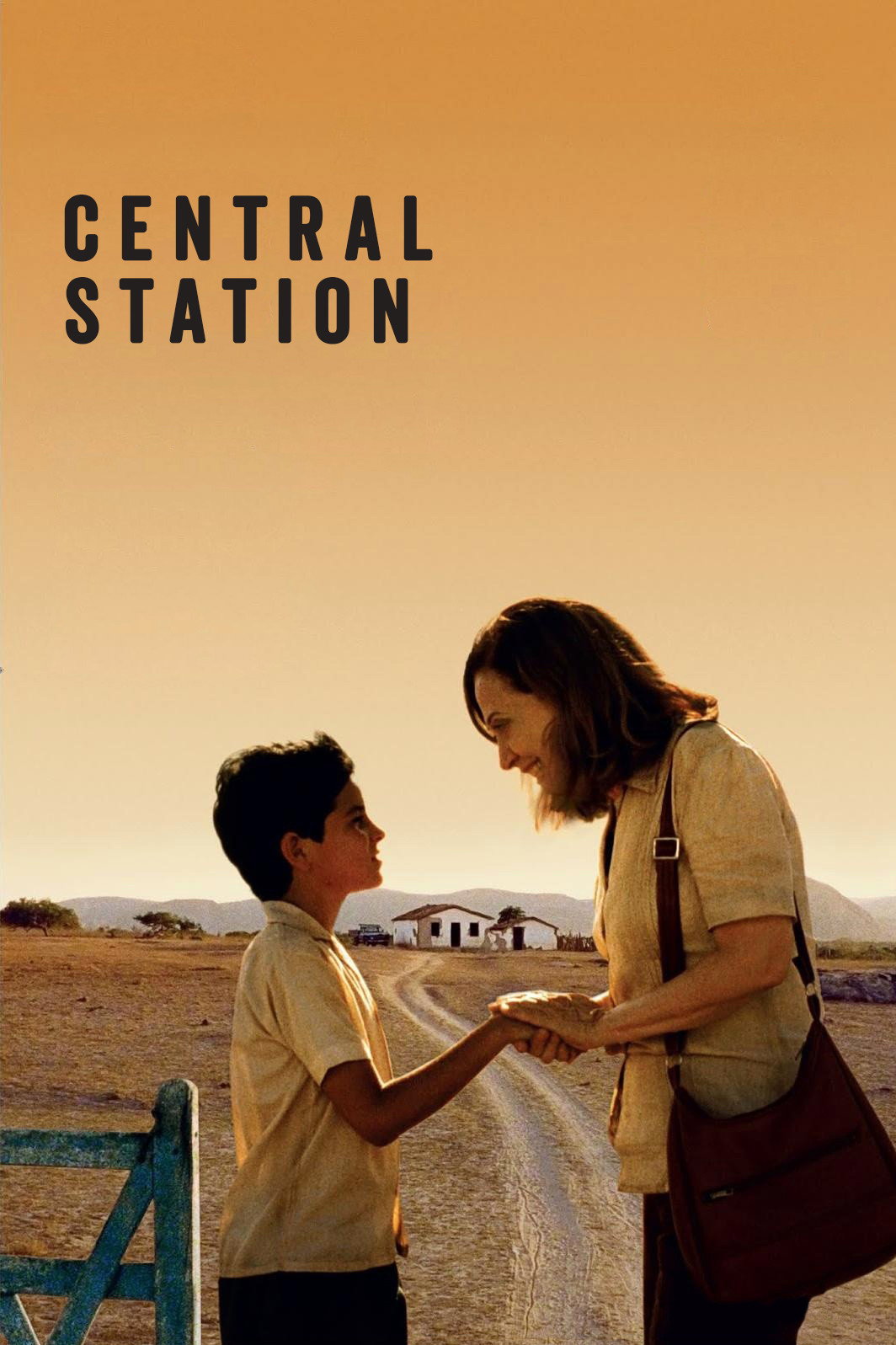
What the Film Is About
From the very first time I watched “Central Station,” I found myself drawn into a world so alive, yet so barren, so harsh, yet so full of hope. It’s a film that lingers long after its closing frames, nudging at me with questions about kindness, redemption, and the invisible lines that tether strangers together. The vibrant noise, the bustling crowds, and the forlorn faces of Rio de Janeiro’s Central do Brasil station act as a crucible, a place where stories cross paths, destinies are altered, and the possibility of grace emerges from the most unexpected corners.
Rather than rehearsing the film’s plot, I am moved to share how “Central Station” swept me into an intimate journey. At its heart, it isn’t merely about an aging, embittered letter writer named Dora, or the young orphan, Josué. It’s about their emotional migration through grief, forgiveness, and the tentative discovery of love in a world that seems bereft of it. The film unfolds as a road movie, but to reduce it to a journey from one physical place to another would shortchange its transformative essence. “Central Station” is a journey of the soul, both for its characters and, invariably, for those of us who let it settle into our bones.
Core Themes
One of the central themes that resonates most with me is the idea of human connection amid anonymity and mistrust. Living in a city, I have often felt the same isolation and suspicion that envelope Dora. The film throws these feelings into sharp relief, giving them flesh and bone in this woman’s guarded heart. Yet, as she encounters Josué and is drawn, almost unwillingly, into his quest for family, I watch the slow unraveling of her defenses, and something quietly profound is revealed about the resilience of compassion—even when it’s been buried beneath years of regret and survival.
The notion of redemption pulses through every scene. Dora’s trajectory, from a self-involved scribe who misuses her power over the illiterate to a woman capable of great tenderness, mirrors my own internal grappling with the possibility of change. The film seems to insist that no one is too hardened by circumstance to be moved by another’s need. Josué’s innocence and determination remind me of how, at times, those we intend to rescue become our rescuers. In witnessing Dora’s transformation, I am continually reminded of the ways in which relationships—especially those formed in adversity—become catalysts for our own rebirth.
Another theme that echoes for me is the search for belonging. Josué’s longing to find his father dovetails with Dora’s unconscious search for a reason to care again, to matter to someone. This search is both literal and existential, their movements across Brazil mirroring the internal landscapes they must traverse. For me, that relentless need for a sense of home, even when the world offers only fractured families and broken promises, lies at the core of what it means to be human.
Symbolism & Motifs
From the very start, “Central Station” employs powerful symbols and recurring motifs that amplify its themes and elevate the story. The titular central station is not simply a backdrop but a metaphorical threshold—one I, as a viewer, recognize as emblematic of the many transitional spaces in my own life. The station is a place where people are forever coming and going, searching for connection, refuge, or escape. It’s a liminal space, saturated with the possibility that one encounter, one conversation, can alter a life’s direction forever.
Letters—the act of writing, sending, or withholding them—are a motif that deeply resonates. For Dora, writing for strangers is a transactional necessity, but it also makes her the keeper of countless hopes and heartbreaks that will never find their destination. The undelivered letters, sometimes kept, sometimes destroyed, represent the severed lines of communication and understanding in society. I feel this deeply—the weight of unsent messages, unresolved regret, and unrealized reconciliation. Letters, in this film, become the currency of yearning and the markers of the distance that persists between people, even when they are standing side by side.
Religion and spiritual imagery also appear throughout the film. Crosses, prayers, and the iconography of saints permeate the landscape through which Dora and Josué travel. For me, these elements underscore the search for deliverance, not only in the afterlife but in the messy, bruised present. The promise of miracles is as elusive as it is essential for the characters, setting up a tension between resignation and faith—a tension I, too, recognize in my own moments of hardship.
The motif of journeying—both physical and emotional—is another element that the film weaves masterfully. The ever-changing landscapes mirror the transformation within Dora and Josué. Brazil’s sprawling, sometimes punishing, terrain becomes a silent witness to their struggle, their small victories, their reconciliations. I’m reminded that our interior journeys are often inseparable from the landscapes we traverse, and that change is rarely straightforward or predictable. “Central Station” echoes this truth with every dusty mile.
Key Scenes
Key Scene 1
The initial encounter between Dora and Josué at Central do Brasil still strikes me as one of the most quietly devastating sequences I’ve seen. Surrounded by chaos, Dora sits at her booth, both participant in and observer of humanity’s parade of grief and hope. Josué tugs at her with his mother, their need almost palpable, and I feel a sense of the arbitrary power Dora holds in transcribing their letter. The subsequent tragedy—Josué’s sudden orphaning—forces Dora into a kind of reluctant guardianship. For me, this scene crystallizes how compassion often arrives not in grand gestures but in the small, halting moments when we are called to see another’s suffering as our own.
Key Scene 2
Another pivotal scene occurs much later, during Dora and Josué’s stay in a rural village. The music, laughter, and warmth of the makeshift community sweep over them. For the first time, they shed some of their wariness and join in the simple joys of shared humanity. Dora dances—tentative at first, but then with genuine abandon. This scene, though brief, resonates with me deeply. It speaks to the possibility of renewal, even after years of emotional drought. Here, joy is both fleeting and redemptive, proof that it is never too late to be changed by generosity and openness. The image of Dora, awkward and smiling, is one that lingers in my own understanding of the ways in which we are nurtured back to life by the acceptance of others.
Key Scene 3
The film’s climactic sequence, where Dora must choose whether to leave Josué with his newfound family or hold onto him, is suffused with aching humanity. The moral complexity of her decision weaves through me every time I revisit this moment. I am reminded of the courage it takes to put someone else’s needs above one’s own longing for connection. Dora’s parting, accompanied by a letter meant to be delivered later, echoes the themes of letting go and trusting in the possibility of reunion—not just between family members, but between all people who open themselves to others. The scene’s emotional honesty forces me to consider the true nature of love as the courage to set free, even when it means facing solitude again.
Common Interpretations
Over the years, I have encountered multiple interpretations from critics and fellow viewers that have both enriched and challenged my personal readings of “Central Station.” Some see the film primarily as an indictment of the social and economic disparities in late 1990s Brazil—the way poverty, illiteracy, and social neglect conspire to keep people isolated and desperate. It’s hard not to draw connections between the film’s atmosphere and the reality of urban life amid structural inequality. I, too, am struck by how the station becomes a microcosm of class divisions—the privileged and the destitute crossing paths, yet rarely seeing one another.
Others emphasize the film’s exploration of surrogate parenthood and intergenerational healing. For these viewers, Dora’s evolution embodies the possibility of breaking cycles of alienation, suggesting that redemption is always available to those willing to risk vulnerability. I align strongly with this perspective; Dora is no saint, but it is her flawed nature that makes her capacity for growth so moving to me.
There are critics who focus on the film’s treatment of faith—sometimes as a source of comfort, sometimes as a hollow ritual. While some read the religious imagery as a critique of institutionalized hope, I experience it more as an expression of longing for meaning, the way people carry fragments of faith even when doctrine has failed them. The film doesn’t offer easy answers, but it does suggest that grace is found not in dogma, but in simple, human acts.
Finally, there is an enduring interpretation that sees “Central Station” as a contemporary fairy tale—a quest filled with challenges, helpers, and small miracles. I confess, I am drawn to this reading. The journey is both external and internal, and the transformation it yields feels as significant as any found in literary myth. To me, the film crafts a space for real, flesh-and-blood miracles: unlikely connections, unexpected forgiveness, and the resilience of hope in the relentless push and pull of life.
Films with Similar Themes
Over time, my encounters with “Central Station” have shaped how I watch other stories of orphaned souls and found families. Several films echo its themes and emotional tone, inviting comparison and contrast.
- The Bicycle Thieves (1948, Vittorio De Sica): In its deft portrayal of working-class struggle and the bond between a father and son, I find similar currents of desperation, tenderness, and dignity amid chaos. Both films reveal how circumstance tests the edges of morality, and how love persists in the face of deprivation.
- Pather Panchali (1955, Satyajit Ray): Another touchstone for me, this Indian classic’s delicate focus on family, loss, and resilience offers an analogous emotional resonance. The pilgrimage across rural landscapes, the ache of separation, and the search for meaning are themes that entwine with “Central Station’s” narrative soul.
- The Road (2009, John Hillcoat): Based on Cormac McCarthy’s novel, this bleak yet beautiful vision of a post-apocalyptic love between father and son echoes the ways that adversity can expose both the best and worst in humanity. Like Dora and Josué, the unnamed pair seek not just survival but a reason to hope, a touch of grace in a world lacking it.
- Kikujiro (1999, Takeshi Kitano): Here, I found unexpected parallels in the unlikely pairing of a wayward adult and a lonely child, their humorous and painful misadventures revealing reservoirs of hidden kindness. Both films transform the road into a crucible of growth and understanding.
- Paris, Texas (1984, Wim Wenders): The poetic wanderings of a detached, damaged man seeking reconnection with his family mirror the emotional landscape of “Central Station.” The themes of loss, redemption, and the fragile threads of human connection continue to strike a chord in me whenever I revisit these stories.
For me, each of these films, in their unique ways, illuminate the power of companionship to slowly, almost imperceptibly, draw us from the margins of loneliness toward the heart of meaning.
For more context before choosing your next film, these perspectives may help.
🎬 Check out today's best-selling movies on Amazon!
View Deals on Amazon