
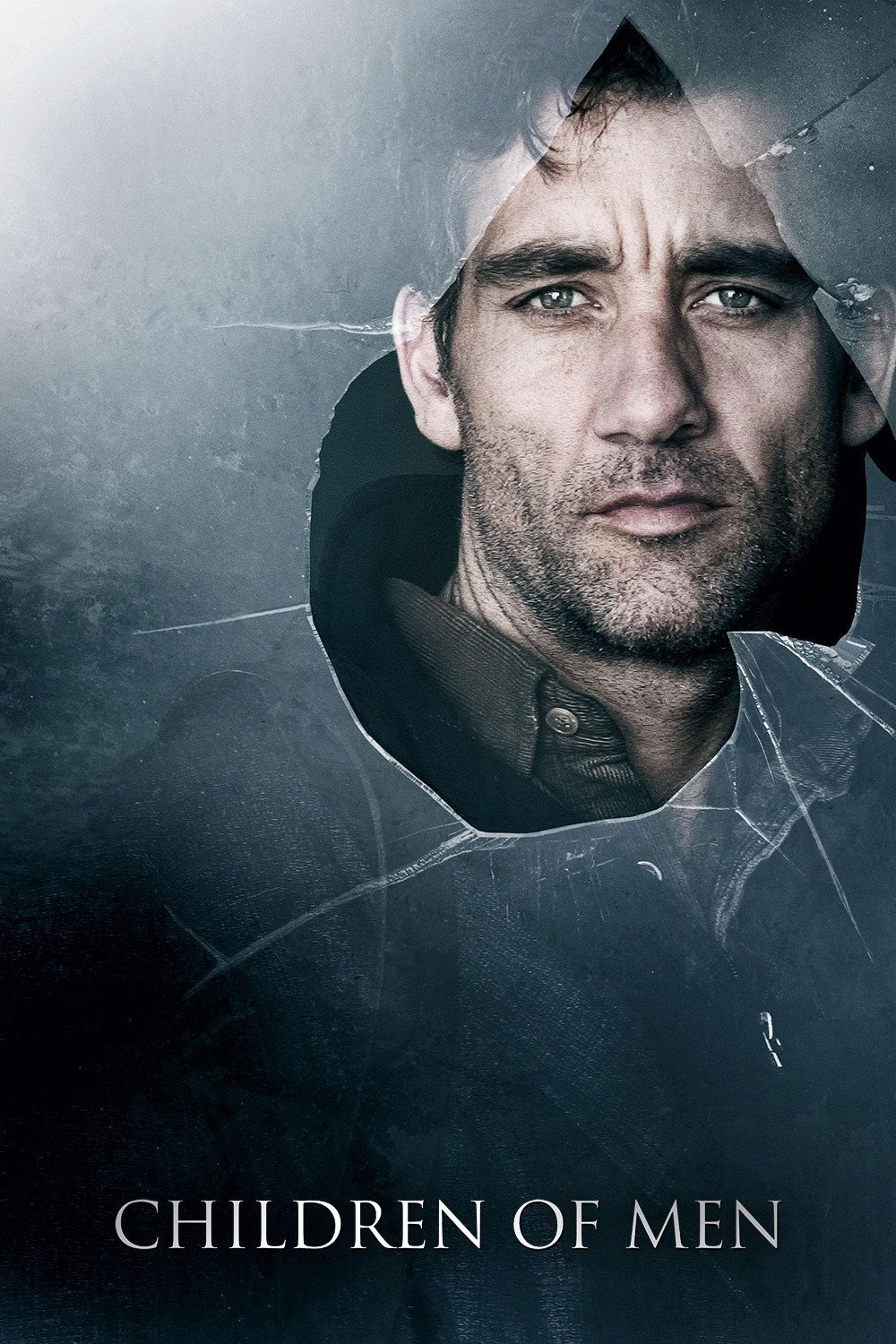
The first time I watched “Children of Men,” I felt caught between two implausible urges: to cry for the world’s despair and to root—almost furiously—for the persistence of hope. This film unsettled me on a level I rarely experience. It peels away the veneer of cinematic comfort, exposing raw nerves about society, loss, and the mechanisms of endurance. More than its dystopian trappings or narrative urgency, what lingers is the way it dared me to contemplate, with uncomfortable intimacy, what happens to people when hope is both forbidden and essential.
What the Film Is About
At its surface, “Children of Men” paints a picture of societal collapse set in a very near future Britain—barren, brutal, and bureaucratic—in which humanity has lost the ability to reproduce. I remember being less concerned with the plot’s logistical intricacies and more shaken by the world as Alfonso Cuaron presents it: a place shrunk by loss, ennui, and endless waiting. The population, numb from chaos and mourning, moves through a militarized everyday, as the youngest person on earth is murdered and despair seems to blanket the globe.
What struck me most immediately is the oppressive absence of children, which not only deprives society of its literal future but its capacity for joy, spontaneity, and aspiration. Children are more than fodder for hope—they are living evidence of continuity. Without them, something fundamental decays. This emptiness is the axis around which the film’s meaning turns. Every character, every decrepit cityscape, every beat-up refugee ship seems to bear the weight of that absence, and for me, it was felt in every frame.
Core Themes
Although “Children of Men” masquerades as a dystopian thriller, its greatest gift is how it asks why hope matters, and how societies respond to its withdrawal. The most powerful theme I drew from the film was the precariousness of faith—faith not in a deity, exactly, but in the simple belief that a better tomorrow is possible.
The film does not simply mourn what is lost; it interrogates the mechanisms of resilience. The presence of Kee—a pregnant refugee—becomes an anchor, not just for the characters but for the film’s philosophy. Her existence is a rebuke to despair, and those around her are forced to recalibrate their cynicism or apathy. I saw Theo’s (Clive Owen’s) gradual willingness to take risks as both heroic and deeply ordinary: he steps forward because, perhaps for the first time in years, there is something worth stepping toward.
Another layer that resonated with me is the chilling portrayal of state power wielded through dehumanization and scapegoating. The refugees (“fugees”) crowded into cages and slums, the omnipresent police, and the disintegration of civil society all speak to fears that are depressingly current. The film is less a warning than an observation: in times of crisis, humans rarely close ranks. Instead, fear breeds cruelty, suspicion, and indifference.
Yet, running parallel to this, there’s a meditation on small-scale acts of kindness and responsibility. Jasper’s comic relief, the battered friends who choose—hopelessly—to help: these moments, however fleeting, are the things that keep humanity recognizable amidst the wreckage.
Symbolism & Motifs
The visual and narrative language of “Children of Men” is littered with potent symbols, and they are never merely ornamental. One of the most unsettling motifs is that of infertility. This condition is less a plot device than a conceptual virus. It spreads a quiet form of violence—hopelessness—that courses through every interaction, every bricked-up playground, every withered expression.
I couldn’t help but notice the recurring use of religious imagery—particularly Christian iconography. Kee’s pregnancy evokes nativity scenes, and the small, battered boat she and Theo board is tellingly named “Tomorrow.” The choice seemed deliberate, a way of both referencing and questioning the mythic weight we place on the idea of salvation. There’s even a lingering doubt: even if hope returns, can the world that remains be saved? The juxtaposition of Kee’s maternity with visuals of decay and militarism felt like a modern re-staging of ancient parables, but with ambiguity in place of certainty.
The motif of sound is also conspicuous. Children’s laughter is entirely absent—jarringly so. Instead, the soundtrack is dominated by soldier’s boots, distant gunfire, and the clinical voice of government propaganda. This aural environment works not just to unsettle, but to reinforce how complete the absence of innocence can be. When a baby’s cry finally shatters this silence, the effect is almost apocalyptic—a small, but seismic, reminder of what’s been lost and what could return.
Even visual details—the omnipresence of cages, fences, and prison-like architecture—speak to another crucial theme: containment. People are not only physically fenced in; minds, agency, joy seem locked down as well. I saw this as both a critique of surveillance states and a metaphor for inner emotional paralysis.
Key Scenes
Key Scene 1
The moment that has lingered with me the most is not one of violence, but of fragile awe: when Kee reveals her pregnancy for the first time. The encounter—tense, unadorned, and almost dreamlike—is constructed with supreme delicacy by Cuaron. There’s a sense of humility, even embarrassment; Kee jokes about being a virgin, but the gesture is less about miraculous origins and more about the absurdity of carrying such a burden. The gravity of the revelation is not in grandstanding, but in its quietness. What is at stake is not just one child, but the potential thawing of the world’s frozen spirit. I felt the film’s emotional temperature shift here, the faintest glimpse of possibility beginning to glow through the grayscale photography.
Key Scene 2
I have rarely seen onscreen chaos captured more convincingly than in the single-take tracking shot set inside the moving car, as Theo, Kee, Julian, and others are ambushed in the woods. The camera’s claustrophobic proximity, the dizzying choreography, and the sudden eruption of violence converge to trap the viewer—in my case, viscerally—in the characters’ fear. This sequence is not just a technical marvel, but a narrative one. The relentless threat of violence, the sudden shattering of plans, the reality that safety is always provisional: this scene synthesizes all the film’s anxieties into a few harrowing minutes. To me, it encapsulated a core idea—hopes are always born into jeopardy.
Key Scene 3
The third sequence that weighs upon me most heavily arrives near the film’s end: as Theo, Kee, and the baby move through the battle-ravaged refugee ghetto. The gunfire pauses when those around realize there is a baby among them. The collective, instinctual reverence for the infant—soldiers, refugees, everyone—delineates, for an instant, the shared humanity beneath layers of fear and brutality. Silence falls, people weep, instinctively reaching out as if the sight of new life could remind them that something else is possible. For me, the power of this moment is not in presenting an unearned optimism, but in underlining how desperation can, at rare moments, yield awe and humility.
Common Interpretations
Through years of rewatching and discussions, I’ve encountered many approaches to “Children of Men.” Some read it as a straightforward allegory for the wars and refugee crises of the early twenty-first century, especially the military and sociopolitical reverberations of September 11, 2001 and the subsequent tightening of borders worldwide. Others see it as a meditation on the slow violence of environmental destruction, or as a parable of lost faith during an era of institutional decay. I find none of these readings mutually exclusive. The film’s very power lies in its refusal to be limited to a single political or cultural moment.
There are also religious or spiritual interpretations, drawing parallels between Kee’s pregnancy and Christian stories of nativity—seeing in her journey a reflection of the way sacred figures have often been hidden, pursued, and misunderstood by the world around them. But my relationship with the film is less about prophecy or parable, and more about reckoning with how easily societies can be stripped down to their most fearful, transactional selves—and how, against all odds, the spark of decency might still persist.
Some viewers focus on the film’s prescience regarding migration, surveillance states, and the manufacturing of fear. The depiction of militarized borders, constant media manipulation, and the scapegoating of displaced people felt frighteningly contemporary even at the time of its release, and has only gained relevance since. A further, more personal interpretation centers on individual redemption: Theo’s transformation from a man numbed by grief to one willing to sacrifice himself for something larger. It is easy to see ourselves in his reluctance, and quietly humbling to imagine summoning such courage.
Films with Similar Themes
As I try to connect my experience of “Children of Men” to other cinematic explorations of similar territory, several films surface in my mind. Few films convey societal collapse as intimately as this one, but works like “Blade Runner” and “Brazil”—with their depictions of bureaucratic indifference and existential malaise—share a kindred spirit.
- “Blade Runner”: Like “Children of Men,” Ridley Scott’s masterpiece asks what it means to remain human in a world scarred by technological and spiritual decline. Both films interrogate empathy, memory, and the possibility of rebirth in environments hostile to hope.
- “The Road”: Adapted from Cormac McCarthy’s novel, “The Road” offers another post-apocalyptic vision—a world stripped bare, where a parent struggles to shepherd a child toward an uncertain tomorrow. Its sense of fragility and its cautious hopefulness echo through Cuaron’s film.
- “Brazil”: With its dystopian bureaucracy and absurdist tone, “Brazil” explores the ways in which individuals are dwarfed by impersonal systems. Though more satirical, its vision of societal rot and personal integrity resonates with “Children of Men.”
- “The Book of Eli”: Set against a devastated America, this film similarly uses themes of faith, survival, and the preservation of hope amid widespread collapse, albeit with a more action-oriented focus.
- “Never Let Me Go”: Here, too, there’s a placid, emotional devastation. It explores the value of life, longing, and the haunting sense that our destinies are out of our hands.
- “District 9”: Neil Blomkamp’s film uses sci-fi to illuminate issues of xenophobia, state violence, and dehumanization, echoing “Children of Men” in both its topicality and its despairing, but not hopeless, tone.
Ultimately, what binds these films is not their dystopian settings, but their insistence that the core of any societal reckoning is the choices individuals make—especially when the world makes looking away so easy.
I return to “Children of Men” not because it answers any questions about how to live in the face of despair, but because it insists on the necessity of asking. Its world may be broken, but it is not yet finished. The possibility of hope—however faint—remains stubbornly alive, demanding vigilance and, sometimes, courage.
If you’re deciding what to watch next, you might also want to see how this film holds up today or how it was originally received.
🎬 Check out today's best-selling movies on Amazon!
View Deals on Amazon