
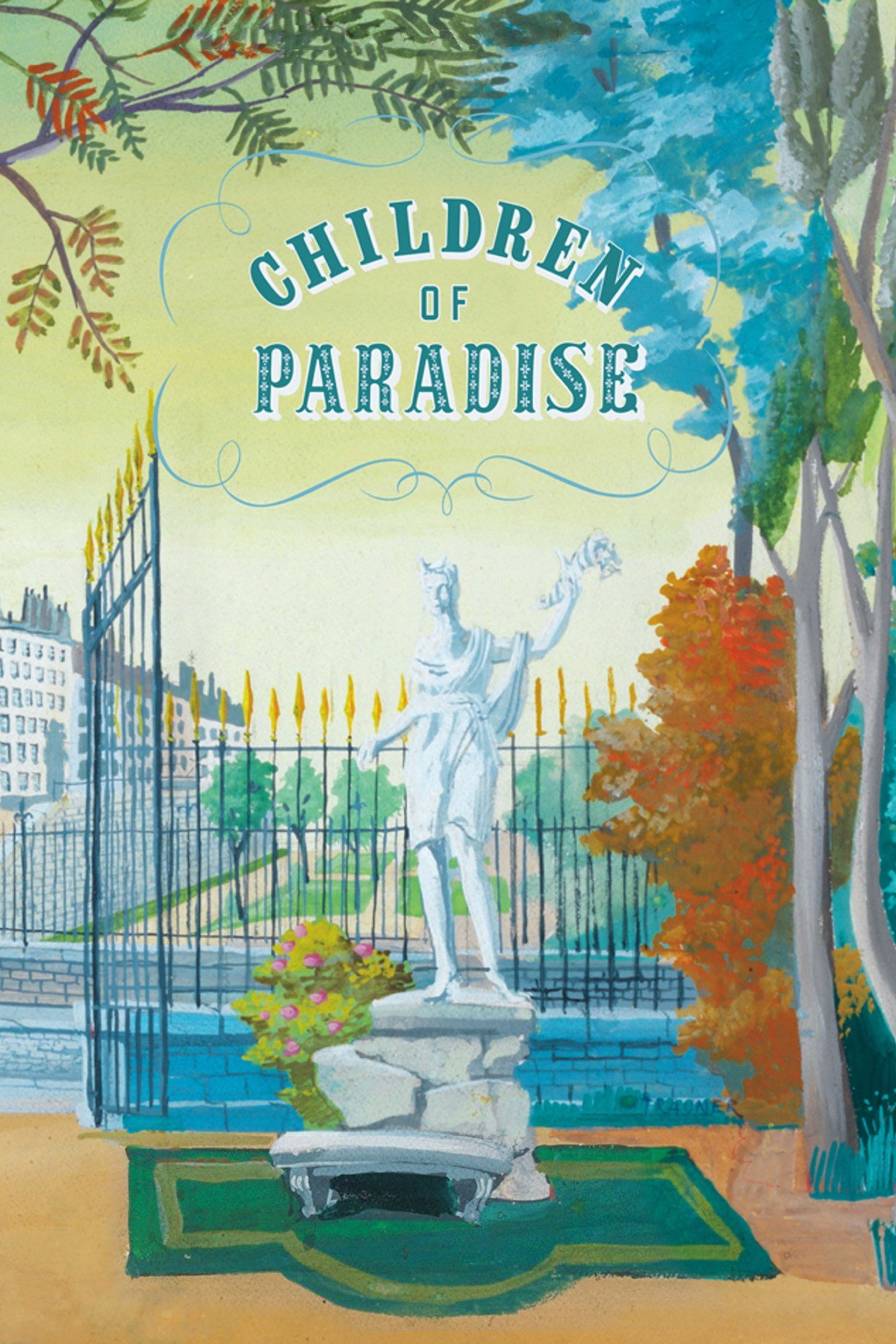
What the Film Is About
When I first encountered “Children of Paradise”, I was taken aback—not by the surface story, but by a feeling of peering into a world whose crowded streets and stages blur illusion and yearning, love and rejection, artifice and honesty. Although the film is set amid the vibrant commotion of the Boulevard du Crime in 1820s Paris, what struck me most was not the bustling world of theaters and criminal underworlds, but the way humans weave between performance and reality. For me, “Children of Paradise” explores the search for love and belonging amid a society intoxicated by spectacle. The film orbits around Garance, a woman whose grace both emancipates and curses her; the men who circle her (the mime Baptiste, the actor Frédérick, the criminal Lacenaire, and the aristocrat de Montray) represent facets of longing and the struggle to define oneself. Yet beneath their stories, I see a profound meditation on identity—how people don masks to survive, to love, to pursue happiness in an indifferent world.
Core Themes
The entanglement of love and performance is the foundation of “Children of Paradise”, a theme that I find especially resonant today. The film’s characters inhabit a world defined by stages—be they literal theater boards or the social stages of Paris’ classes and criminal circles. For me, every connection in the film is shadowed by longing, yet also mediated by masks. Baptiste communicates through mime, his movements revealing more than words ever could. To me, he embodies the artist whose expression arises not from language, but from ineffable suffering and beauty. His love for Garance, silent and adoring, feels pure, but it is also constrained by his inability—or refusal—to step off the stage and seize life without pretense.
Opposite him stands Frédérick, whose flamboyant acting seems liberated, yet his boisterous persona is itself a mask protecting a profound insecurity. Lacenaire, meanwhile, dresses his criminality in wit and performs evil almost as theater; I’m reminded here of the performative nature of power and rebellion. Garance, for her part, eludes all attempts to possess or define her. She is bewitched and bewitching, magnetic not only for the men in her orbit, but for me as a viewer frustrated by her unknowability. Her refusal to be claimed struck me as both courageous and melancholy, a reflection of the film’s central tension: the yearning to belong while remaining free, to love without surrendering one’s identity.
Watching the film during an era aware of surveillance, social performance, and the craving for recognition, I feel its relevance. The cacophony of the Boulevard du Crime suggests to me both the creativity and alienation of urban experience, the infinite ways people invent and reinvent themselves—sometimes to survive, sometimes just to pretend they are alive. Love, in “Children of Paradise”, is both a performance and an escape, at once authentic and ultimately beyond the reach of its seekers.
Symbolism & Motifs
What keeps me returning to “Children of Paradise” is its flood of recurring images and symbols, each drawing me deeper into its layered meanings. The motif of the mask is everywhere: Baptiste’s face painted in white, the endless masquerades of the theater, the sly performances by each character in their daily lives. I find the mask especially poignant—it is at once a tool of deception and a shield against a world that cannot accept one’s true self. In Baptiste’s silent longing, I see not just unfulfilled love but the heartbreak of being unable to drop the mask even in intimacy.
Another image that stays with me is that of the crowd—the ever-present audience, both within and outside the theaters. To me, the crowd symbolizes the collective hunger for stories, distractions, meaning—a restlessness that echoes the characters’ own inner needs. The setting itself, the Boulevard du Crime, is soaked in irony: a place that entertains with tales of violence, while real heartbreak unfolds quietly among its denizens.
Water also recurs, particularly in the climactic scenes that end in rain and separation. Water, for me, signifies both cleansing and irretrievable loss—a barrier as much as a conduit. The parted mists and fleeting glimpses between Garance and Baptiste remind me of how desire often slips through our fingers, leaving only longing behind.
- Masks: Both literal and figurative, they highlight the conflict between self-protection and honest expression.
- Stages and Curtains: Boundaries between public and private selves are underscored by the constant movement behind curtains, on and off stage.
- Crowds: The anonymous masses remind me of each character’s isolation; they witness but do not intervene.
- Water and Mirrors: Symbols of reflection, separation, and transformation.
Key Scenes
Key Scene 1
One of the first moments that mesmerized me is Baptiste’s impromptu pantomime, when he clears Garance’s name by enacting the crime she didn’t commit. In this scene, the spontaneous blur of real accusation and theatrical display dissolves. I am always moved by how Baptiste leaps from passive observer to creative participant. His art saves an innocent woman—yet it is also his declaration of love, expressed only in movement. Whenever I reflect on this scene, I see the power of vulnerability: how art can pronounce truths that words dare not speak, and how, sometimes, deep feeling can only be channeled through performance. The crowd’s reaction also lingers with me—they are moved, but what they witness remains ambiguous, as though uncertainty is at the heart of all passionate gestures.
Key Scene 2
Later, the backstage moment where Baptiste, face still painted, whispers his love to Garance is one I find almost unbearable in its tenderness. The physical barrier of make-up, costume, and the proximity of the audience underline the impossibility of honest connection. It’s here I sense most keenly the struggle of self-revelation—the way both are constrained by the roles expected of them. As an observer, I can almost feel the ache of vulnerability, how stepping from the shadows into love always carries the risk of heartbreak. The thrill and risk of disclosure, entwined with the disappointment of never being fully seen, have stayed with me since my earliest viewing.
Key Scene 3
Near the film’s end, amid raucous Carnival revelry, Garance and Baptiste’s final encounter nearly cracks the boundaries separating desire from fulfillment. The crowded street, swirling with masked revelers, serves as a physical metaphor for the confusion and hunger that saturate their lives. In this chaos, the former lovers grasp for each other but are pulled apart. I see this as the film’s aching heart: in the throes of joy and chaos, true connection becomes nearly impossible. I have watched this scene countless times, noticing how crowd and spectacle both envelope and deny the lovers. Separation is not only physical—it’s the crowning mask. The dream of love is trampled amid the laughter and wildness of a world that barely glances at individual yearning. I am reminded every time that the randomness of circumstance often conspires against desire, leaving only the memory of closeness.
Common Interpretations
Over the years, I have encountered several interpretations of “Children of Paradise”, and each illuminates a new aspect for me. Many see the film through the lens of wartime allegory, given its production under Nazi-occupied France. The masked performances, the clandestine worlds, even the sense of being watched, can be read as metaphors for artistic resistance and secrecy. I find this reading compelling—knowing that the film was made in such dire historical circumstances only heightens its yearning for freedom and integrity. The film’s release in 1945, as the world stumbled out of war, charged its artifice with a desperate hope for beauty amid disaster.
Another common interpretation focuses on the role of art in both liberating and enslaving the self. Artifice, as shown in the play-acting of every character, is not simply a shield but a mode of survival for the marginalized. I often reflect on how even today, people navigate society by adopting personas—sometimes out of fear, sometimes as self-defense, sometimes simply because to be fully honest is too risky. The film seems to suggest that every act of love, creation, or rebellion necessarily takes the form of a performance, yet something essential can still slip through, touching the heart.
Yet for me, the most affecting interpretation is existential. The film’s characters pursue happiness, love, ambition, yet the crowd and the city remain unchanged, indifferent. Their passions blaze, fade, and vanish, swallowed by time. Watching “Children of Paradise”, I am reminded that individual lives are fleeting performances. The validation we seek—whether in art, love, or recognition—often remains elusive. But the pursuit, the earnest effort to reach through the mask, is what gives life its tragic grandeur.
Films with Similar Themes
As I have continued to explore cinema’s approaches to longing, illusion, and the search for authenticity, several other films spring to mind.
- La Strada by Federico Fellini: Like “Children of Paradise”, this film situates its characters on the margins of society, grappling with love and cruelty. The motif of the traveling performer—the mute Gelsomina—strongly echoes Baptiste.
- Amarcord (Fellini again): Here, memory and performance blend into a bittersweet evocation of lost innocence and perpetual longing.
- Cinema Paradiso: The fusion of everyday experience and the magic of performance connects deeply to the power and consolation of art, a theme central to “Children of Paradise”.
- All About Eve: The blurring boundary between identity and performance, and the price paid for ambition, seem to me an American echo of the film’s concerns.
- Les Enfants Terribles: Jealousy, love, and theatricality swirl together in Jean Cocteau’s exploration of youth and obsession.
- La La Land: Despite its glossy contemporary color, it dances with similar questions—what must one sacrifice for art? For love? Can we ever have both?
I carry “Children of Paradise” with me like a secret—whenever I return, I tumble back into its labyrinth of longing, crowds, and illuminated faces behind painted masks. More than a classic, it is, for me, an invitation: to look behind the curtain of daily existence, to seek beauty even knowing it may slip away, and to cherish the fleeting moments when love and self-expression dare to meet, spark, and vanish.
For more context before choosing your next film, these perspectives may help.
🎬 Check out today's best-selling movies on Amazon!
View Deals on Amazon