
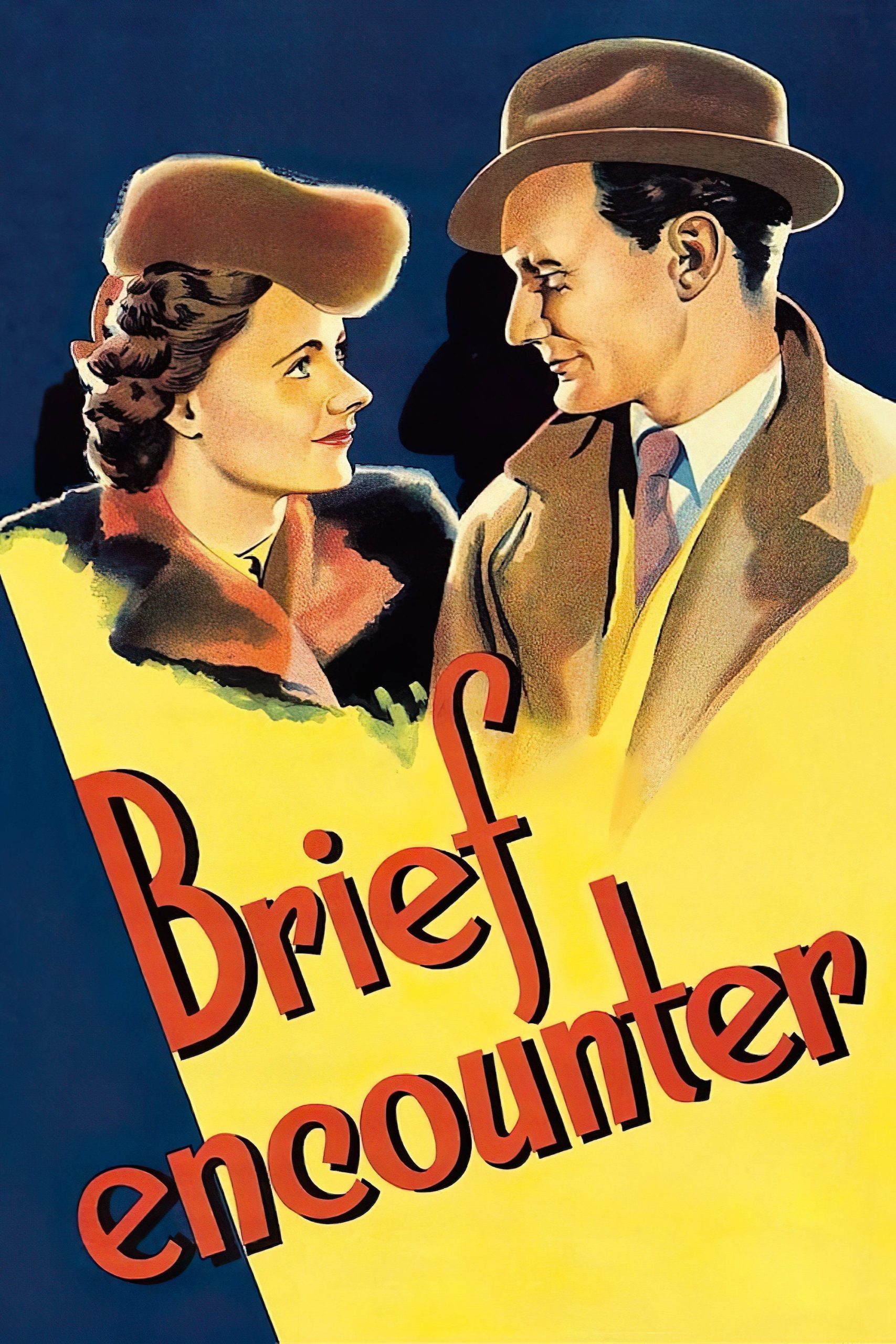
What the Film Is About
From the very first time I watched “Brief Encounter,” I was struck not so much by the forbidden romance at its heart, but by the overwhelming sense of yearning that permeates every frame. The film, directed by David Lean in 1945 and adapted from Noël Coward’s play “Still Life,” follows the emotionally intense, fleeting wartime encounter between Laura Jesson and Dr. Alec Harvey. Yet, for me, the storyline functions only as an entry point to something far larger: the aching tension between societal expectation and personal desire, and the discovery of oneself in the narrow, silent spaces between words and actions.
On the surface, “Brief Encounter” might seem simple—a middle-class English housewife meets a doctor at a railway station, and a strong mutual attraction soon threatens to undo the reliability of their quotidian lives. But when I sat with the film, turning its moments over in my mind, I found it had far less to do with infidelity, and far more to do with the quiet desperation and the unvoiced emotional burdens we all carry. The story, to me, is a study in outward conformity versus inward turmoil, painted with the kind of restraint that defined the postwar British psyche.
I see “Brief Encounter” not only as a reflection of its era but also as a lasting meditation on the way personal happiness can be sacrificed at the altar of duty and routine. By centering on characters who are ordinary in the eyes of the world but extraordinary in their private sufferings and passions, the film grants dignity and profundity to interior lives that so often go unnoticed.
Core Themes
What moves me most about “Brief Encounter” is its nuanced treatment of repression, longing, and the conflict between individual fulfillment and the obligations imposed by society. Every time Laura hesitates, every time her voiceover reveals a contradiction between what she feels and what she says, I’m reminded of my own internal negotiations—those small wars fought in silence.
- Suppression and Emotional Restraint: More than perhaps any other emotion, restraint defines the characters’ experience. Laura and Alec live in an England that prizes self-control, and every gesture they make is tempered by an awareness of what they stand to lose. I find myself endlessly fascinated by how their passion struggles to be expressed, filtered through polite language and brief, charged glances. Their romance is more about what is left unsaid than what is spoken aloud.
- Routine Versus Escape: The film meticulously builds Laura’s regular domestic existence: Thursdays spent shopping, the cinema, the train, the home. The monotony of routine is not simply background noise—it is the fabric of her world, representing safety but also a form of imprisonment. For me, their weekly meetings become a small rebellion, a bid for escape into the possibility of another kind of life.
- The Burden of Morality: Perhaps the most haunting theme I find in the film is the pervasive sense of guilt. Laura’s inner conflict—her love for Alec and her loyalty to her family—is never resolved. Her suffering is real, and by not offering either a redemptive or punitive resolution, “Brief Encounter” leaves us in a place of uncertainty that feels deeply truthful. I often think about how this mirrors the choices we make, the costs we pay, sometimes without applause or condemnation, but with a sense of heavy finality.
- Social Conventions and Gender: As I watch, the film’s portrayal of social conventions stands out. Laura, as a woman in 1945 England, bears almost the entire emotional toll of the affair. The suffocating gender norms of the period press on her, sculpting both her longing and her guilt, making the film as much about the roles expected of women as it is a personal narrative of romantic frustration.
- The Fleeting Nature of Intimacy: Above all, “Brief Encounter” reminds me that some of the most profound connections in life are brief, intense, and necessarily incomplete. The poignancy comes not despite their separation, but because of it. The film’s great insight, at least for me, is that sometimes we are forever changed not by a lifetime spent with someone, but by a moment in which we realize our own capacity for feeling.
Symbolism & Motifs
One of the great pleasures I find in “Brief Encounter” is in excavating the rich symbols and recurring motifs that underscore its emotional terrain. The most prominent is, of course, the railway station itself—a liminal space, neither truly at home nor fully away, but rather in transit. Every time Laura sits in the station’s drab waiting room, I feel the weight of her in-betweenness; physically and emotionally, she is suspended between duty and desire.
The train whistles, often signaling the hour of parting or possibility, become to me more than just background noise: they are a sonic reminder of time’s relentless advance. Each departing train is a reminder of the choices not made, the lives never lived. When I hear the train, I think about how quickly moments pass, and how life often arrives and departs before we can truly arrive at ourselves.
There is further symbolism in the film’s use of light and shadow. Laura’s face is frequently cast in half-shadow, her emotions always partly illuminated and partly hidden. I see this chiaroscuro as an externalization of her emotional state: divided between clarity and confusion, hope and fear. Similarly, the recurring motif of the borrowed apartment—an anonymous space briefly made personal, suffused with longing and guilt—highlights the impermanence of their love. I am struck by how even this space cannot allow their romance to fully unfold; it is always a temporary refuge, never a home.
Perhaps most subtly, the film uses the ordinary to invoke the extraordinary: cups of tea, polite exchanges, the bustle of the station staff. These small moments, when I reflect on them, become charged with meaning—reminders that even the most consuming passions must nestle awkwardly inside the mundane routines of daily existence.
Key Scenes
Key Scene 1
One of the most devastatingly beautiful scenes, for me, comes not in a climactic declaration of love, but in the casual, almost cruel, interruption of farewell. Near the film’s end, Laura and Alec share a final stolen moment in the station’s refreshment room. Their emotional goodbye is abruptly shattered by the arrival of Laura’s acquaintance, Dolly Messiter, whose cheerful, oblivious chatter drowns out Laura’s silent agony. I am always shaken by this moment, as the camera lingers on Laura’s face. The enormity of her loss is invisible to all but us, the viewers, and it’s here that I am most struck by the tragedy of ordinary life: how private agony must bow before public decorum.
Key Scene 2
Another scene that lingers in my mind is their visit to the borrowed flat. As Laura and Alec attempt to construct a private paradise in someone else’s home, the intrusion of the apartment owner’s friend forces Laura to flee in shame. The manner in which she covers her face and escapes down the stairs is, to me, the film’s most potent visualization of guilt and fear. It is not merely a practical escape but a retreat into the only safety she knows—her life of habit and duty. I find myself reflecting on all the ways we retreat when reality or morality pushes against our longing.
Key Scene 3
Lastly, there is the closing moment of the film, where Laura returns home, her secret still intact, her pain undiminished. As her husband, Fred, gently thanks her for returning to him, suspecting nothing of her inner tumult, I am left with a profound sense of loneliness and resignation. In this quiet exchange, the film seems to ask how many stories like Laura’s remain buried under layers of responsibility and self-abnegation. Each time I watch it, I feel the pressure of that untold yearning—the sense that every seemingly tranquil home may shelter storms of feeling we cannot see.
Common Interpretations
In discussing “Brief Encounter” with others, I’ve found a wealth of interpretation, each reflecting the viewer’s own experiences and values. One frequent perspective is that the film is a cautionary tale about the dangers of straying from one’s duties—evidence, perhaps, of its moral climate at the end of World War II. Yet what speaks most to me is not the warning, but the empathy with which both Laura and Alec are portrayed. Their struggle is not painted as selfishness but as deeply human.
I have read critics who see the film as an elegy for lost opportunities—not just in romance, but in every aspect of life where desire is checked by responsibility. For myself, “Brief Encounter” operates as a lens through which to view the invisible intersections of class, gender, and social expectation in mid-century Britain. Laura’s story is at once intensely personal and politically charged: it is about a woman’s interior life during a period when such things were rarely spoken about openly.
I am also fascinated by those who interpret the film as a defense of marriage, arguing that Laura remains faithful in the end and that the sanctity of family prevails. Yet, when I pull back from the conventions of the era, I see the story less as an endorsement of moral codes and more as a compassionate account of the cost such codes impose. The film, to my mind, is ultimately about empathy: for others, yes, but especially for oneself, in recognizing the complexity of our desires and the ambiguity of our choices.
Films with Similar Themes
As I reflect on “Brief Encounter,” I find myself drawn to other films that examine love’s limits and life’s compromises. One natural companion is Lean’s own “The Passionate Friends” (1949), where romantic yearning again comes into conflict with social expectation. I also think of “Lost in Translation” (2003), with its exploration of fleeting connection in a world of impersonality and passage. Both films, though widely separated in time and setting, share the sense of precious emotional spaces created and then surrendered, never quite fitting into the everyday world.
“In the Mood for Love” (2000), directed by Wong Kar-wai, resonates for me as a spiritual descendant of “Brief Encounter”: both films lavish care on creating atmospheres thick with repression, longing, and the rituals of ordinary life. When I contemplate “Carol” (2015), I see another story where characters are forced to weigh their own happiness against the cost exacted by the outside world. The same sense of what might have been—of lives only partly realized—infuses each of these works, reminding me that the ache of incomplete love is a universal condition.
In no other film, though, do I find the particular poetic clarity and aching restraint of “Brief Encounter”—a film that continues to move me, not only because it tells the story of two people, but because it gently, insistently encourages us to look for the lost possibilities in our own lives and the lives of those around us.
For more context before choosing your next film, these perspectives may help.
🎬 Check out today's best-selling movies on Amazon!
View Deals on Amazon