
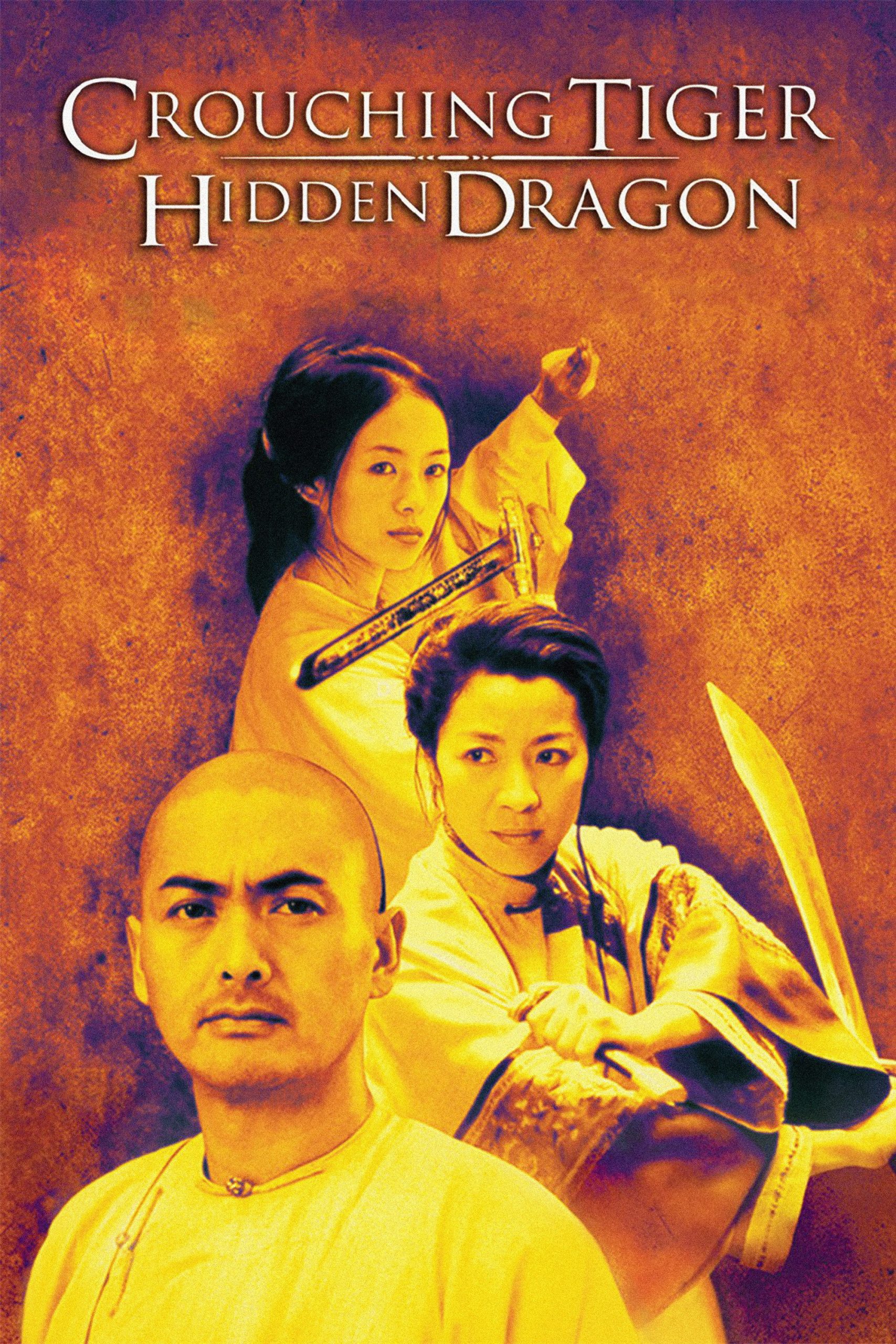
What the Film Is About
I vividly recall the first time I watched Ang Lee’s “Crouching Tiger, Hidden Dragon.” My memory holds the sweep of bamboo forests, the ache of muted love, and the way the film seemed to move weightlessly across the boundaries of genres and cultures. Watching it, I didn’t simply witness a martial arts spectacle — I felt enveloped by a bittersweet current of yearning and self-restraint that pulsed through every frame. What continues to captivate me is how every leap into the air is underpinned by gravity: the social, emotional, and personal limitations that ground the souls of its characters, no matter how they soar. The film tells the story of warriors, yes — but at its essence, it meditates on the hidden emotional lives beneath grand gestures, on the secrets we keep from each other and ourselves, and on the impossible negotiations between desire and duty.
I find myself returning to “Crouching Tiger, Hidden Dragon” not for its plot, which revolves around a legendary sword, a stolen artifact, and the machinations of martial sects, but for the way it immerses me in a world where every act of heroism or violence is quietly shadowed by unspoken longing. Lee crafts a lyrical dance between tradition and rebellion, the visible and the repressed, and in that tension I see not only a uniquely Chinese setting, but an intimately human struggle. The film’s narrative, while tied to classic wuxia conventions, is merely the surface. Beneath lies a story of love restrained, dreams denied, and the yearning to transcend the dictates of fate.
Core Themes
No matter how often I revisit the film, I find myself tracing the outline of its core themes: repression versus freedom, the generational conflict between tradition and self-expression, and the collision of spiritual ideals with the tangled web of human feelings. At the heart of these is the theme of desire — secret, unsanctioned, often thwarted. Yu Shu Lien, Li Mu Bai, and Jen Yu each embody distinct forms of longing. Watching their journeys, I’m reminded of how the most powerful forces in our lives can be those we scarcely articulate.
Much of the film’s emotional power comes from restraint — not only in movement and martial technique, but in relationships. Li Mu Bai and Yu Shu Lien’s decades-long, unrequited affection aches with the pain of missed opportunities, the choices made out of loyalty, and the burden of unresolved pasts. Their love is never consummated, never even openly discussed until it teeters on the edge of possibility. Jen Yu, by contrast, is a figure of rebellion, torn between the freedoms she craves and the suffocating structures into which she has been born. I recognize in Jen’s arc the archetypal generational struggle: the younger self, desperate to define itself against the confines of inheritance and expectation.
The film is also relentlessly haunted by the interplay of gender and power. In so many scenes, I’m struck by how the women wield strength, whether through the sword or subtlety, but are continually hemmed in by societal strictures. The fantasy of the wuxia world, Ang Lee suggests, can only partially liberate those who inhabit it. Disappointment, loss, and sacrifice permeate every victory; each leap skyward is followed by a return to harsh ground. From this blend of beauty and pain arises a sense of tragic grandeur that, for me, defines the film’s emotional register.
Symbolism & Motifs
The lexicon of “Crouching Tiger, Hidden Dragon” is saturated with symbolic meaning. Chief among these is the Green Destiny sword — an object coveted, contested, and ultimately cast aside. For me, the sword has always stood as a double-edged symbol, at once a source of power and a curse, a legacy that both protects and imprisons. Its loss or possession marks each character’s relationship to fate and desire: to take up the sword, in many respects, is to accept the burden of expectation, to reject it is to risk almost everything for sovereignty over one’s own story.
Bamboo forests and rooftops form an alternate realm where the normal limitations of gravity and custom are temporarily suspended. I interpret these settings as motifs of paradox: elevated freedom laced with underlying danger. These airborne sequences are exhilarating precisely because they represent fleeting escapes from the earthbound realities of tradition and heartbreak. When Jen and Yu Shu Lien spar above the treetops, I see much more than breathtaking choreography; I see an embodiment of possibility, a visual metaphor for what the heart desires but the world cannot sustain.
Names, too, function symbolically in the film. The Chinese saying from which the English title is derived — “crouching tiger, hidden dragon” — refers to concealed strength, latent potential, and dangers that lie beneath still waters. This idea shapes every relationship and narrative thread, from Li Mu Bai’s internal turmoil to Jen Yu’s secret mastery. It prompts me to consider the hidden recesses within all of us, the battles fought in silence, and the parts of ourselves shaped by fear, longing, and ambition.
Key Scenes
Key Scene 1
Among the film’s many unforgettable sequences, the duel between Jen Yu and Yu Shu Lien in the teahouse lingers most vividly in my mind. For me, this fight transcends the traditional hallmarks of martial arts cinema. Here, the rapid clash of weapons becomes a dialogue of thwarted hopes and mutual recognition. Watching it, I sense both Jen’s ferocity — her raw, untamed will — and Yu Shu Lien’s counseled, disciplined strength. Each weapon Jen seizes is a fleeting experiment in identity, a bid for self-definition rapidly countered by Shu Lien’s experience. The relentless choreography is animated by something deeply emotional: the pain of paths diverging, of a generation clawing for agency against the inexorable pull of history. This scene compels me to reflect on how self-assertion can be both exhilarating and isolating.
Key Scene 2
The bamboo forest duel between Li Mu Bai and Jen Yu is, for me, one of the most exquisitely lyrical moments in cinema. Their fight, unfolding in slow-motion among swaying treetops, becomes less a contest than an aesthetic essay on grace, control, and longing. The absurd beauty of their movement, suspended between earth and sky, is tinged with melancholy. Li Mu Bai is not simply seeking to subdue or instruct Jen; he is reaching toward a future he believes she could realize, if she would only relinquish rage for wisdom. The elegiac undertone — the knowledge that pure discipline cannot alone ensure happiness — pulls at me whenever I watch. I find myself thinking of the gap between our potential and our wounds, the ache of gifts left unfulfilled by internal conflict.
Key Scene 3
The unspoken confession between Li Mu Bai and Yu Shu Lien near the film’s end devastates me in its tenderness and brevity. After a lifetime of silent affection, Li Mu Bai’s acknowledgment of love is simultaneous with its impossibility. Their intimacy is finally spoken — and promptly shadowed by mortality. What moves me is not only what they say, but the vast sea of feeling beneath their words: gratitude, regret, the futility of having waited so long. In that moment, I find the core truth of the film — something as fleeting and enduring as memory itself. Emotional restraint, once a mark of nobility, is revealed as a tragic flaw; the candor that arrives too late haunts them, and, by extension, haunts me. The final emanation of their love becomes a silent argument with the world as it is.
Common Interpretations
Whenever I discuss “Crouching Tiger, Hidden Dragon” with others, I encounter a rich diversity of readings. Some viewers focus on its feminist possibilities, citing the preponderance of complex, empowered female characters in a genre typically dominated by men. I see this, too — and am continually awed by the way Yu Shu Lien and Jen Yu navigate authority, agency, and vulnerability.
Others interpret the film primarily as a meditation on the clash between tradition and modernity. I’m drawn to this reading, perhaps because I often feel the pressure of inherited norms in my own life, the tug between honoring what came before and forging a new path. For some, the film is a lament for lost possibilities — what can never be reclaimed once youth, time, or opportunity has passed. The ending, ambiguous and open, encourages each of us to bring our own longing and regret to the viewing experience. Is Jen Yu’s final leap an act of despair or transcendence? For me, it embodies both — a simultaneously tragic and liberating gesture.
There are also interpretations grounded in cultural specificity, noting the ways the film interrogates the philosophy of wuxia — the martial, chivalrous spirit — and its complex legacy in Chinese narrative tradition. As a Western viewer drawn to Eastern aesthetics, I wrestle with my outsider’s perspective, wary of reduction and eager to glimpse the universality within the culturally particular. Each character stands at the crossroads of public duty and private yearning, and from that crucible arises a drama I recognize, regardless of time or nation.
Films with Similar Themes
As I reflect on other films that evoke the same ache and awe I experience with “Crouching Tiger, Hidden Dragon,” a number come to mind. Wong Kar Wai’s “In the Mood for Love” shares an obsession with repressed feeling and the poignancy of love unfulfilled. Both films use silence and gesture to speak volumes; both leave me with the sense of having witnessed not romance, but the memory of romance, its contours sharpened by time and distance.
I also think of Zhang Yimou’s “Hero” and “House of Flying Daggers.” These films, too, inhabit the world of martial arts fantasy and grapple with themes of sacrifice, identity, and the fatal boundaries erected by society. Yet none, for me, fuses the genre’s visual spectacle with such sustained emotional depth as Lee’s work. Alfonso Cuarón’s “Y Tu Mamá También,” while from an entirely different context, parallels “Crouching Tiger” in how it chronicles the journey from innocence to experience, desire to loss — the bittersweet rites of passage that mark all growing up.
Even outside of the wuxia genre, films like “Brokeback Mountain” ask us to reckon with the price of feeling stifled by custom or expectation. Ang Lee’s fingerprints are unmistakable in both films: a delicate, painful awareness of how rarely the world allows us to love freely, and how the heart’s hidden music finds its own defense in secrecy, even in tragedy.
For more context before choosing your next film, these perspectives may help.
🎬 Check out today's best-selling movies on Amazon!
View Deals on Amazon