
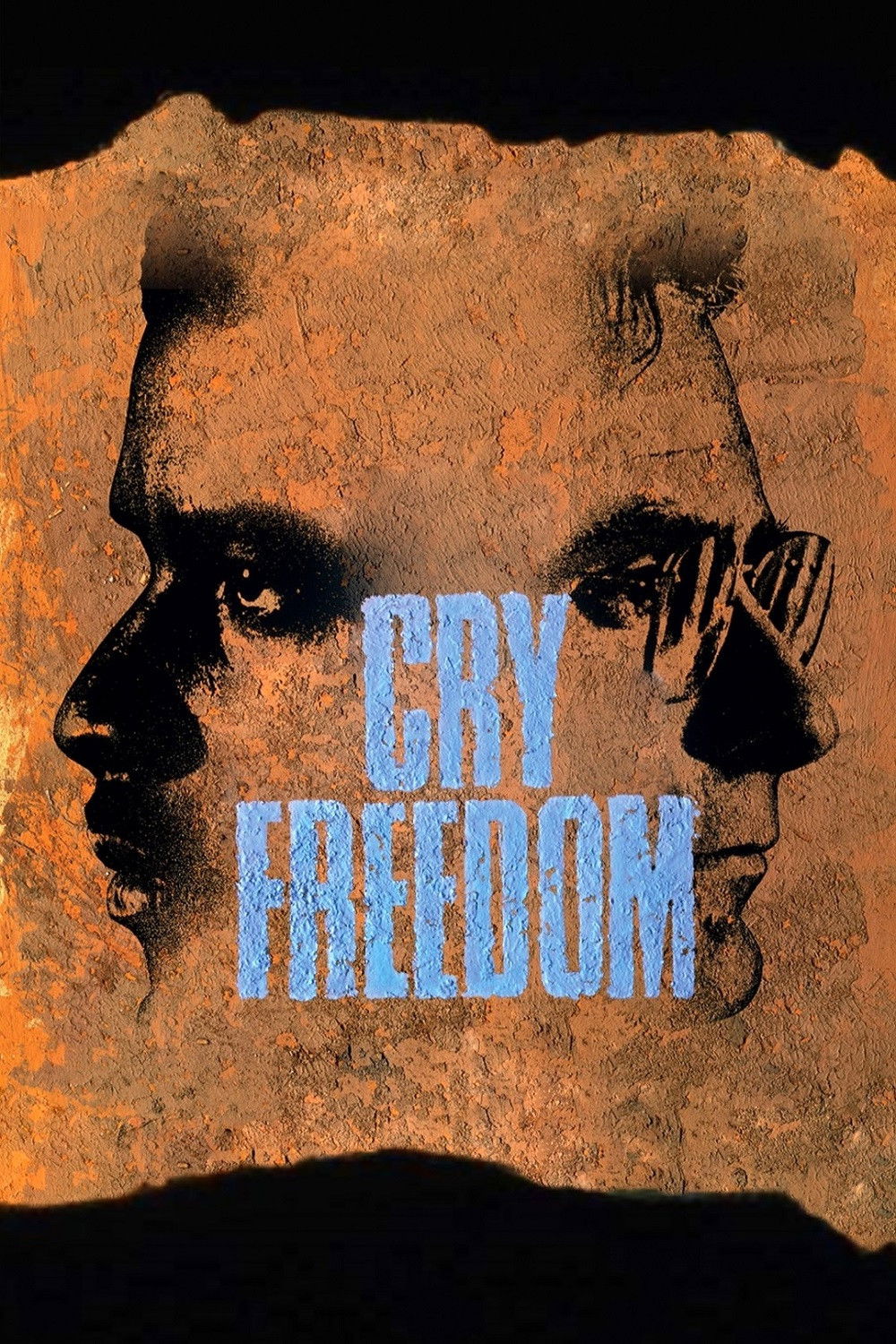
What the Film Is About
When I first watched “Cry Freedom,” I expected a tale centered on South African history, but what unfolded pushed me into a deeper state of contemplation. The film uses the friendship between Donald Woods, a white liberal editor, and Steve Biko, a Black activist, as an anchoring point to explore the unforgiving realities of apartheid-era South Africa. This is not just a movie about two men; it is a personal record of moral awakening, a challenge to complacency, and a document of the emotional and psychological toll exacted by systemic injustice. I found myself not only intellectually challenged, but on several occasions, emotionally overwhelmed by the moral questions the film indirectly asks of its audience: What would I have done? Would I have spoken up or stayed silent, and would I have had the courage to keep going in the face of such overwhelming odds?
“Cry Freedom” is, on the surface, a historical drama about resistance and journalistic truth-telling during apartheid. But in its execution, it becomes more than a recounting of its source events; the film becomes about the collision between comfort and conscience. For me, it was an invitation into the discomfort of history, asking not just to witness, but also to reckon with, histories of complicity and courage intertwined.
Core Themes
What lingers with me, long after the closing credits, are the film’s urgent inquiries into moral responsibility and the cost of bearing witness. “Cry Freedom” is less a story of straightforward heroism and more an anatomy of the psychological and ethical conflicts inherent in challenging an unjust system. The filmmakers ask: What does it really mean to be an ally? Can empathy and solidarity bridge the chasm that society has brutally carved between races and classes? These questions resonated deeply with me as I watched Woods move from detached observer to impassioned advocate.
The theme of systemic oppression is omnipresent. Every frame contains reminders of the machinery of apartheid—restrictive laws, passbooks, segregated living, and arbitrary authority. But the film doesn’t settle on oppression alone. Instead, it investigates acts of courage in the face of what seems insurmountable. The steady pulse of resistance, exemplified by figures like Steve Biko, forms the heart of the narrative. I repeatedly returned to the notion that radical change often begins with individual relationships that defy sanctioned boundaries.
Another central theme that struck a personal chord is the burden of privilege and the different risks faced by people depending on their social standing. Woods’s journey is fraught but fundamentally different from Biko’s, whose activism courts annihilation from the first moment. By juxtaposing their fates, the film scrutinizes the uneven terrain of risk and consequence, a lesson that made me re-examine my own sense of security, the freedoms I take for granted, and the uncomfortable truth that courage often costs more for some than for others.
Finally, “Cry Freedom” interrogates the power and limitations of the written word. The story is also about journalism—about who gets to tell stories, how truth is policed, and the consequences for those committed to exposing uncomfortable realities. Watching Woods struggle to smuggle out Biko’s testimony made me reflect on the enduring tension between truth and safety, and the paradoxical suggestion that while truth can liberate, it can also destroy.
Symbolism & Motifs
The film is rich with recurring visual and narrative symbols that reinforce its thematic content. Identity documents (the infamous passbooks) are a motif that encapsulates the day-to-day indignities of apartheid, reducing complex individuals to bureaucratic categories. These objects recur with meticulous, almost oppressive frequency, reminding me constantly that violence is as much psychological as it is physical. Each time a character is asked for their pass, I felt the cumulative weight of state surveillance hanging in the air.
Water is another recurring symbol, particularly in scenes involving Biko’s speeches and gatherings. In several moments, water appears as a metaphor for life, resilience, and purification—hinting at the hope that, even in parched conditions, resistance can sustain communities. These counterpoints to state violence remind me of the human drive toward dignity, no matter how many barriers are erected.
The motif of doors—locked, kicked in, or quietly shut—underscores themes of access, exclusion, and intrusion. The frequent depiction of police raids and midnight invasions brought home for me the perpetual vulnerability faced by those classified as “other” under apartheid. These intrusions are not just corporeal, but symbolic breaches in personal autonomy and safety.
Finally, the recurring presence of radio and newspapers not only grounds the viewer in the narrative’s historical context, but also becomes a meta-commentary on the role of media. They are the lifelines that connect isolated struggles to the outside world, and their contested status in the film echoes ongoing debates about information control, censorship, and propaganda. I was struck by the enduring power of words to both inspire and endanger.
Key Scenes
Key Scene 1
The first scene that remains vivid in my memory is the initial encounter between Woods and Biko. It is a meeting brimming with intellectual sparring and mutual skepticism. What first struck me was the careful choreography of their discussion—every word charged with both possibility and peril. Their dialogue is not just a meeting of minds but a metaphorical crossing of boundaries, institutional and personal. As I watched Woods, at first hesitant and somewhat paternalistic, move toward real engagement, I recognized my own struggles to transcend the limitations of perspective and experience. The awkwardness, the pauses, the struggle to listen rather than judge—all mirror the challenges inherent in any real attempt at solidarity across divides. The scene raises uncomfortable questions: can empathy ever be enough? Can listening itself be a form of action? I left the scene not entirely sure but deeply moved by the risk both men take to trust one another, even tentatively.
Key Scene 2
The depiction of Biko’s death in police custody stands as the film’s moral and emotional apex. I found it almost unbearable to watch—its brutality rendered not in stylized violence, but in the mundane, bureaucratic evil of neglect and dehumanization. The choice to withhold direct spectacle and instead show the aftermath, the apologetic lies of officials, and the anguish etched onto the faces of those left behind, is a devastating critique of institutionalized cruelty. This sequence made me painfully conscious of the ease with which societies rationalize horrors done in their name. The emotional power of the scene made me reflect on the quiet complicity required to uphold such a regime and forced me to confront the ways ordinary people become cogs in destructive systems. The silence that follows Biko’s death in the film is, for me, the most eloquent statement: sometimes, absence testifies more effectively than presence. It left an ache that lingered long after the credits rolled.
Key Scene 3
Woods’s perilous escape from South Africa toward the film’s end is staged as a taut thriller, but beneath the suspense lies a deeper commentary on privilege and cost. Unlike Biko, Woods ultimately has a chance to run, to survive, to bear witness beyond the reach of South African security police. Watching Woods and his family navigate checkpoints and subterfuge, I was acutely aware of the luxuries of movement and choice, denied to so many others in the story. The tension in the scene is not just plot-driven; it is existential. With each obstacle, the stakes of telling the truth become more immediate, more personal. The realization that so much depends on factors like race, citizenship, and international attention presses upon every frame. This scene gave me an uneasy sense of the unevenness of liberation—the fact that for many, escape is not an option, and the only refuge is found in resistance itself, regardless of consequence.
Common Interpretations
“Cry Freedom” has prompted a spectrum of responses in the decades since its release, and my own view is colored by a recognition of both its contributions and its shortcomings. Many see the film as a vital exposé of apartheid, introducing international audiences to the realities of segregation, brutality, and heroism in South Africa. It is sometimes discussed in educational contexts where its dramatizations serve as a springboard for inquiry and activism. I share the sense that the film’s impact lies not only in its historical content but in its emotional urgency—its power to move viewers beyond passive observation into reflection or even action.
Yet the film has also faced pointed criticism for its storytelling choices, especially its framing through the eyes of a white protagonist. Some argue that this perspective softens or redirects attention from the lived experiences of Black South Africans. When watching, I was troubled by this dynamic, aware of the irony that a film about erasure can itself participate in erasure. Still, I found that the film’s efforts to depict the limitations and evolution of Woods’s viewpoint provided a partial, if uneasy, self-critique. For me, the merit of “Cry Freedom” doesn’t rest on narrative perfection, but on its ability to unsettle and provoke self-examination—an effect that feels essential when grappling with histories of injustice.
Another common interpretation is that “Cry Freedom” functions as a meditation on the power of storytelling and journalism. By foregrounding Woods’s struggle to publish the truth about Biko’s death, the film acknowledges the importance of bearing witness and amplifies the ethical stakes of reporting under repression. The act of smuggling a story becomes an act of resistance, a theme that resonates with me in our own era of contested narratives and state censorship.
Films with Similar Themes
As I reflect on “Cry Freedom,” I recognize a lineage of films that similarly interrogate injustice, resistance, and moral complexity. One immediate parallel is “Mississippi Burning” (1988), which also delves into racism, police violence, and the compromises faced by those seeking justice in a hostile environment. The comparison, however, raises important questions about perspective and voice—an issue both films navigate with varying degrees of success.
Another film that echoes some of the themes of “Cry Freedom” is “Schindler’s List” (1993), a work chronicling personal transformation and the collision between complicity and conscience. In both films, the protagonist’s increasing involvement exposes him not only to risk but to the necessity of uncomfortable choices in the pursuit of justice. Watching these works side by side made me consider how stories about atrocity often rely on the vantage point of a witness to convey systemic horror—highlighting both the strengths and limitations of this storytelling strategy.
Similarly, “The Battle of Algiers” (1966) stands out for me as a rigorous examination of colonial oppression and the calculus of resistance. Its unflinching depiction of insurgency and brutality complements “Cry Freedom”’s focus on non-violent protest and state repression. Watching these films in tandem made me more attuned to the global nature of struggles against domination—and to the diversity of tactics and voices that constitute such movements.
Finally, I think of “Selma” (2014), which dramatizes the 1965 marches led by Martin Luther King Jr.. Like “Cry Freedom,” “Selma” is preoccupied with the interface between leadership and collective risk, the visibility and vulnerability of activists, and the intricate architecture of systemic racism. Drawing connections between them, I experienced the recurring reminder that history is not remote but insistent, that the quest for justice challenges not only the powerful but all who would stand witness.
If you’re deciding what to watch next, you might also want to see how this film holds up today or how it was originally received.
🎬 Check out today's best-selling movies on Amazon!
View Deals on Amazon