
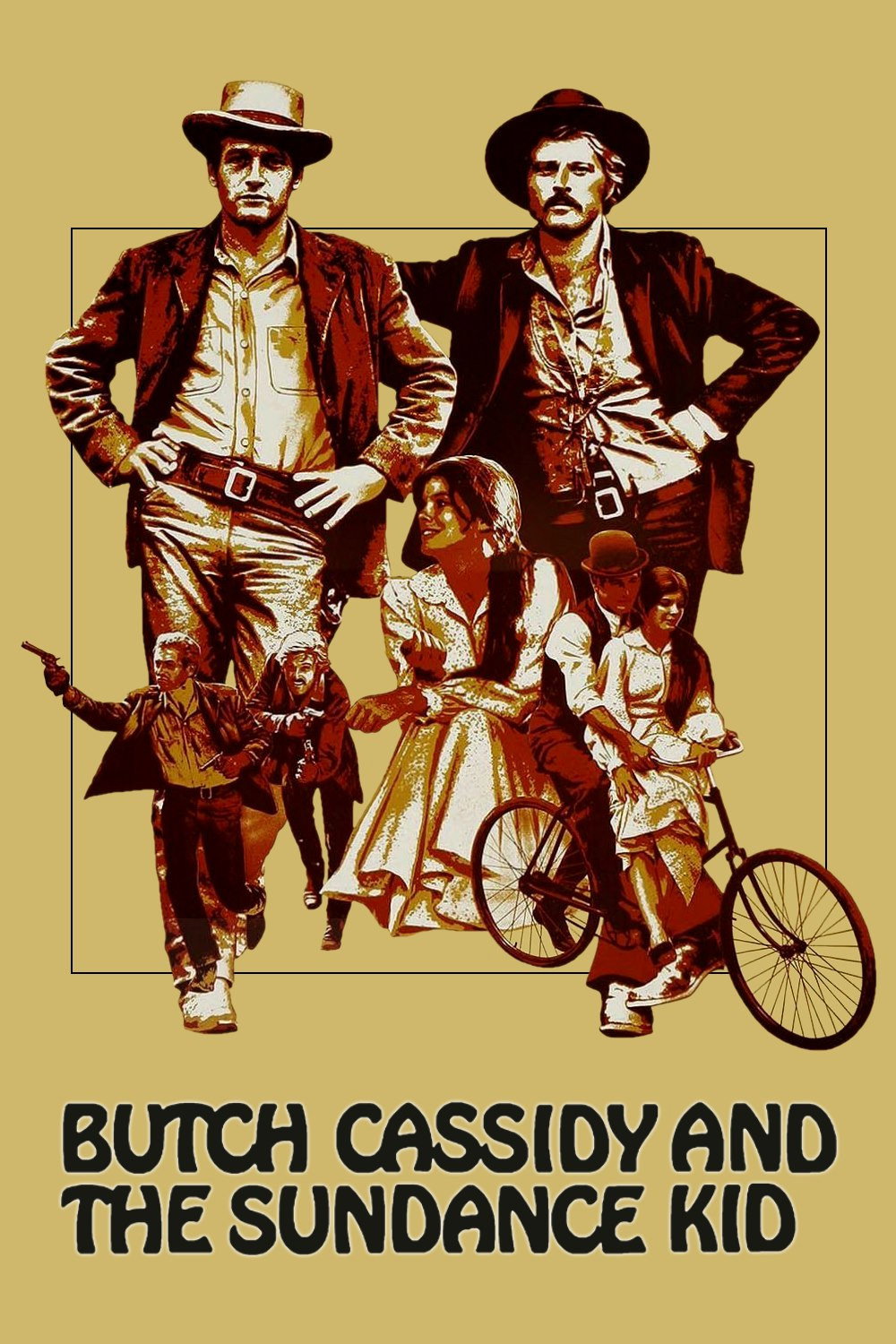
What the Film Is About
Every time I revisit Butch Cassidy and the Sundance Kid, I’m pulled not by nostalgia for its iconic lines or sun-drenched vistas, but by a quieter, more persistent restlessness—a deep resonance with its sense of fading worlds and uncanny wit in the face of the end. On its surface, the film is a buddy Western, sparking with the irreverent energy of Paul Newman and Robert Redford as legendary outlaws, but beneath that easy camaraderie lies a meditation on loss, adaptation, and the inexorable flow of time.
What makes this film linger with me isn’t punchlines or gunplay; it’s the haunting awareness that a way of life is vanishing, replaced by something altogether colder and more mechanical. These two iconic bandits aren’t romantic figures of boundless hope—they’re haunted, running gentlemen whose charms can’t outrun history. When I watch their story unfold, I’m reminded of an era’s twilight, and the uneasy realization that all eras, eventually, must fade.
Core Themes
The first time I saw the film—too young to understand every line but old enough to feel the ache behind a joke—I realized I wasn’t watching a straightforward Western. Its core is heavy with themes of change, mortality, loyalty, and what it means to be swept aside by history. Butch and Sundance aren’t only outlaws; they’re men out of time, charmingly ill-equipped for the growing complexity of the world around them.
- Change and Obsolescence: The film revolves, inexorably, around change. The old West—their stage, their playground, their home—is closing shop. The advent of organized law enforcement (the seemingly unstoppable super-posse), the omnipresent telegraph wire, even the train companies, embody the spread of modernity that leaves little room for the free-wheeling antics of folk heroes.
- Friendship as Refuge: If I had to name the emotional bedrock of the film, it’s the profound, fraternal friendship between Butch and Sundance. In the chaos of pursuit, their trust in each other reads not only as camaraderie but as defiance—a last grasp at meaning and continuity as everything else dissolves.
- Laughing into the Abyss: There’s a persistent levity in the dialogue—even in crisis, the banter never wholly fades. But unlike the self-assured quips of invulnerable action heroes, these jokes feel desperate, symptomatic of men who sense that their luck, and their time, are running out. Humor isn’t a shield; it’s a coping mechanism against the irreversibility of their obsolescence.
- The Displacement of Innocence: The West of the film isn’t innocent, but there’s a sense of childlike improvisation in Butch and Sundance’s escapades. The encroachment of mechanized pursuit replaces imagination with strategy, heart with calculation.
These themes don’t just color the periphery—they define the story’s tone. For me, every re-watch is a personal dialogue with the inevitability of change, with how we respond—clinging, joking, running—from the futures we didn’t choose, and perhaps cannot accept.
Symbolism & Motifs
So much of what I love about Butch Cassidy and the Sundance Kid is found in its careful layering of imagery and recurring motifs. The film’s very structure mirrors its themes—snatches of sepia still-lives, moments of joyful movement, then lingering, unbearable stillness.
- The Bicycle: The famous scene where Butch shows off the newfangled contraption for Etta isn’t only comic relief. The bicycle stands as a symbol of change—a quaint harbinger of new directions, one that feels charming but, to Butch, is alien and ridiculous. Sympathetically, I relate to Butch’s mix of enthusiasm and awkwardness—approaching change with bravado, but never quite belonging there.
- The Train: The film’s trains aren’t just vehicles for robbery—they’re the muscle and sinew of a new, regulated America. The contrast between steam and horseback, schedule and wandering, plays out in every robbery; Butch and Sundance pit their improvisation against the predictability of machinery.
- The Super-posse: The interminable chase by a near-mythical group of lawmen, never seen clearly, becomes a spectral force—invincible, tireless, the embodiment of change itself. As the chase drags on, they turn from men into inevitability, suffocating every option, closing every door. I feel the anxiety mount with every scene: what happens when you’re finally caught by an age you can’t outrun?
- Sepia-Toned Photographs: The recurring images and transitions presented as old photographs evoke, for me, a mournful nostalgia—a deliberate reminder that these are moments already ended, legends already mythicized even as they play out alive on screen.
The film abounds with these motifs, evoking the passage not just of men but of myth. By the end, I find myself mourning not only Butch and Sundance, but the world that made them possible.
Key Scenes
Key Scene 1
One recurring image etched in my memory is the extended, relentless pursuit by the super-posse. There’s an unrelenting rhythm as Butch and Sundance scramble across rock faces, through rivers, and into desperate hiding. I never see their pursuers up-close—the posse is always distant, blurred by dust, rendered nearly supernatural. Each time, I feel the tension ratchet higher. It’s not a cat-and-mouse chase so much as a slow strangulation. What I take away most powerfully from these sequences is the sense of doom—not from a villain, but from history’s encroaching hand. Their desperate choices, banter, and hope for escape all seem to age before my eyes with every cut, every narrowed escape route. It’s less about who’s faster or more clever, and more about who’s refusing, one step at a time, to accept the terms being forced upon them.
Key Scene 2
The Bolivian shootout, especially its final moments, remains one of cinema’s most famous codas, and for good reason. As Butch and Sundance huddle, battered and bleeding, exchanging their last words, the screen freezes just as they burst from cover, guns drawn, into a wall of bullets. Every time I reach this moment, I brace myself—the image is endless possibility and inevitable doom intertwined. In that frozen frame, there’s space for hope, for fantasy, for an unbroken outlaw legend. But the sepia coloration roots it in memory, in myth, and, crucially, in loss. For me, it’s a far more searing goodbye than any direct depiction of their deaths would be; it allows them, and me, to suspend disbelief for a moment, and to recognize the power myth has over endings.
Key Scene 3
The bicycle ride with Etta is at once lighthearted and unbearably poignant. As Butch sings and goofs about, there’s an innocence to the moment, playful and bright. Yet, I always sense a tension beneath the play—this is Butch trying, perhaps, to imagine a place for himself in a world he knows is leaving him behind. The bicycle, with its promise of forward motion and progress, is clumsy in his hands. Etta’s laughter mixes affection with pity, and I’m reminded how terribly hard it is to keep pace with a world that’s outgrown you—no matter how charming or optimistic you might be.
Common Interpretations
Over the years, I’ve found countless readings of the film, each one filtering its meaning through the lens of the times and the personal stories of its viewers. To some, it’s a classic buddy movie, all charisma and one-liners—a celebration of friendship and bravado against impossible odds. For others, it’s a revisionist Western, using irony and self-awareness to critique and update an old form. But for me, the most resonant interpretation comes as a gentle elegy for both the men and the mythologies of their era.
There are viewers who see Butch and Sundance as anti-establishment icons, rebels who refuse to serve any system but their own. There are those who frame them as tragicomic figures, their wit and cleverness little comfort as the walls close in. Some critics focus on its tone—a blend of comedy and violence almost unprecedented in earlier Westerns—as a reflection of the turbulence and ambivalence of late 1960s America, with its lost innocence and questioning of old heroes. I’ve always felt the film works by holding the tragic and the comic in a precarious, beautiful balance: it laughs at the darkness without denying it, and allows sorrow to creep in around the edges of every smile.
No single interpretation can quite capture the film’s ache. For me, what endures—what keeps me coming back to it on quiet evenings—is the sense of searching: for connection, for meaning, for a place in a world that seems indifferent or outright hostile. It’s a film for anyone who’s ever felt the chill of time closing in, and who’s tried, even just for a while, to outrun it with a grin.
Films with Similar Themes
Part of what makes Butch Cassidy and the Sundance Kid so powerful for me is how it echoes in other stories—not just other Westerns, but films grappling with the tension between tradition and modernity, between friendship and isolation.
- The Wild Bunch (1969): Released the same year, Sam Peckinpah’s film shares a deep engagement with the passing of the old West and the violence of its replacement. A far bleaker vision, but similarly haunted by change and obsolescence.
- Bonnie and Clyde (1967): While set in a different era, this film also follows charismatic outlaws doomed by forces larger than themselves, blending glamor, humor, and fatalism in a way that feels kin to Butch and Sundance’s journey.
- Unforgiven (1992): Clint Eastwood’s late Western sifts through the myth of the gunslinger in a world that no longer cares for heroics, offering a somber, self-referential look at what happens when your time has gone.
- No Country for Old Men (2007): The Coen Brothers’ adaptation of Cormac McCarthy’s novel confronts aging, fate, and the unstoppable progress of a colder, more impersonal world, echoing the relentless pursuit motif from Butch Cassidy’s super-posse.
- The Last Picture Show (1971): Not a Western in the conventional sense, but a film suffused with the ache of a dying way of life, set in a small Texas town awash with nostalgia and regret.
Each of these films pushes at the boundary between myth and reality, asking what, if anything, survives the march of time or the end of an era. I find myself drawn repeatedly to their quiet melancholy, their winking sense of humor—and ultimately their uneasy peace with impermanence.
If you’re deciding what to watch next, you might also want to see how this film holds up today or how it was originally received.
🎬 Check out today's best-selling movies on Amazon!
View Deals on Amazon