
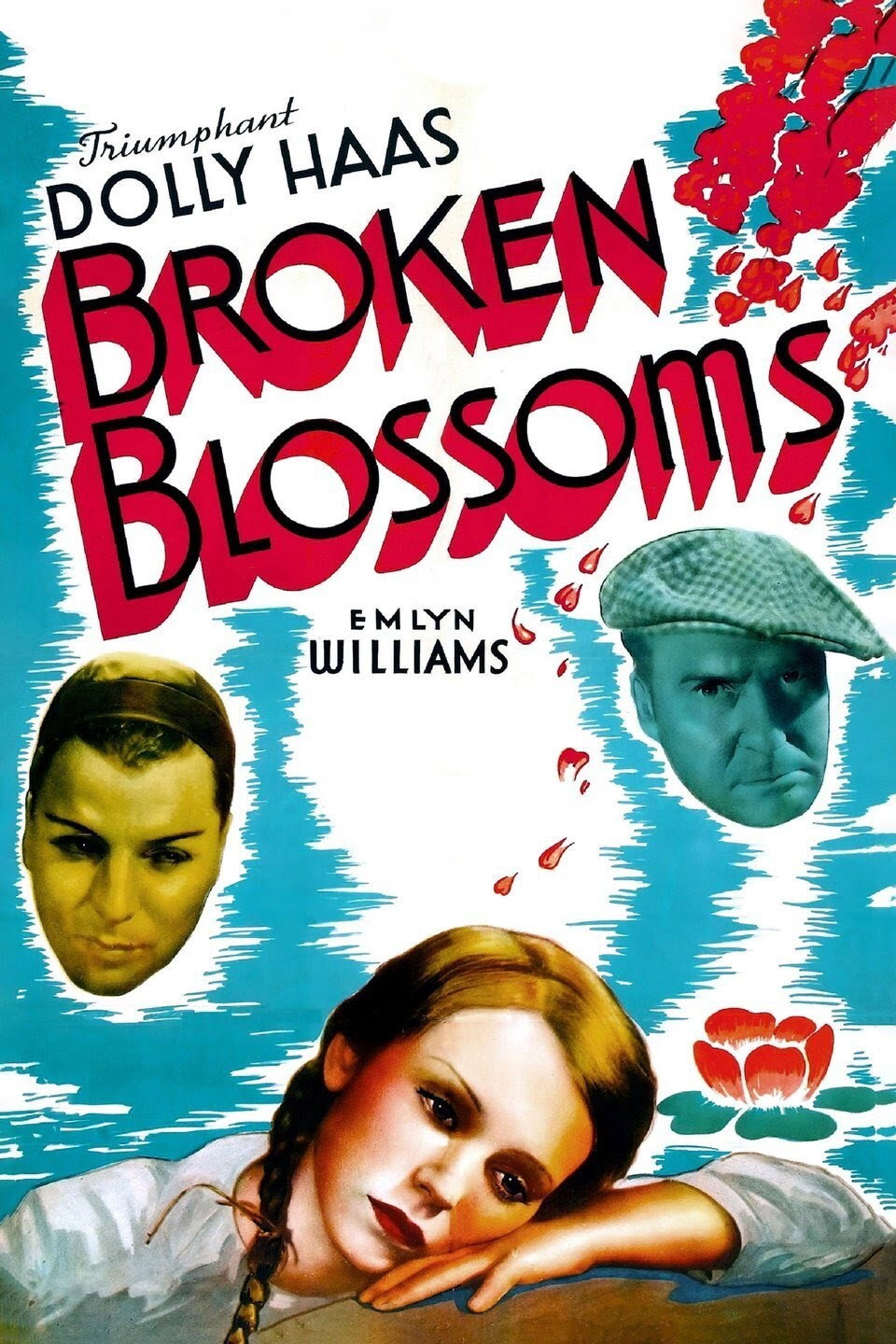
What the Film Is About
When I first encountered D.W. Griffith’s 1919 silent film “Broken Blossoms,” I didn’t expect to be so deeply unsettled. While I had read that it was a melodrama set in London’s Limehouse district, what ultimately struck me was not the simplistic outline of cultural encounter but the profound sense of tenderness and sorrow that bleeds through every frame. For all the film’s melodramatic trappings, “Broken Blossoms” offers a primer in empathy and endurance—a story that feels just as urgent in an era marked by its own forms of alienation. More than a cross-cultural romance, it’s an intimate meditation on the search for refuge in a relentlessly violent world. There is very little comfort to be found in its story, yet in that absence, I find the emotional core of why the film endures for me long after the credits fade away.
From my vantage point as a modern viewer, the film’s age is impossible to ignore—there are scenes and stereotypes that feel uncomfortable and dated, attempts to convey difference that ring awkwardly. Yet, when stripped of the mannerisms of another century, the film’s aspirations become brighter: to give voice to the voiceless, and to show suffering with such rawness that it refuses to look away. For all its limitations, “Broken Blossoms” pulled me headlong into its world through a clarity of emotion that feels radical, even now. The story is less about a plot than it is about two haunted souls—one an abused child, the other a Chinese immigrant—finding fleeting solace in each other’s wounded presence. That accidental grace is perhaps the rarest quality in silent cinema, and it’s this that haunts me every time I reflect on the film.
Core Themes
The heart of “Broken Blossoms,” as I see it, is the brutal opposition between cruelty and compassion—two forces constantly in battle, both outwardly and within. The film’s fundamental drama is not simply one of East meeting West, but of gentleness striving to survive in a world overwhelmingly inhospitable to it. Lucy Burrows, embodied in Lillian Gish’s delicate, trembling performance, is the apotheosis of innocence and vulnerability. Each time I return to this film, I’m astonished by how nakedly her pain is registered: every grimace and flinch a testament to a lifetime of brutality under her father’s fists. Yet it’s not her suffering alone that wounds me—it is her resilience, her tentative openness to fleeting happiness even as danger circles ever closer.
I find myself particularly drawn to the film’s insistence that acts of gentle kindness are, by the logic of its world, acts of quiet rebellion. Cheng Huan, the immigrant played by Richard Barthelmess, originally sets out to preach the Buddha’s message of peace to the West. That mission, soon crushed by experience, transforms him into a loner drifting through a hostile city. When fate brings Lucy into his orbit, I recognize not a romantic ideal but a portrait of exhaustion—kindness as something both beautiful and perilously fragile. In their shared moments, I see a world worn by violence and bigotry, and yet still capable of blooming, if only for a moment, with the possibility of tenderness.
Opposition and contrast are at the core of my reading of the film. Not just between East and West, but between hope and despair, between the interior realm of dreams and reverie, and the harsh outside world. It’s notable to me how frequently the characters gaze out from behind closed doors and latticed windows, their gestures speaking of longing for safety, for understanding, for connection. Each boundary in the film—social, cultural, even architectural—becomes a dividing line, visible in every composition. For me, the tragedy of “Broken Blossoms” lies less in the specific fates of its characters than in the apparent impossibility of bridging those divides.
Symbolism & Motifs
Every time I watch “Broken Blossoms,” I don’t just see characters playing out a sad story—I encounter a world suffused with symbols, gestures, and recurring motifs that seem to amplify the film’s emotional timbre. The titular blossoms, for one, are never merely decorative: they become the stand-in for the fragility of hope, touched only fleetingly before inevitable destruction. I find that the way Griffith weaves flowers throughout the film—Lucy’s delight at receiving them, the way Cheng Huan gently offers a single bloom—creates a vocabulary of yearning. The modest bloom becomes the emblem of a better world just out of reach, a world in which gentle gestures might survive hard circumstances.
The motif of abuse is omnipresent, and I feel it most intensely in the use of space. Lucy’s attic, with its close-set walls and shadow-cast corners, functions as both refuge and prison. Doors slam, trap, and isolate, underscoring how physically limited her options are. In stark contrast, Cheng Huan’s shop is a fantasy of peace, adorned with paper lanterns and soft fabrics, where light falls just so, creating an almost otherworldly tranquility amidst urban squalor. Each time Lucy enters that space, it’s as if another world were possible, and yet I know the outside reality will not let that illusion stand for long.
The motif of the journey is also central to my understanding of the film’s ambitions. In showing Cheng Huan’s journey from China to London, the film sketches a global movement that circles back on itself, confronting utopian hopes with hard experience. The dream of transforming the world through peace—explicitly referenced in the Buddha statue that presides silently over many scenes—comes up against the entrenched masculine violence embodied by Lucy’s father. For me, the film’s religious symbolism is less about Buddhist doctrine than about the stubborn endurance of gentleness, the daily struggle to preserve it in spite of relentless suffering.
Language itself—especially in a silent film—becomes a motif. The absence of speech forces the audience to read meaning in eyes, gestures, and visual contrasts. Each intertitle is carefully crafted, but I’m always aware of what is not said, of words left unspoken out of fear or shame. I see this most powerfully in Lucy’s relationship with Cheng Huan, where so much longing and care must be communicated without the crutch of dialogue. It’s a film about silences as much as about violence.
Key Scenes
Key Scene 1
For me, one of the most haunting scenes is the moment when Lucy, battered and terrified after an especially violent beating, escapes to Cheng Huan’s shop. The door closes behind her and, instantly, I feel the atmosphere change: from cold and threatening to safe and impossibly gentle. Here, Griffith uses all the tools of silent film—soft lighting, gentle camera movement, close-ups of Lucy’s trembling face—to draw me into the sanctuary these two find together. The simple act of Cheng Huan offering Lucy a flower becomes a ritual of promise: for moments, the world outside falls away. In rewatching this, I’m always struck by how much meaning can be packed into a wordless exchange, how nearly-unbearable tenderness can feel when set against such a background of violence. Safe spaces are as fleeting as blossoms in this narrative, and their beauty lies in that very fragility.
Key Scene 2
Another unforgettable sequence for me is Lucy’s desperate retreat to the tiny closet at the film’s climax. After being discovered by her brutal father, Lucy’s final stand—cowering behind a flimsy door as her father pounds away—is a masterclass in suspense, but also in emotional identification. The claustrophobia of the scene, the ways Lucy contorts herself to make herself as small as possible, highlight the utter absence of protection available to the vulnerable. Watching this, I find myself not just as a spectator, but almost a participant, drawn in by the camera’s tight focus and Gish’s raw performance. There is something deeply truthful here: the defenses we construct against violence are never quite enough. The violence, when it finally crashes through, becomes not just the destruction of safety but the destruction of hope itself.
Key Scene 3
I return again and again to the quiet aftermath of the film’s tragedy: Cheng Huan, cradling Lucy’s lifeless body, surrounded by the remnants of the dreams both held. The scene is suffused with a sense of irreversible loss. Here, the Buddha statue looms over the tableau—a silent witness to suffering. I interpret Cheng Huan’s final actions (his decision to take his own life) not as melodramatic excess but as the inevitable end of a world in which tenderness is impossible to sustain. What lingers with me is not just the despair, but the film’s refusal to offer easy consolation. There is no redemption here, only sorrow, and yet the film insists on the dignity of the broken. The cycle of violence is not magically undone, but for a brief time, love manages to flicker.
Common Interpretations
Reflecting on “Broken Blossoms” through the lens of film history, I recognize several strands of interpretation. Some see it as a classic example of the early cinematic melodrama, focusing on Lillian Gish’s iconic performance and the expressive potential of silent cinema. Others, more critically, probe the film’s representation of race—Cheng Huan’s character played by a non-Asian actor, with all the attendant stereotypes that now read as both problematic and symptomatic of early 20th-century attitudes. When I consider racial and cultural dynamics, I find myself walking a fine line between acknowledging the film’s limitations and recognizing its aspirations: it depicts the immigrant as a figure of moral and emotional nobility, even as it exoticizes him. There is no escaping the ways in which both violence and tenderness are mediated through the lens of the dominant culture.
Several critics have noted the film’s treatment of violence, particularly domestic and patriarchal violence. When reading “Broken Blossoms” alongside other social problem films of the era, I see Lucy’s plight as emblematic of a larger malaise—the powerlessness of women and children in a system geared towards male authority. To me, the film’s willingness to dwell on the impact of abuse, to make Lucy’s suffering visible and central, marks it as an early work of cinematic empathy. Whether or not it succeeds on every note, the mere act of representing such suffering remains significant.
Others approach “Broken Blossoms” as an allegory of unattainable ideals. The dream of cross-cultural understanding and harmony is quietly undone by forces of ignorance and cruelty; the blossoms break just as a fragile relationship blooms. In this reading, the film is more about mourning lost possibilities than showing how to overcome adversity. This is how I most often approach the film—as a lament for the world we might have had, had violence not intervened. Yet, even in that lament, I find a kind of beauty: a record of the moments when gentle souls found each other, however briefly.
Films with Similar Themes
Whenever I reflect on “Broken Blossoms,” other films of sorrow and solace inevitably come to mind. Charlie Chaplin’s “The Kid” (1921) resonates for me with its portrait of found family and childhood pain, similarly foregrounding the resilience of the vulnerable and the desperate need for kindness in an urban wasteland. “The Crowd” (1928) by King Vidor, though focused on a different set of struggles, explores the quiet tragedies of ordinary people battered by indifferent city life.
I also think of “The Story of the Last Chrysanthemums” (1939) by Kenji Mizoguchi, where the motif of the fragile flower blooms anew as a symbol of hope impossibly at odds with reality. A more modern parallel, in a less melodramatic guise, can be found in “Nobody Knows” (2004) by Hirokazu Kore-eda, which, like “Broken Blossoms,” immerses the viewer in the world of children abandoned to their fates, searching for meaning and kindness where so little is offered.
Most striking are those films that seek to understand suffering without resorting to easy answers. In Satyajit Ray’s “Pather Panchali” (1955), I sense another echo, the same impulse to linger with characters in poverty yet without stripping them of their dignity or humanity. These films, like “Broken Blossoms,” do not flinch in the face of hardship; instead, they use the camera to bear witness, to render pain visible, and—when possible—to memorialize the rare beauty of compassion asserting itself in the least likely places.
For more context before choosing your next film, these perspectives may help.
🎬 Check out today's best-selling movies on Amazon!
View Deals on Amazon