
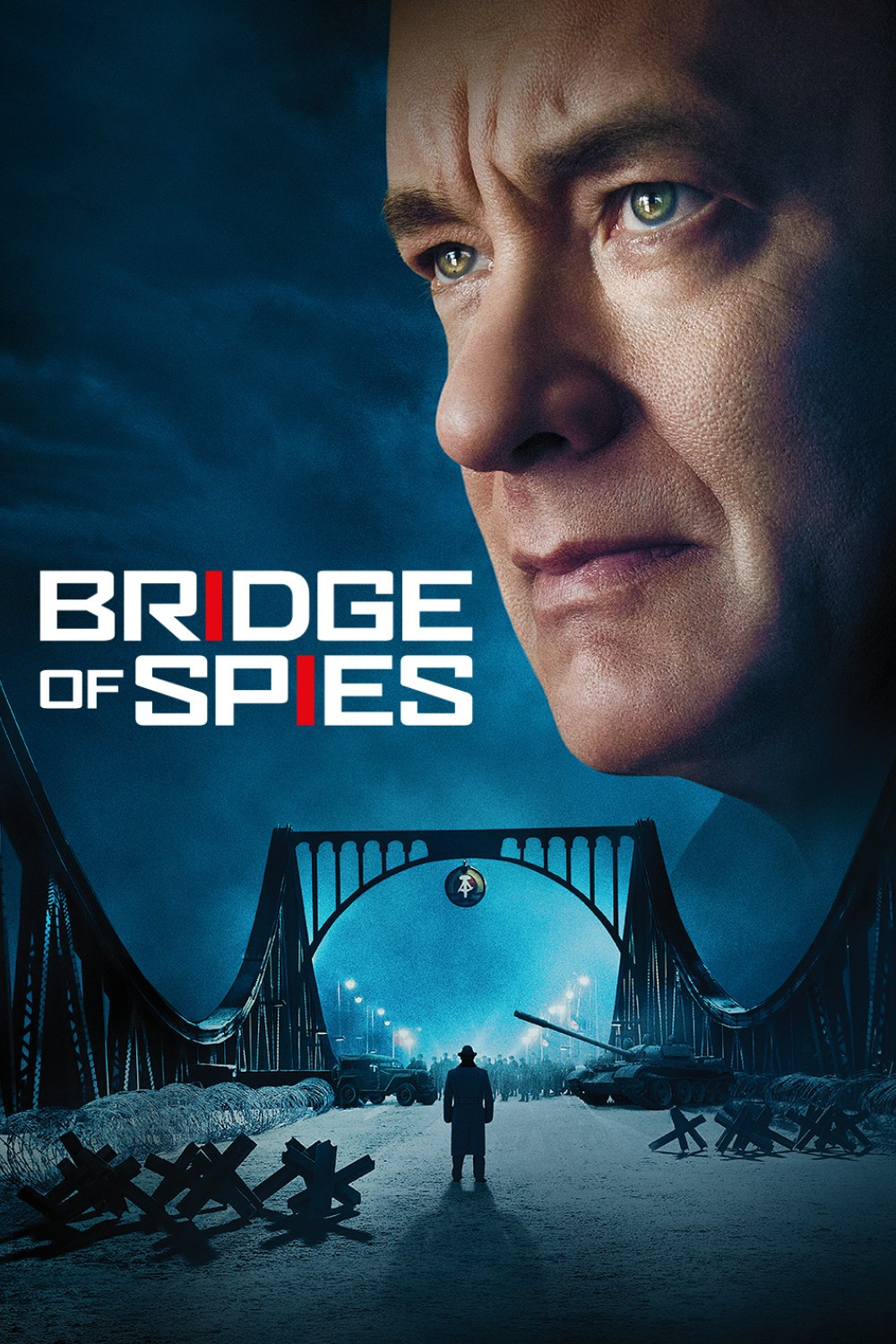
What the Film Is About
Watching “Bridge of Spies,” I found myself deeply drawn into a world that feels at once distant and painfully familiar. The movie throws me back into the charged era of the late 1950s and early 1960s, when the world teetered on the edge of nuclear brinkmanship and mutual suspicion. Yet, the canvas Steven Spielberg paints is more than a Cold War thriller—it’s a nuanced meditation on what it means to be human in a world cleaved by ideology. I’m compelled less by the story’s specifics—swap negotiations, ideological chess, and legal tactics—and more by the film’s persistent questioning of fairness, loyalty, and the individual’s place against the roar of history.
At its heart, “Bridge of Spies” is the story of James B. Donovan, an American insurance lawyer unexpectedly recruited to defend Rudolf Abel, an accused Soviet spy. What unfolds is not just the drama of a man reluctantly becoming a diplomat during the high tensions of the Cold War, but a profoundly stirring journey through the moral labyrinth of patriotism, justice, and human dignity. Every moment I spent watching Donovan navigate his adversarial environment nudged me towards questioning how far I, or any of us, would go to uphold principle in the face of massive social and political pressure.
Core Themes
The deeper I ventured into the fabric of “Bridge of Spies,” the more I realized its most persistent theme is the value of the individual—sometimes even above the nation-state. Donovan is thrust into a narrative where his commitment to due process and fairness for Abel is roundly misunderstood by his peers, the media, and even his own family. This devotion to principle is a through-line that continually prompts me to reflect on the price of genuine integrity. I am struck by how, in Donovan’s refusal to bend to prejudice and governmental cynicism, the film makes an urgent case for what I’d call “soft heroism”—the slow, sometimes lonely work of standing up for what’s right, without fanfare or violence.
Another theme that resonates with me is the shifting nature of identity under political duress. Abel, painted by many as a faceless threat, is quietly imbued with an inner dignity that not only humanizes him but also exposes the arbitrary divisions of nationality and ideology. As Donovan interacts with both Americans and Soviets, I recognize the persistent undercurrent: people, across divides, often fear, love, and hope for many of the same things. This empathy embedded in character interactions feels subversive considering the genre’s usual stakes—nations fighting for survival.
The film is also an understated exploration of negotiation—not just the kind that happens at tables between diplomats, but the negotiation each character enacts daily between what their country demands and what their conscience allows. As I contemplate this, I see how “Bridge of Spies” offers a compelling lens on the price of principled engagement in a time when bending to power might seem easier and less costly.
Symbolism & Motifs
Every time I watch “Bridge of Spies,” I notice how charged its setting and iconography are—how themes are mapped not just through dialogue but through careful deployment of space, weather, and barriers. The bridge itself—the Glienicke Bridge that gives the film its name—is more than a mere meeting point for political exchange. For me, it becomes a liminal space, standing in for all the divides (national, psychological, ethical) that the film probes. As Donovan walks across it, I’m reminded both of fragility and potential. The bridge represents what’s possible when connections are built not on trust, perhaps, but on careful mutual acknowledgment of shared humanity.
Winter, snow, and the ever-present cold are motifs I can’t ignore. The harsh Berlin weather is not simply historical authenticity—it sharpens the emotional chill of the Cold War itself. The deep blues and greys of the cinematography reinforce a sense of psychological isolation, making Donovan’s stubborn quest for decency all the more moving. I see the cold as a constant antagonist, pressing on every conversation, every negotiation. Whenever the warmth of a handshake or an act of empathy breaks through, it feels monumental—a flash of hope in a frozen world.
I also pick up on the juxtaposition of the American and Soviet flags, of homespun American domesticity and the battered landscape of postwar Berlin. Spielberg plays methodically with these contrasts, reminding me of what is at stake at the level of ordinary people—a child’s safety, a family’s hopes—within the broader theater of superpower rivalry.
Key Scenes
Key Scene 1
One of the most formative scenes for me is Donovan’s impassioned defense of Abel in court. Amid a sea of antagonism, Donovan’s voice is quiet but firm. He makes the argument that America is defined not by its enemies, but by its adherence to the rule of law, even when—especially when—upholding those laws feels dangerous. The clarity of this scene lingers in my mind and challenges my own definitions of patriotism. Amid the pressure to dehumanize Abel, Donovan’s insistence on fairness becomes a radical act—not just legal, but deeply moral. The scene forces me to confront what it genuinely means to uphold ideals in troubled times. Donovan’s defense is not grandstanding, but a profession of faith in the structures that keep society from sliding into barbarism.
Key Scene 2
Another scene I return to is the clandestine night crossing at the Berlin wall, when Frances Powers, the downed American pilot, is held captive. On the surface, this scene is about orchestrating a swap. But when I see Donovan moving through this divided city, negotiating not only with officials but also with the precariousness of fate (the chaos of checkpoint Charlie, the fear-ridden interactions with East German authorities), it reads as a metaphor for every moral crossing we must make in life. I think about the permeability of boundaries and the ways in which history invents lines that ordinary people must navigate. Donovan, alone and dogged in unfamiliar territory, becomes for me an avatar of the unwelcome responsibility each of us faces in the face of injustice—the knowledge that sometimes no one else is coming to make the hard choices on our behalf.
Key Scene 3
The final exchange on the titular bridge packs an emotional weight that pulls together the film’s undercurrents. As Donovan oversees the exchange of Abel for Powers, the silence, punctuated by measured steps and uncertain glances, presses on me the true stakes: these are not just political chess pieces, but men with histories, families, and complicated allegiances. Everything about this moment—the cold river beneath, the frozen air, the solemnity of the proceedings—makes me reflect on negotiation as a form of hope, a fragile act of trust in a climate trained towards suspicion. I watch Abel and Donovan share a final look, and I see in that unspoken exchange a recognition that, for all the trappings of statecraft, it is the gestures of individuals that save lives and illuminate the possibility of peace.
Common Interpretations
When I discuss “Bridge of Spies” with friends or fellow film lovers, I often encounter readings that focus solely on political gamesmanship or the heroism of Donovan as an American ideal. While these are certainly present, what lingers for me is how thin the line is between selflessness and self-preservation. Some see the film as a patriotic story of American exceptionalism—Donovan as the paragon of what is best in the national character. Yet, to me, the more potent reading is one that sees Donovan’s journey as a triumph not of nationality but of conscience—a deeply human, rather than purely American, victory.
Others read the film as a demonstration of the absurdity of the Cold War: two superpowers trading in secrets and lives with devastating nonchalance. I don’t disagree, but what makes the film compelling for me is how, in the midst of this absurdity, individuals can still choose dignity. Spielberg’s humanism comes through in small moments—the kindness exchanged between adversaries, the recognition of shared vulnerability. To me, “Bridge of Spies” is less about what divides us than what persists quietly beneath those divisions: the possibility of compassion under even the greatest pressure.
Some viewers point to the film’s meticulous period detail and dry procedural pace as evidence that Spielberg is making a statement about the relentless grind of diplomacy and legal processes. While that is undeniably true, I find myself most affected by the emotional charge lurking beneath the surface. The realism and restraint amplify the moments of warmth and empathy—which serve as subtle acts of resistance in a cold world.
Films with Similar Themes
My mind turns naturally to other films that probe the moral ambiguities and quiet heroism explored in “Bridge of Spies.” Among them, Spielberg’s own “Lincoln” seems a cousin, mining the drama in legislative compromise and the moral cost of leadership. In “Lincoln,” as in “Bridge of Spies,” heroism is often incremental, suffused with self-doubt and negotiation rather than triumphant certainty.
Another film that echoes for me is “Munich,” also directed by Spielberg, which examines the ethical complexities of pursuing justice in the aftermath of violence. While “Munich” is darker and more ambiguous, both films share an awareness of how individual conscience is pressured, even warped, by the machinery of state power.
The 2012 film “Argo” comes to mind as well. While “Argo” leans more into suspense, it explores similar territory: personal ingenuity and ethical compromise set against a geopolitical backdrop. In all these films, I’m compelled by the ordinariness of the protagonists—everymen thrust into extraordinary circumstances and forced to weigh their private values against historical imperatives.
- To Kill a Mockingbird (1962): Another film about defending the unpopular and the necessity of principle.
- Tinker Tailor Soldier Spy (2011): A portrait of espionage as psychological attrition and ambiguity rather than glamour.
- A Man For All Seasons (1966): A meditation on conscience amid political pressure, with Sir Thomas More holding out for his principles against king and country.
- Thirteen Days (2000): A deep-dive into Cold War crises and the brinkmanship that defined the age.
All of these films, and especially “Bridge of Spies,” remind me that the backbone of history is often less about armies and more about the ordinary individuals who find the courage to negotiate, to stand their ground, and to build—however impermanently—bridges across the ice.
For more context before choosing your next film, these perspectives may help.
🎬 Check out today's best-selling movies on Amazon!
View Deals on Amazon