
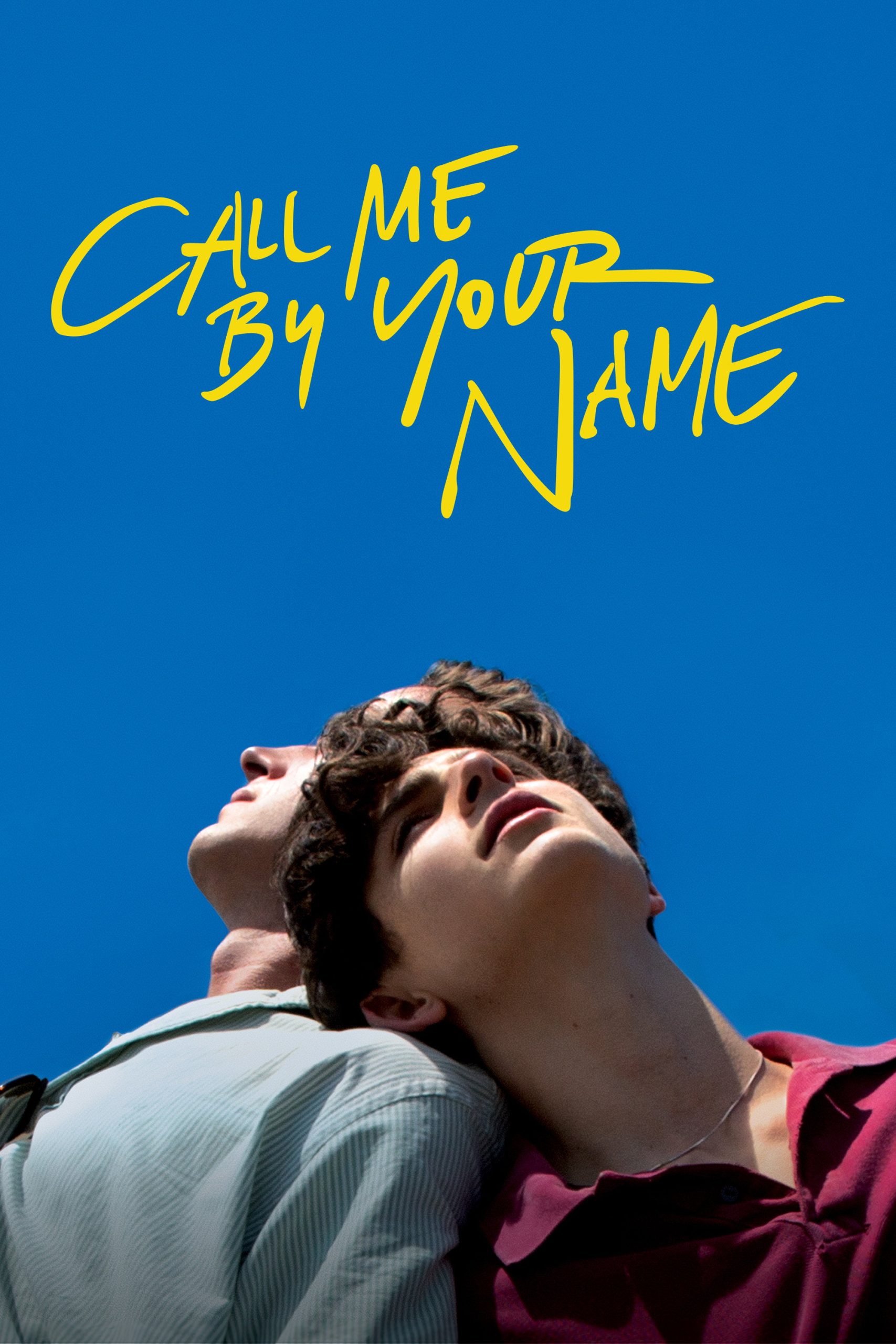
What the Film Is About
From the first moments of “Call Me by Your Name,” I felt drawn into an evocative world far removed from my everyday reality—a timeless Italian villa, sun-kissed gardens, and the gentle rhythms of a summer that seems to expand beyond the possibility of endings. For me, the true subject of this film is not simply the romance between Elio and Oliver, but rather the feeling of being caught between the fleeting freedom of youth and the inevitable gravity of maturity. Luca Guadagnino’s adaptation immediately strikes me not as a straightforward love story, but as a remarkably sensitive meditation on desire, identity, and the exquisite pain of transience.
It would be too simplistic to describe what unfolds in those lush, honeyed days of 1983 as just a coming-of-age tale or a tender romance. Instead, as I experienced it, the film unfolds like a memory—a mosaic of longing, discovery, and heartbreak. Every lush, sun-dappled frame seems fueled by undercurrents of anticipation and nostalgia; the air vibrates with secrets, not just spoken between its characters, but held closely to the heart by anyone who has ever experienced first love amid the fullness of a summer that feels like it might never end.
Core Themes
Reflecting on “Call Me by Your Name,” I’m struck by how interwoven its themes are. The film lingers in my mind because it confronts the ways we encounter ourselves through the act of loving someone else. Desire—a force both beautiful and brutal—lies at the heart of the story. I see Elio’s journey as one of losing and finding himself through his intense attraction to Oliver. Their initially tentative relationship becomes a crucible for self-discovery, where the boundaries between pleasure and pain, intimacy and isolation, are blurred.
The film’s exploration of memory is equally resonant to me. Every moment feels as if it’s being recalled from a future vantage point, tinged with the bittersweet ache of things lost and treasured forever. I relate deeply to the idea that our most formative experiences become memories that both wound and sustain us—a duality articulated with extraordinary delicacy in the film.
Identity, especially in relation to sexuality, is another core theme that permeates the narrative. While set in the more restrictive early 1980s, “Call Me by Your Name” approaches Elio’s awakening not as a political statement, but as something both deeply personal and universal. The film foregrounds the individual lived experience—how the process of discovering desire can be both liberating and utterly destabilizing.
Finally, the sense of impermanence that hovers over Elio and Oliver’s relationship is, for me, one of the film’s most powerful themes. The awareness that summer must end, that love is all the more precious because it is so fragile, gives every gesture and kiss an emotional weight that lingers long after the film’s closing moments.
Symbolism & Motifs
As I return to “Call Me by Your Name” in my thoughts, I recall how it is a film built on layers of motifs and symbolism that enrich its emotional tapestry. Perhaps the most iconic symbol is the ripe peach—sensual, fragile, and fleeting. The peach speaks powerfully to the nature of desire itself: soft, intoxicating, perishable. What I found most daring was not the explicitness of the scene, but how it crystallizes Elio’s vulnerability and the way longing can drive us to expose our most intimate selves, sometimes in privacy, sometimes in the gaze of another.
The recurring use of water also stands out to me. Whether the characters are swimming in the river or escaping the heat, water functions as a metaphor for immersion, transformation, and sometimes, the need to hide or be cleansed. I find there’s a recurring tension between submersion (concealment, retreating from the world) and surfacing (revelation, risk) that runs parallel to Elio’s evolving relationship with Oliver and himself.
Books, music, and ancient artifacts are ever-present motifs in the film, underscoring the intellectual and sensual landscapes inhabited by the characters. I can’t help but draw connections between the excavation of ancient statues—bodies frozen in time—and Elio’s own attempts to understand a love that, though brief, feels monumental. The lived experiences of previous generations and the weight of history present themselves in every languid afternoon and whispered confession, reminding me how much the personal is shaped by the cultural, and vice versa.
The shifting seasons form another motif: summer as a symbol of possibility and freedom, while autumn signals transition, loss, and memory. I’m often left pondering how, like the seasons, our most intense emotional experiences are destined to turn, no matter how much we wish to hold onto them.
Key Scenes
Key Scene 1
The evening when Elio confesses his feelings to Oliver may be one of the most honest depictions of vulnerability that I have ever seen in cinema. Stunned by his own desire and paralyzed by the fear of rejection, Elio stumbles through phrases and silences that left me squirming with empathy. As a viewer, I recognized the agony of trying to make oneself understood while barely understanding oneself. Guadagnino’s direction lingers on Elio’s trembling uncertainty, suspending the moment in charged ambiguity. For me, it’s a masterclass in how longing can be both a confession and an invocation, a plea for meaning in a world that so often refuses to offer any.
Key Scene 2
The much-discussed peach scene strikes me as audacious not for its explicitness, but for its raw exposition of solitude and desire. Here, sexuality is both innocent and desperate—a private act of yearning witnessed unexpectedly by Oliver. Their subsequent exchange—where Oliver is tender rather than judgmental—becomes, for me, the emotional heart of the film. It is about acceptance, compassion, and the aching hope that someone will understand and hold us at our most exposed. I am often haunted by how the scene blurs shame and intimacy, illustrating how desire always risks both connection and abandonment.
Key Scene 3
The climactic conversation between Elio and his father sits with me long after the credits. This gentle, devastating talk embodies generational wisdom and, for me, a profound act of parental love. Rather than preach or protect, Elio’s father recognizes his son’s sorrow and urges him not to numb himself to the pain or to diminish the magnitude of first love’s loss. When I listen to his words, I’m reminded of how our pain is, paradoxically, evidence of our capacity for joy. This scene connects me to the film’s core empathy—it finds dignity in heartbreak, suggesting that suffering may yield a deeper understanding of ourselves and the world.
Common Interpretations
In discussion with friends and fellow film lovers, I’ve encountered a range of interpretations surrounding “Call Me by Your Name.” Some see it primarily as a gay love story, with its understated politics situated in the quiet normalcy with which the film treats queer desire, especially in the context of early 1980s Europe. I agree that its subtlety is part of its radicalism; the film refrains from melodrama in favor of a more universal exploration of first love, hope, and loss.
Others focus on the film’s themes of transience and how it captures the ephemeral quality of happiness. This interpretation resonates strongly with me; I recall times in my own life where I felt, like Elio, that possibility was infinite—only to realize how quickly seasons change. I see many viewers reflecting on how the inevitability of endings does not diminish the value of experience, but magnifies it. The ache of longing becomes inseparable from the beauty of being alive.
There are also those who read the film as an allegory of self-discovery, where the emerging sexual identity serves as a metaphor for the journey of any person coming to terms with their desires, strengths, and fears. I find this reading especially persuasive—while Elio and Oliver’s story is unique, it also invokes the universal cycle of discovery, loss, and transformation. The almost mythic setting, removed from the encroachments of the outside world, allows viewers like me to project their own moments of awakening onto the film’s landscapes of sensuality and longing.
For some, the film’s relative lack of external conflict felt jarring, yet I view this as a deliberate choice. By focusing on the interiority of Elio’s experience—the ebb and flow of hope, expectation, and heartbreak—the film invites us to relive our own moments of silent yearning, far from the gaze of others. In that space, love is both sanctuary and risk.
Films with Similar Themes
Reflecting on “Call Me by Your Name,” I often find myself thinking about films that tread similar emotional territories. “Brokeback Mountain” immediately comes to mind for its depiction of forbidden love and the cost of denying one’s true self. Yet, the tragic inevitability in Ang Lee’s film is exchanged here for a sorrow rooted in memory and the fleeting nature of happiness. Where “Brokeback Mountain” is haunted by regret and the violence of repression, “Call Me by Your Name” is suffused with nostalgia and the gentle ache of growing up.
I also see echoes of “Maurice,” the adaptation of E.M. Forster’s novel. Set in pre-World War I England, “Maurice” also explores love between men, with the additional shadow of societal expectations and legal danger. The contrast between repression and realization underscores, for me, how significant it is in “Call Me by Your Name” that Elio’s family accepts him, suggesting an almost utopian respite from the harsher realities of history—a bittersweet ideal, perhaps, but one that lingers as possibility.
Another film that replays in my thoughts is “Moonlight.” Barry Jenkins’ meditation on Black masculinity, queerness, and longing shares with Guadagnino’s film a lyrical, almost dreamlike quality. Both films trace the journey toward self-acceptance and the profound ways first love can reshape our sense of who we are. Where “Moonlight” employs urban textures and silences, “Call Me by Your Name” gives us sunlight, antiquity, and open landscapes—but both resonate, for me, as cries for tenderness in a world so often defined by denial.
For those who appreciate the collision of memory, youth, and heartbreak, Francois Truffaut’s “The 400 Blows” and Sofia Coppola’s “Lost in Translation” also occupy a similar emotional space in my mind. Though not love stories in the literal sense, these films evoke the poignant realization that even our most precious moments are subject to the relentless march of time—that to come of age is, inevitably, to say goodbye to a version of ourselves forever.
For more context before choosing your next film, these perspectives may help.
🎬 Check out today's best-selling movies on Amazon!
View Deals on Amazon