
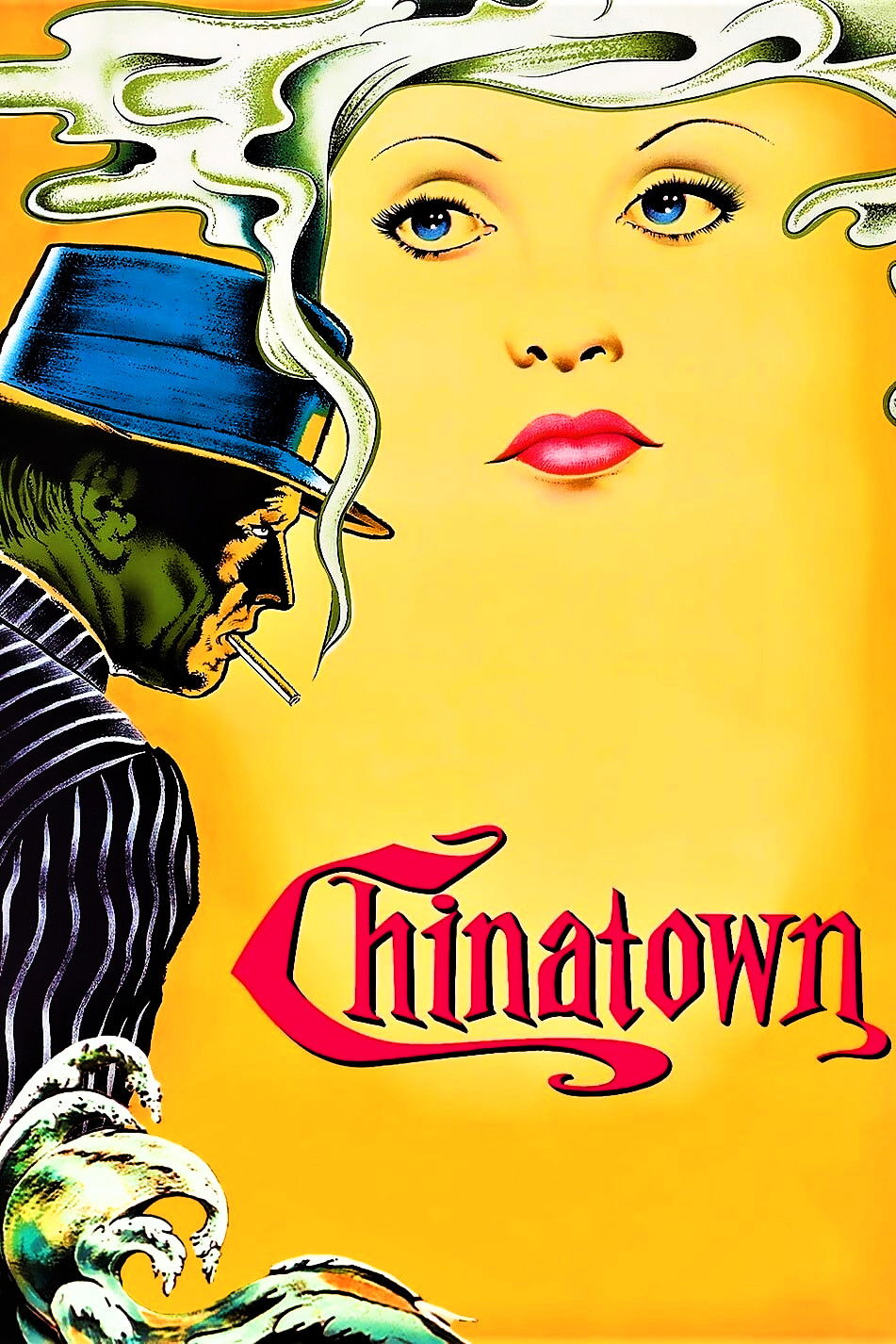
What the Film Is About
The first time I watched “Chinatown,” I remember feeling as though I’d wandered into a labyrinth with no exit. The film’s notorious final words—“Forget it, Jake. It’s Chinatown”—hung in my head long after the screen faded to black, leaving me uneasy and searching for meaning. For me, “Chinatown” isn’t so much about a detective story as it is a slow, deliberate unmasking of the myths that hold together what we often call civilization. The world of this film is so thick with secrets and lies, layer upon layer, that I found myself asking: What truly lies beneath the surface of our institutions, our relationships, and even our identities?
Every time I return to the film, I notice how it shifts the ground under my feet. At its most basic, “Chinatown” follows private investigator Jake Gittes as he is drawn into a tangled conspiracy involving murder, water rights, and powerful Los Angeles elites. But beyond its neo-noir plot twists, I now see it as a meditation on the limits of knowledge, the corrosiveness of unchecked power, and the futility of seeking pure truth in a deeply compromised world.
Core Themes
“Chinatown” is not just an old Hollywood homage to film noir—it’s an autopsy of the American Dream decaying from within. The themes that resonate most with me are:
- The Illusion of Control
- Pervasiveness of Corruption
- The Tragedy of Innocence Lost
- Systemic Violence and Moral Ambiguity
- The Persistence of Water as Power
What continues to haunt me is the sense of futility that pervades every frame. Jake Gittes, with his tailored suits and air of self-assurance, begins the film believing that intelligence and skill can break through deceit. As he chases after leads, people, and motives, the narrative reveals how limited and vulnerable those tools really are against the sheer enormity of systemic corruption and old power in Los Angeles.
I’ve come to see Gittes’s journey as emblematic of anyone seeking justice in an unjust world. His character is a vessel for our hopes—hopes that cleverness or perseverance might deliver some modicum of truth or justice. Yet the deeper he gets, the more those hopes curdle into despair, replaced by a painful awareness of his own powerlessness. The façade of civility collapses, and what’s exposed underneath is terrifying in its indifference and cruelty.
The film continuously blurs boundaries—between hero and villain, truth and lie, public interest and private greed. This ethical murkiness seeps into every interaction. What struck me most was the film’s suggestion that corruption isn’t limited to bad individuals, but is instead embedded in the foundation of society. The quest for water—supposedly a communal good—becomes a story of exploitation, theft, and murder, orchestrated by pillars of the community using the cloak of respectability to shield their monstrous actions.
Symbolism & Motifs
“Chinatown” is rich with imagery and recurring motifs that have deepened in meaning for me with each viewing. The most obvious is water. At first, the struggle over water rights appears to be just local politics, but soon it becomes clear that water itself is a symbol for life, control, and even destiny in a city built on thirst and greed. Water is everywhere and nowhere: reservoirs, dry riverbeds, disappeared lakes. It’s the invisible lubricant for the machinery of power, reminding me how the things most essential to life can be weaponized and commodified.
The motif of sight—and, by extension, blindness—also runs through the film. Gittes is quite literally injured, his nose slashed, making him both the observer and the wounded, compromised investigator. The city of Los Angeles itself, drenched in sunlight yet rank with secrets, becomes a paradox: a place where so much is visible but so little can actually be seen or understood. I’ve often wondered if this is a comment on the nature of knowledge—how some truths are not only hidden but designed to be unknowable within systems that benefit from our ignorance.
Even the title, “Chinatown,” serves as a motif representing the place of ultimate confusion for Jake Gittes. It is a space where his actions are always misunderstood, where meaning is always perverted, and where innocence cannot survive. The very mention of Chinatown in the film conjures a sense of alienation, a kind of cultural and moral limbo where normal expectations are suspended and chaos reigns.
- Water: Control, manipulation, and the lifeblood of a city
- Blinding Sunlight: Irony of exposure with persistent secrecy
- Chinatown: Metaphor for futility, miscommunication, and tragic unpredictability
- Broken Glass, Mirrors: Fragmented perspectives and hostile reflection
For me, these motifs are not just decorative—they invite the viewer to look beyond the story and to confront uncomfortable truths about the world outside the movie theater.
Key Scenes
Key Scene 1
I often return to the scene at the Oak Pass Reservoir, where Gittes discovers that water is being dumped into the desert at night. On first viewing, I found the sight of precious water spilling uselessly into the dust bewildering. Later, it hit me: this is the heart of the film’s message about waste and manipulation. Here, the exteriors are glaring and dry, the act of dumping water a deliberate, calculated gesture to falsify scarcity and serve hidden agendas. It’s no accident, I think, that the truth is hardest to spot at night, underscoring how power operates invisibly, outside of public scrutiny.
As I watched Gittes silently witness this act, it became clear that the conspiracy at play is on a completely different scale than his usual cases. He is, in that moment, a helpless observer to forces beyond his comprehension or control—a dynamic that repeats throughout the film and feeds its tragic sense of powerlessness.
Key Scene 2
Another pivotal moment for me is the confrontation between Evelyn Mulwray and her father, Noah Cross, in Evelyn’s home. The swirling revelations of incest, abuse, and control add a nauseating intimacy to the film’s already suffocating web of corruption. Here the public crimes—the theft of water, land fraud—are mirrored in private horror. This scene is the climax of the film’s exploration of power as not simply economic or political, but familial and generational. The exchange brims with fear and resignation, as Evelyn’s painful confession forces me as a viewer to accept that some wounds—deep in the roots of family and history—can never fully heal.
I realized as I watched that evil is not always a stranger; sometimes it is bound up in the very people and institutions meant to protect us. The failure of social and legal mechanisms to offer any real protection for Evelyn is, to me, the bleakest comment the film makes on the world Gittes inhabits—and, by extension, our own.
Key Scene 3
The film’s devastating finale, set in the heart of Chinatown itself, feels inevitable with each rewatch. The police, chaos, and the tragic fate of Evelyn Mulwray coalesce in a single, confusing tangle of violence and misunderstanding. When Jake’s former partner utters, “Forget it, Jake. It’s Chinatown,” I’m left reeling by the implication: the system will always absorb and neutralize any challenge to its authority. Chinatown, both as a physical locale and a concept, becomes a graveyard for hope and agency. All that remains is pain and a resigned acceptance that there are places—literal and moral—where good intentions cannot survive.
For me, this scene speaks to the intractability of injustice when it is entrenched so deeply in culture and power. The futility is overwhelming, but it’s precisely this despair that makes the film linger in the mind, demanding to be revisited and reconsidered.
Common Interpretations
In countless discussions and essays about “Chinatown,” a recurring interpretation is that the film is a cautionary tale about the dangers of unchecked power. The historical context—set during the water wars of early Los Angeles, inspired by real-world events surrounding the California Water Wars and influential figures like William Mulholland—anchors its narrative in actual American history. For me, this adds a documentary weight to its cynicism, making the film feel less like an old-fashioned mystery and more like a true horror story of the way money and power shape the world we inhabit.
Some see “Chinatown” as a metaphor for the failure of individual action in the face of systemic evil. Gittes’s inability to win, to help Evelyn, or to restore any order is not merely a plot twist, but a thesis about the structural forces—capital, patriarchy, bureaucracy—that render individuals helpless. The cycles of abuse and exploitation are too old and too well-defended to be dismantled by one person’s efforts.
Others have remarked on the film’s unique relationship to the noir genre. While borrowing its stylistic palette—femme fatales, corrupt officials, hardboiled detectives—it subverts the typical noir conclusion. Instead of order restored or evil punished, the film offers only uncertainty, loss, and moral ambiguity. For me, this is the core of the film’s power: it denies catharsis and forces us to sit with the discomfort of a broken world.
Finally, scholars and casual viewers alike point to “Chinatown” as a portrait of Los Angeles itself—a city founded on stolen land and stolen water, haunted by the contradictions and illusions that built it. Whenever I drive through LA, I can’t help but think about how many of its foundations lie hidden, both literally (in aqueducts and reservoirs) and figuratively (in secrets and lies).
Films with Similar Themes
My journey with “Chinatown” has often led me to seek out other films that probe similar anxieties and truths. These works, in their own way, pull back the curtain on power, illusion, and the American psyche:
- “The Maltese Falcon” (1941): An early template for the disillusioned detective, interrogating the corrupt heart at the core of the pursuit for meaning and value.
- “L.A. Confidential” (1997): Another Los Angeles-set noir, this film digs into the interlocking webs of police corruption, media manipulation, and the cost of uncovering the truth.
- “There Will Be Blood” (2007): A historical epic about the birth of California wealth, where oil (rather than water) becomes the symbol for ambition, destruction, and moral rot.
- “Blade Runner” (1982): Only nominally science fiction, Ridley Scott’s film explores, in a neon-lit LA, how truth and identity erode under power and artifice.
- “Zodiac” (2007): David Fincher’s investigation tale, set in San Francisco, shares Chinatown’s obsession with unknowable truth and the limits of the detective’s ever-hopeful gaze.
Each of these films, like “Chinatown,” is ultimately about the impossibility, and the fatal necessity, of confronting systems that seem too vast to fight.
If you’re deciding what to watch next, you might also want to see how this film holds up today or how it was originally received.
🎬 Check out today's best-selling movies on Amazon!
View Deals on Amazon