
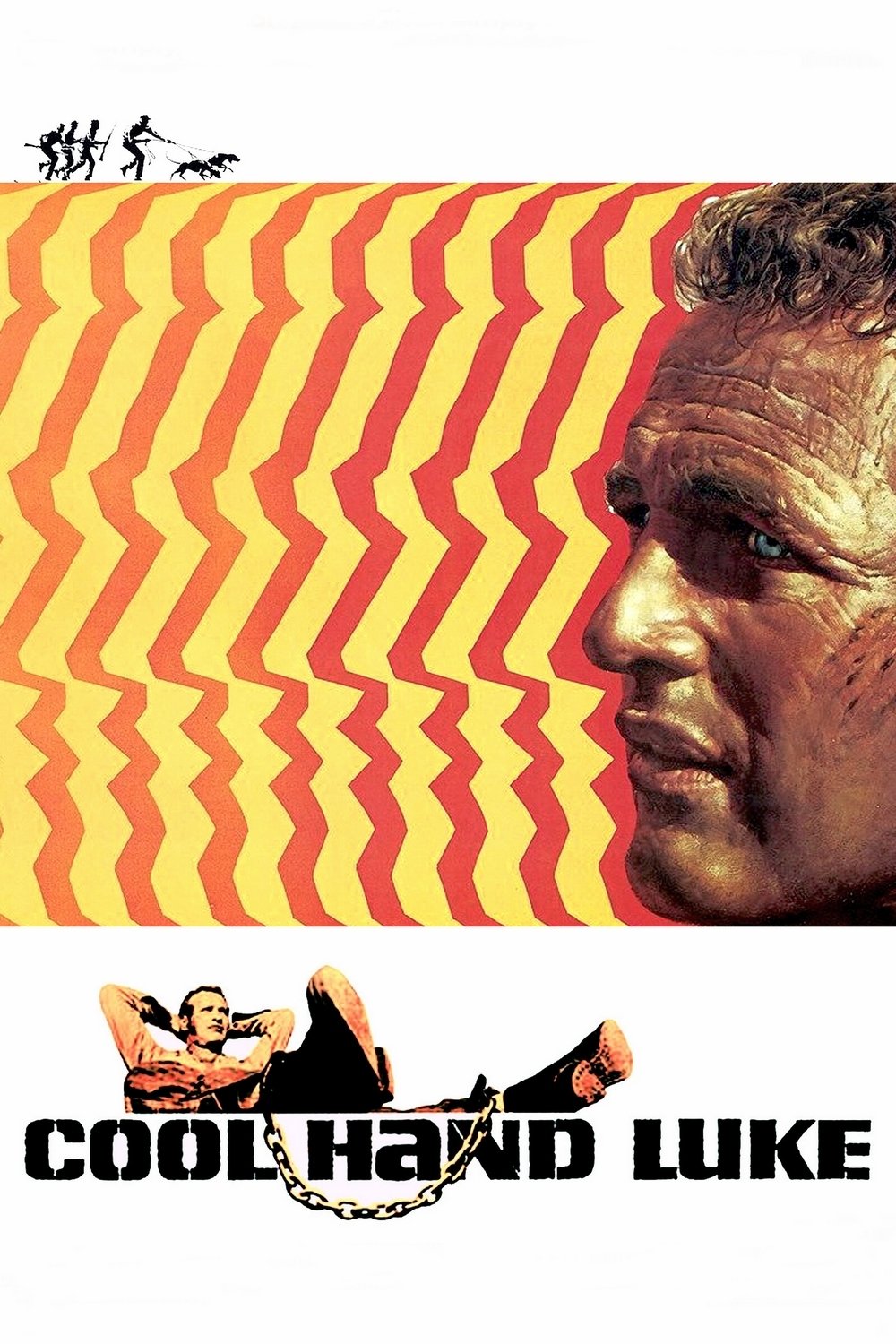
What the Film Is About
“Cool Hand Luke” first found me when I was young, restless, and convinced that no wall could contain my ambitions or anxieties. Every viewing since has struck me less as a straightforward tale and more as an evolving meditation on freedom, pain, and resistance. The film thrusts us into the choking heat of a Florida prison camp, where the eponymous Luke Jackson—a veteran freshly convicted for a petty act of vandalism—faces off not only against the institution but the existential machinery oppressing each man behind those endless fences.
The story, on its surface, takes the pulse of a penal colony grinding through routines of labor, punishment, and dogmatic control. Luke’s apparent indifference, his refusal to break, acts like a drop of anarchy in a carefully regimented pool. Yet the narrative, at its deepest flow, is less about Luke versus the prison and more about how one soul’s rebellion offers an entire cohort an aching glimpse of hope, transcendence, and sometimes, futility. The walls are physical, but they extend—sometimes most brutally—into every man’s very sense of possibility.
Core Themes
I’ve turned “Cool Hand Luke” over and over through the years, and certain undercurrents seem inexhaustible. The one that finds its way into my thoughts most often is the concept of nonconformity—not as a slogan, but as the lived, bruised struggle against all forms of arbitrary authority. Luke is punished less for real crimes than for refusing to surrender what makes him him. To me, the film asks how much authentic living society can tolerate, and how much it is prepared to crush.
Another theme woven tightly into the prison dirt is the search for meaning under circumstances designed to strip it away. Bourgeois freedom doesn’t exist here; the men are not masters of their labor or their bodies. Yet within this microcosm, I see endless strategies for seizing moments of dignity. Whether cracking jokes around the barracks, betting for cigarettes, or suffering through physical ordeals, the prisoners yearn for moments that assert, however briefly, that they are more than the system’s inventory.
The third theme that arrests me is the ambiguity of martyrdom. What does it mean to lead, inspire, or die for a cause few, perhaps even oneself, fully understands? Luke’s struggle resonates with the cadence of Christian allegory, but also with a kind of brute existentialism. He stands, again and again, not necessarily out of heroism, but as an act of refusal to submit—an act with costs and uncertainties. The following questions have occupied many of my reflections: when is resistance meaningful, and when is it simply defiance in the void? Is hope sustaining, or is it, as the prison boss says, precisely “what we here are trying to get rid of”?
Symbolism & Motifs
On every rewatch, I notice how deliberately director Stuart Rosenberg arranges the film’s imagery to reinforce its existential battleground. The ever-present chains, the dirt, and the humid Florida backdrop are never just scenery; I feel them as reminders of the implacable reality each character must navigate. The repeated symbolism of the eyes—mirrors, sunglasses, glances exchanged during moments of solidarity or authority—all evoke a sense of surveillance, judgment, and ambiguous complicity.
The motif of eggs, most famously in the infamous eating contest, has haunted my interpretations. On one hand, they represent the absurdity and endurance of man against physical limits; on another, they recall spiritual motifs of rebirth and sacrifice. The chain gang’s labor—tarred roads and endless weeds—feels almost Sisyphean, advancing nowhere even as they sweat and bleed. As I see it, the whirring of the prison’s routines echoes the background hum of any society that seeks to grind individuality into submission.
Then there’s the use of music and recurring religious iconography. The banjo, plucked in moments of solitude; the constant invocation of prayer, hope, and ultimately, the possibility of grace amidst suffering—all blend to turn the chain gang’s daily purgatory into a troubled site for faith and doubt. I always return, too, to the motif of the rain-streaked window and Luke’s battered smile: a reminder that both pain and laughter exist even within the smallest possible cell.
Key Scenes
Key Scene 1
The “egg-eating challenge” sequence sits with me, perhaps unlike any other. There’s little practical sense in the act itself—Luke betting he can eat fifty eggs in an hour—except as a primal assertion of willpower against the collective sense of impotence that defines their world. As I watch the convicts cheer him on, their faces awash with disbelief, longing, and even fear, I realize the eggs are simply a stand-in for every limit set over them: bodily, social, metaphysical.
This scene is, in my view, both comic spectacle and desperate invocation—a moment where hope and futility become indistinguishable. When Luke’s bloated body finally collapses into a parody of the crucifixion pose, spread-eagled and exhausted, I sense not only the shadow of Christian symbolism but also a profound question about suffering and salvation. Is his deed redemptive, or merely absurd? The cheers of his fellow inmates seem less like triumph than like relief—a brief, collective escape from the dead weight of their ordeal.
Key Scene 2
The sequence where Luke learns of his mother’s death slices deeper every time. His spirit, already bruised, is expected to absorb the loss with stoic passivity—another reminder that he no longer owns his fate or even his private grief. The warden’s cruel command—”You got your mind right, Luke?”—is less a question than a threat, demanding surrender not just of action, but of selfhood. What startles me is not Luke’s strength, but his naked anguish, laid bare in broken posture or trembling hand rather than grand speech.
For me, this is the moment when Luke’s resistance turns inward, a silent burning instead of a visible blaze. The system doesn’t just demand labor—it demands emotional docility, a perverse confusion of punishment and mercy. The film, here, peels away any illusion that suffering in isolation breeds nobility. Instead, I see a man forced to grieve by someone else’s rules, his remaining hope made suddenly precarious. It made me wonder, long after the credits, how many freedoms go unmeasured because they are invisible, lost inside.
Key Scene 3
I think often of the climactic scene where Luke, battered and nearly broken, barricades himself in a church and attempts—if not to pray, then at least to address whatever might listen. The starkness of the space, the echoing emptiness, and the fractured terms of his monologue form a nexus of spiritual ambiguity. Luke tries to connect, to assert meaning beyond his predicament, but ultimately faces only his own reflection and the silence overhead.
When the authorities close in, and he faces the possibility of death, his voice carries neither bitterness nor surrender, but a remarkable clarity: he has tried, in his way, to remain unbroken. The role of failure, in this moment, offers comfort—he never stopped questioning, nor did he give the system the satisfaction of his complete submission. It’s here that the film’s ambiguity becomes most pronounced for me. Is this an act of defiance or reconciliation? Perhaps both. The scene lingers not as moral victory, but as profound, unresolved yearning—a yearning I recognize in my own quiet struggles against the world’s indifferent machinery.
Common Interpretations
Over decades and countless essays, “Cool Hand Luke” has accumulated interpretations as thick as the dust on its prison floors. Some viewers read Luke as a Christ-figure—a Messiah for the chained, whose suffering and sacrifice promise redemption, if not in this life, then in the ideal just out of reach. It’s an understanding I can grasp, given the film’s visual rhymes and moments of grace sprinkled throughout the despair. The egg scene, the crucifixion pose, even the communal sorrow at Luke’s end—all echo motifs from the Christian tradition, with Luke as the inscrutable, ultimately misunderstood savior.
Yet, many critics and fellow enthusiasts argue for a more existentialist or even nihilist reading. In this view, Luke’s resistance is meaningful precisely because it is unsanctioned, unblessed, doomed to fail. There are no miracles—only small flashes of defiance that momentarily expose the absurdity of institutions. For those who tend this reading, “Cool Hand Luke” becomes a parable about the futility of hope, the hollowness of rebellion, and the search for dignity in a universe deaf to our appeals. It all depends, I think, on how much one believes in the transformative power of small acts.
Still, others see the film as a broader critique of mid-century American authoritarianism—the invisible networks of power that hold lives in place long before the introduction of bars or chains. In the postwar era, Jim Crow laws, economic fragmentation, and the vestiges of McCarthyist conformity shaped social anxieties, and Luke’s revolt can be read as a generational howl against those invisible prisons. In this interpretation, the story transcends the penal colony to encompass anyone ever disciplined for not keeping their “mind right.”
Personally, I move between these readings, never quite satisfied with one. Almost every time I revisit the chain gang, I see something new—sometimes quiet hope, sometimes bitter irony, sometimes just the fragile beauty that persists in waste places. The only certainty is the film’s ongoing invitation to wrestle, question, and, if only for a while, refuse to surrender meaning to authorities that claim it as their own.
Films with Similar Themes
After spending so much time with “Cool Hand Luke”, I began to scout for other films and stories that vibrate with a comparable urgency—works that refuse to turn the machinery of oppression into mere backdrop, or reduce rebellion to a matter of ego. In many ways, the film’s greatest kin is not found in obvious prison-break tales, but in works that probe the nature of internal and external resistance.
- One Flew Over the Cuckoo’s Nest (1975): Few films explore the nexus of individuality, institutional control, and perseverance quite like this one. The asylum in Milos Forman‘s adaptation is its own type of prison, and R.P. McMurphy’s struggle, paralleling Luke’s, foregrounds the cost of laughing in the face of unrelenting bureaucracy.
- The Shawshank Redemption (1994): In this adaptation of Stephen King, Andy Dufresne’s patient resistance, and his quiet acts of subversion, reiterate the recurring theme that dignity must sometimes be conjured from the very grit meant to erase it. The film, like “Cool Hand Luke,” understands not merely the mechanics of escape, but the nuanced definitions of freedom.
- Papillon (1973): Based on the memoirs of Henri Charrière, Papillon’s ceaseless effort to escape the penal colony of French Guiana grapples with the same existential dilemmas: Is freedom a place, an act, or simply a state of mind that persists in chains?
- Stalag 17 (1953): Though set in a German POW camp, its unflinching eye on camaraderie, suspicion, and the irreducible wildness of the human spirit shares unmistakable DNA with Luke’s Florida hellscape.
- The Great Escape (1963): This classic not only entertains as a masterwork of ensemble plotting, but lingers in my mind as an illustration of hope as insurrection—both against authority and against the slow erosion of the self.
I think it’s significant that these films, even in their most somber moments, cherish the tiny acts—jokes, prayers, plans—that keep their heroes (and sometimes, their audiences) alive. They, like “Cool Hand Luke,” participate in the age-old conversation about what can and cannot be broken by force, and whether dignity endures wherever it is most fervently denied.
If you’re deciding what to watch next, you might also want to see how this film holds up today or how it was originally received.
🎬 Check out today's best-selling movies on Amazon!
View Deals on Amazon