
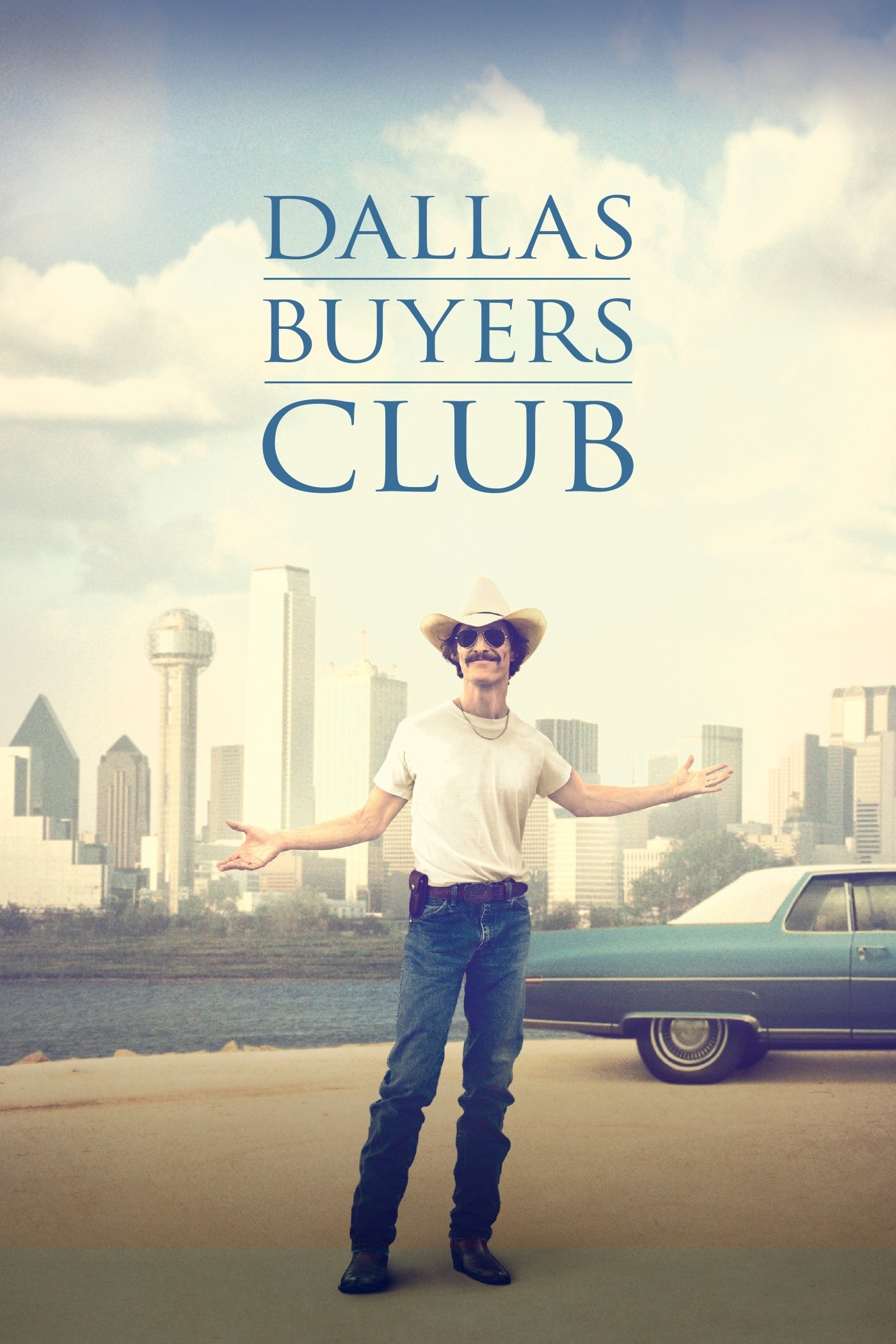
What the Film Is About
When I first watched “Dallas Buyers Club,” I remember being immediately absorbed, not by the particulars of Ron Woodroof’s journey, but by the oppressive atmosphere the film conjures. The movie dives into the AIDS epidemic of the 1980s, but more than simply painting a backdrop of a public health catastrophe, it thrusts viewers into the collision of desperation, identity, and self-preservation. For me, the film is far less a biographical crisis narrative and more an exploration of what happens when systems fail people and the individual must claw out their humanity, any way they can.
The story centers on Ron Woodroof, a Dallas electrician and occasional rodeo cowboy, who, after being diagnosed with HIV, finds himself in a world that views his existence as a death sentence—socially, physically, and morally. This isn’t a standard story about heroism or redemption, and as I reflect, I find it’s not really about that at all. Instead, “Dallas Buyers Club” interrogates the nature of marginalization, the lengths people go to survive, and the often uneasy alignments one forms under threat. The film strikes me not as a mere medical drama but as a document about what dignity means in the face of stigma.
Core Themes
For me, the heart of the film beats through several intersecting themes, each resonating differently as I followed Ron’s journey. The most obvious theme is survival: not simply biologically, but existentially. Ron’s story is one of forced reinvention, and the desire to keep living compels him into legal gray areas, risking everything.
Closely entwined is the theme of alienation. From the moment that Ron receives his diagnosis, it’s as though a chasm opens up between him and the world he thought he knew—friends dismiss him, the medical establishment offers little hope, and the world of his youth suddenly appears foreign. I see this alienation not just in his relationships, but in how he battles the government, pharmaceutical companies, and his own internalized prejudices.
Defiance is crucial, too: Ron’s refusal to accept the prognosis or the social sentence handed down echoes an American mythos of rugged individualism, but in this context, it’s stained with desperation and anger. It isn’t valiant, clean rebellion; it’s messy, fueled by fear and stubbornness. That rough edge gave the film a credibility that stuck with me long after I watched.
I also find social critique embedded deep in the narrative. The film examines how systems designed to protect—whether they’re government agencies, pharmaceutical conglomerates, or hospitals—often fail those most in need. Instead, compassion and practical support come from unlikely sources: other ostracized figures, underground communities, and eventually from Ron’s own begrudging acceptance of those he previously scorned. The irony did not escape me: forced outside, Ron redefines his tribe and, in the process, his own sense of self.
Symbolism & Motifs
“Dallas Buyers Club” is steeped in symbolism that often emerges in the everyday textures of the film rather than in grand gestures. The line between citizen and outlaw quickly blurs; I found that the act of crossing borders—physically hauling medication into the U.S.—symbolizes the journey from status quo obedience to rule-breaking necessity and, ultimately, to a new authenticity. Every time Ron crosses that threshold, it feels like a small revolt against his own previous complicity in a system that now excludes him.
I found the motif of masks especially powerful: The initial lifestyle Ron chooses is itself a kind of mask, a performance of masculinity that covers up complicated vulnerabilities. After his diagnosis, the veneer falls away, but new performances take place. Whether it’s the costumes he dons to sneak past customs, or the persona he creates as a buyers club operator, Ron’s journey is a study of how identity is both chosen and imposed.
The hospital, with its cold routine and bureaucratic malaise, becomes a symbol of abandonment and indifference—a place that promises care but delivers resignation. Conversely, the buyers club is a place of chaos and hope, self-made solidarity arising in the ruins of the official system. That dichotomy, to me, captures the essential conflict at the story’s heart.
Even the recurring images of money—crumpled bills, hastily calculated dues—remind me that every transaction is fraught with moral and mortal stakes. Money becomes a stand-in for access, for power, for the illusion of control. In Ron’s hands it is both liberation and a constant reminder of the world’s imbalances.
Key Scenes
Key Scene 1
One of the earliest scenes that lingers in my memory is Ron’s initial doctor’s appointment, when he learns of his diagnosis. I still recall the clinical coldness in the room and how, though the information given is earth-shattering, the delivery is as neutral as a weather report. For me, this moment is crucial because it marks the shattering of Ron’s reality. The camera lingers uncomfortably on his confusion, his anger, and then his resolve. I saw in that scene the desolate isolation people felt when HIV/AIDS first burst into public consciousness—a diagnosis was not just a medical fact, but a near-certain social death sentence.
Key Scene 2
Alongside Ron’s awakening is his evolving relationship with Rayon, a transgender woman and fellow AIDS sufferer. The scene that burrowed most deeply into me is when Ron defends Rayon at the grocery store, after initially expressing revulsion and hostility towards her. The tension in this mundane space is startling—cowboys and shoppers freeze, the threat of violence hovers, and for a fleeting moment, Ron chooses loyalty over prejudice. That alignment, fragile as it is, feels revolutionary in its ordinariness. I think about how the world of the film is divided not simply along lines of sickness and health, but also of otherness, and what it means to step tentatively across those lines. This scene transformed my understanding of allyship—not as a grand gesture but as small, necessary acts of resistance.
Key Scene 3
The desperate border crossings into Mexico, which recur throughout the film, stand out as perhaps its greatest acts of rebellion. I remember the palpable anxiety in these scenes, but also the resourcefulness and unchecked courage. Each trip is a refutation of the system that bars access not only to health but to possibility itself. Here, Ron is both smuggler and savior—taking risks that most wouldn’t dare, all in service of a principle larger than legality: the right to fight for one’s own life. Sitting with these moments, I couldn’t help but reflect on how the boundaries we set up—laws, nations, norms—are often more porous and arbitrary than we like to believe, especially in the face of suffering that demands urgent response.
Common Interpretations
I’ve encountered numerous readings of “Dallas Buyers Club,” both in discussions with others and in critical essays. One prevalent interpretation treats the film as a celebration of individualism, focusing on how Ron’s fight against bureaucracy becomes a stand-in for the undying American spirit. Yet when I think about the film, I am uneasy with this triumphant reading: Ron isn’t an uncomplicated hero. His transformation is forced, grating, and always marked by loss. Individualism is not a simple good here; it is both a survival strategy and a symptom of a failed collective.
Another take, which resonates more with me, posits the film as a parable about the failures of institutions. Watching Ron circumvent government restrictions on medication, I couldn’t help but see a broader critique of how public policy often lags behind reality, especially during public health crises. The role of the Food and Drug Administration (FDA), which is depicted as both a gatekeeper and an antagonist, further sharpens this critique.
Some interpret the relationship between Ron and Rayon as a testament to the possibility of change. Initially, Ron’s homophobia is as much a product of his environment as it is a personal failing. Yet through necessity and growing respect, he opens himself to a shared humanity. For me, this interpretation underscores the hopeful undercurrent of the film: that adversity can, sometimes, generate unexpected solidarity.
Finally, I’ve seen the film discussed as a product of its time—a reckoning with the 1980s AIDS crisis and the subtler, ongoing legacies of stigma and marginalization. The film’s popularity, I believe, can be partially attributed to a contemporary craving to re-examine the failures and communal traumas of that era. It feels particularly urgent, given our own ongoing struggles with public health and justice.
Films with Similar Themes
Reflecting on “Dallas Buyers Club” led me to think about other films that confront questions of alienation, resistance, and the search for agency under duress. “Philadelphia,” one of the seminal American films about AIDS, comes to mind for its similar portrait of stigma and legal crusading, though it is more somber and legalistic in tone. I remember how both films haunt the viewer with the ache of vulnerability and the cost of prejudice.
“Milk,” about the life of Harvey Milk, also operates as both a biography and a political rallying cry—though with a focus on gay rights and political mobilization rather than medical activism. Yet, the underlying message of community and the need to upend unjust systems resonates powerfully with my impressions of “Dallas Buyers Club.”
On a broader scale, “Erin Brockovich” channels the energy of outsider activism against faceless institutions, while “The Constant Gardener” explores the exploitative side of the pharmaceutical industry, echoing some of the same skepticism toward authority I felt in “Dallas Buyers Club.” Even “Fight Club,” despite its very different subject matter, examines how systems can disfigure identity and prompt unpredictable forms of resistance.
All these films, in one way or another, explore what I think of as the essential question at the heart of “Dallas Buyers Club”: What do we owe to each other in times of crisis, and what happens when the bonds of society are tested by fear, bureaucracy, or neglect? These are questions that stay relevant, long after the credits roll.
For more context before choosing your next film, these perspectives may help.
🎬 Check out today's best-selling movies on Amazon!
View Deals on Amazon