
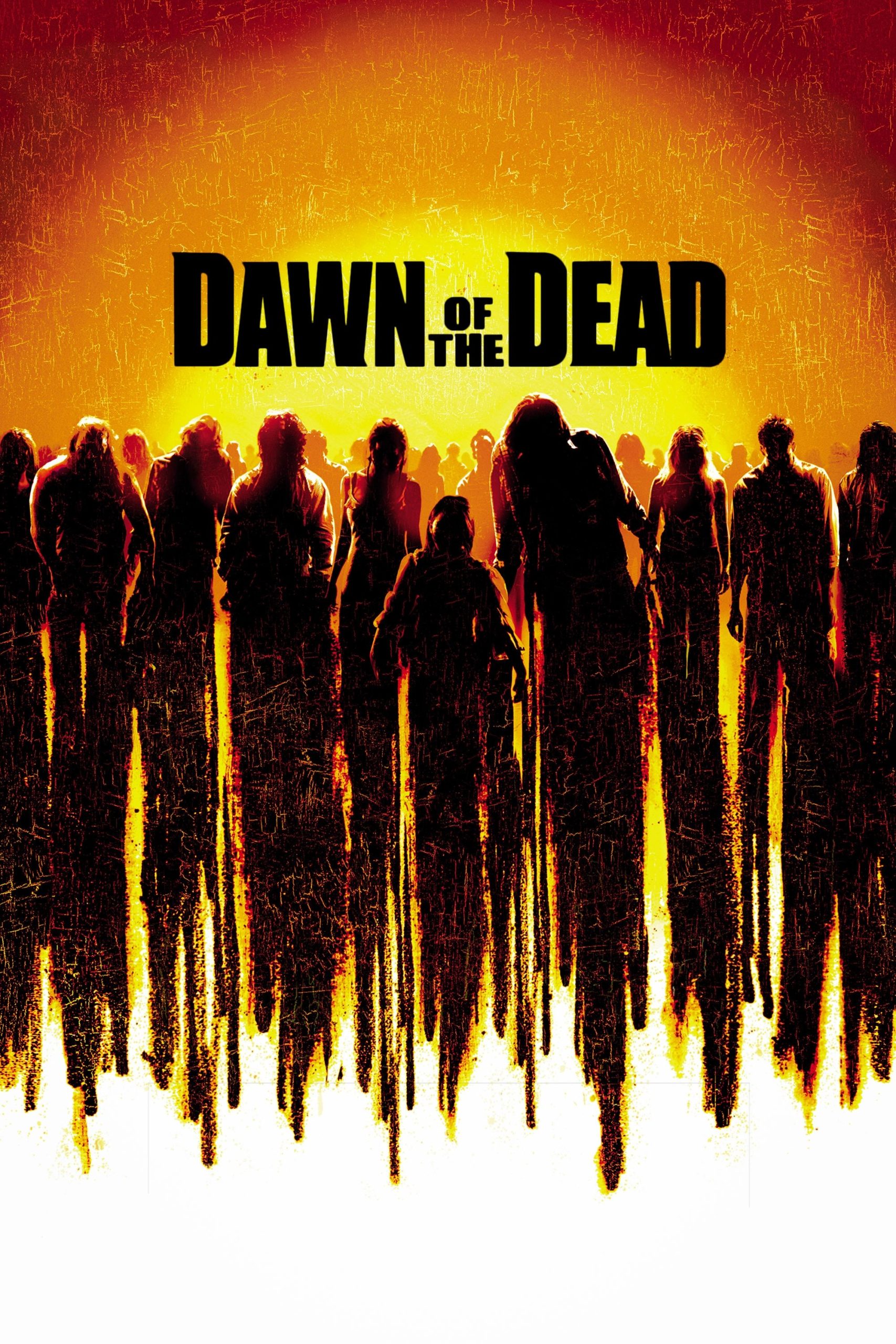
What the Film Is About
I remember the first time I watched “Dawn of the Dead,” sitting nervously on the edge of my seat, not because the zombies were particularly frightening to me, but because there was something chillingly familiar about its world. The film struck me as far more than a simple horror spectacle; it was a mirror held up to my own fears about society, survival, and how we, as people, react to crisis and abundance. The story is set amidst a rapidly collapsing society, four survivors seeking refuge in an abandoned shopping mall as hordes of the undead overrun the world outside. What could easily serve as a standard setting for gory thrills instead unfolds as a profound and satirical exploration of modern life.
For me, “Dawn of the Dead” isn’t just an escalation of the zombie apocalypse begun in George A. Romero’s “Night of the Living Dead,” but a poignant commentary on human habits and aspirations. The film’s plot foregrounds the slow-burning existential dread that emerges not only from immediate threats—like the relentless zombies—but from the more subtle dangers inherent in our societal values and habits. It’s the suffocating quiet of the empty mall, the endless aisles of goods, and the survivors’ growing detachment from purpose and reality that initially captured my attention. Seeing these survivors fall into patterns of consumer bliss, even as civilization teeters on the edge, I recognized so much of my own world’s inertia: the desire to fill emptiness with things, especially when confronted with fear and uncertainty.
Core Themes
The film has haunted me ever since for the way it interrogates several core themes that remain alarmingly relevant. Perhaps the most overpowering is consumerism and empty material accumulation, which the survivors, and the zombies themselves, embody in the mall. I find myself returning again and again to the idea that the true horrors of “Dawn of the Dead” are not the walking corpses, but rather the compulsion to consume, and how this hollows out our sense of meaning and direction in life.
What’s particularly compelling is how Romero deconstructs the illusion of safety that wealth and possessions can create. The characters barricade themselves with goods, fashion themselves a home from the trappings of modern prosperity, and yet they are plagued by ennui, isolation, and the specter of their own mortality. I can’t help but see echoes of my own day-to-day existence, where distraction and comfort sometimes crowd out reflection and real connection. The film’s bleak comedic touch only sharpens this critique, suggesting that our most cherished solutions—security, abundance, control—are, in the end, just as fragile as the boarded-up entrances of the mall.
Another theme that resonates with me is the breakdown of social norms and the reversion to primal instincts. Watching the characters’ gradual transition from disciplined survivors to complacent consumers and, eventually, passive spectators of their own demise, I am reminded of how thin the veneer of civilized behavior really is. The chaos outside the mall is reflected in the microcosm within, and I’m forced to ask what anchors my own sense of decency and purpose when society’s structures begin to fail.
The film also positions the mall as a paradoxical sanctuary-prison, asking difficult questions about time, power, and ultimately the meaning of freedom. Isolated from the world’s dangers but also from its context and stakes, the survivors find that abundance can be its own kind of emptiness, and that the things we cling to for protection can easily become barriers to growth and awareness. This dilemma has shaped the way I think about progress and safety in my own life, where, so often, the desire to preserve what I have can clash with the necessity of facing real uncertainty and loss.
Symbolism & Motifs
What makes “Dawn of the Dead” such a rich film for me is not only its thematic concerns but the way Romero weaves them seamlessly into the film’s imagery and symbols, which remain burned in my memory long after the credits rolled. The shopping mall is the most obvious and powerful symbol: its glass doors and escalators, its sterile lighting and endless racks of unattainable merchandise, all become a metaphor for a culture obsessed with material comfort yet vulnerable to emotional and spiritual poverty.
I was particularly struck by how the zombies themselves are used. They are not simply mindless monsters, but rather echoes of the mall’s former customers—returning, instinctively, to the place they once found meaning, now reduced to aimless wandering. This image stuck with me as a critique of habitual behavior and social programming. The zombies in “Dawn of the Dead” are not terrifying for their violence but rather their familiarity: I, too, sometimes move on autopilot, drawn to familiar routines without conscious purpose.
Romero also plays with motifs of enclosure and surveillance. The mall’s glass walls and security cameras reinforce a sense of being watched and of watching oneself, fueling the anxiety and dislocation felt by the characters. For me, these motifs signal the subtle pressures to conform and the constant self-monitoring demanded by modern consumer society, in which appearance can be as important as substance. The film’s recurring shots of locked gates, empty concourses, and endless mall music become, in my mind, a statement about the limits of escapism and denial in the face of real crisis.
Finally, the juxtaposition of abundance and death—shopping carts full of food beside rotting corpses, designer clothes draped on wounded bodies—lends the film its darkly comic edge. I learned to see these images not just as shock value, but as metaphors for the decay built into unchecked consumerism: the ways in which everything is brought into a cycle of acquisition or use, even as meaning and life drain away.
Key Scenes
Key Scene 1
The first deeply affecting scene for me occurs early in the survivors’ arrival at the mall. They wander through deserted corridors, pausing in front of mannequins posed behind glass. There’s a surreal calm, broken only by the distant scrape of the undead. What makes this scene so resonant is how the characters gaze at the displays, both frightened and fascinated, momentarily distracted by the trappings of a vanished normalcy. I always get the sense that, despite the world ending, the rituals of selection and desire persist: an artificial stillness that is both comforting and suffocating.
When I watch their expressions, I see not just awe or horror, but recognition. The mannequins, the gleaming shops, and the soft music become stand-ins for a life ordered by routines and aspirations that now seem empty and unreachable. That simple walk through the corridors says more to me about the allure and peril of consumer culture than any speech or dialogue could. We seek what we know, even when it no longer serves us—sometimes, especially then.
Key Scene 2
Another scene that remains indelible in my mind occurs after the survivors take full control of the mall. Having banished the zombies and secured the entrances, they indulge in every luxury the mall provides—trying on fur coats, preparing elaborate meals, playing arcade games. Initially, I found myself smiling at their relief, but as the montage continues, a melancholic undertone emerges. The playful excess transforms into boredom, malaise, and isolation. Fran, the film’s most thoughtful voice, grows increasingly distant, suggesting that the fantasy of safety and plenty is a hollow victory.
For me, this sequence perfectly encapsulates the film’s core critique: the illusion of total control, of ultimate comfort, winds up feeling suffocating and meaningless. I recognize the pull of novelty and pleasure, but the emptiness that often follows steep indulgence is all too familiar. It’s as if, by filling their days with consumption, the characters lose touch with the motivation and community that gave their lives meaning. The luxury becomes a gilded cage, a theme I’ve seen play out both in my own experience and in the world around me.
Key Scene 3
The mall invasion by a biker gang marks a brutal turning point—and for me, it is both exhilarating and horrifying. The bikers burst in, looting and taunting the zombies, scattering valuables and food with reckless abandon. Suddenly, the careful order created by the survivors collapses into chaos. Watching this unraveling, I’m struck by how quickly the trappings of civility and order can disintegrate when challenged by brute force and opportunism.
This is the moment when the line between survivor and predator blurs, when violence and greed intermingle and the original threat—zombies—becomes secondary to human destructiveness. I always interpret this sequence as a kind of grim allegory: that inside even the safest fortress, the seeds of destruction are already planted, and that social breakdown is as likely to come from within as without. It’s a sobering reminder that any community or order built purely on exclusion and hoarding is forever vulnerable to collapse, both internally and externally. For me, the spectacle of violence isn’t gratuitous, but instead an urgent warning about the fragility of our constructed realities.
Common Interpretations
Over the years, I’ve encountered a variety of interpretations of “Dawn of the Dead,” and while most focus on the obvious satire of consumerism, I find my own readings expanding with each revisit. Many viewers latch onto the portrayal of the mall as a stand-in for post-war American consumer society, its promise of abundance rendered grotesque by the endless, lumbering return of its ‘customers.’ I see this as a direct critique of the 1970s economic malaise and the shift from communal aspirations to private gratification—an analysis that deepens with historical distance.
Others emphasize the film’s meditation on group dynamics, isolation, and the price of security. Here, the narrative transcends its immediate setting to become an allegory for how fear prompts us to trade freedom for comfort, often at great personal and social cost. I’m reminded of the perennial human temptation to withdraw from the world, to believe that with enough preparation or privilege, crisis can be kept at bay. The film ultimately undermines this fantasy, and I see in it a cautionary tale about the risks of disengagement and the limits of even our best defenses.
Some interpreters go a step further, viewing the zombies themselves as metaphors for conformity and loss of individuality in the modern world. I find this perspective especially resonant. Their march through the mall, repeating meaningless gestures, becomes an exaggerated but still recognizable image of contemporary life’s routines and desires. Watching them, I have to confront uncomfortable questions about my own patterns of consumption, distraction, and acquiescence to norms I rarely question.
Films with Similar Themes
As I’ve pondered “Dawn of the Dead” over the years, I’ve found myself drawn to other films that explore the collision of survival, order, and emptiness in modern society. Romero’s own “Night of the Living Dead” is, of course, the immediate precursor, offering a starker, more intimate meditation on fear and breakdown. For me, that film interrogates race and authority as much as zombies, while “Dawn” expands the lens to include capitalism and collective desire.
I see kinship, too, in John Carpenter’s “They Live,” with its biting satire of unconscious conformity and consumer manipulation. Both films deploy genre tropes in the service of social critique, unsettling me not with monsters but with the familiar. David Cronenberg’s “Shivers” and Videodrome echo Romero’s fascination with the contagion of ideas and the dangers lurking behind modern life’s facades. I found in these movies a similar willingness to peel back the protective layers of civilization and stare into the abyss underneath.
More recently, 28 Days Later and Train to Busan have revived the zombie genre while addressing contemporary anxieties—pandemics, isolation, breakdowns of trust. Yet, what sets “Dawn of the Dead” apart for me is its sardonic humor and its refusal to offer easy answers. I see in these other films a continuation of Romero’s legacy, but few match its intricate weaving of horror, satire, and pathos. Even beyond horror, films like Fight Club and American Beauty revisit similar questions about the emptiness of material comfort and the potential for violence hidden beneath surface order.
For more context before choosing your next film, these perspectives may help.
🎬 Check out today's best-selling movies on Amazon!
View Deals on Amazon