
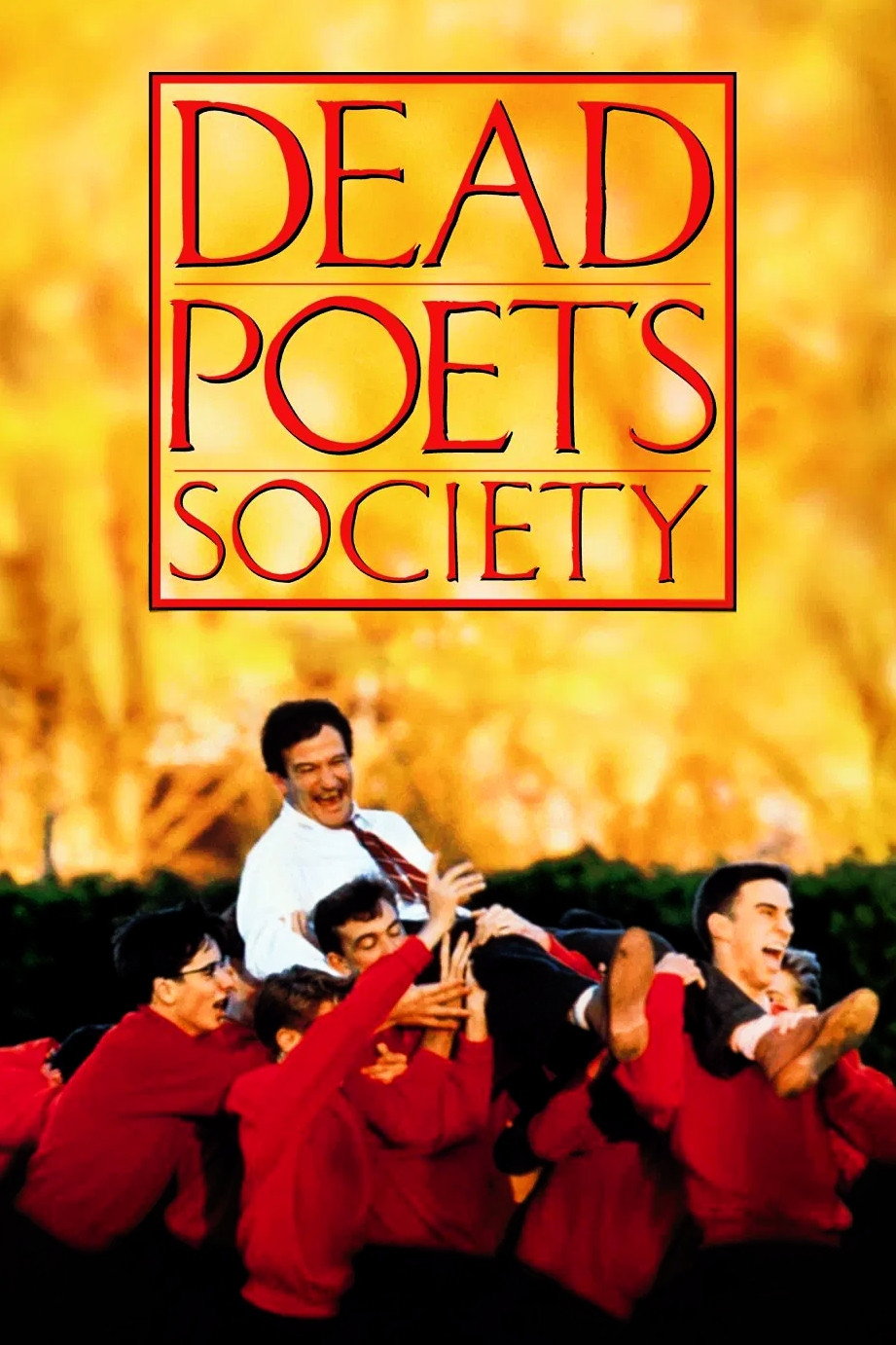
What the Film Is About
I still remember the first time I watched “Dead Poets Society”—I was at that uncertain threshold between adolescence and adulthood, filled with both the promise of possibility and the dread of disappointing those who’d handed me every unspoken rule. The film felt like an urgent whisper, telling me I wasn’t alone in the struggle to define myself outside of what was expected. On the surface, the film is about a group of boys attending the elite, tradition-bound Welton Academy in 1959, whose lives are changed by the arrival of John Keating, an English teacher unlike any other. But what draws me back again and again is how “Dead Poets Society” is far less about school, poetry, or even rebellion—its real terrain is the unending, honest effort to carve authenticity from conformity, and to live life with unapologetic intensity in the face of suffocating expectations.
Unlike many movies featuring adolescent protagonists, “Dead Poets Society” doesn’t glorify youthful rule-breaking for its own sake. Instead, it probes the price of questioning authority, the cost of honesty, and the courage it takes to “seize the day” (carpe diem) when doing so may leave you alone, misunderstood, or even broken. Watching these characters, I felt as if the film was directly interrogating my own fears of stepping off a prescribed path—a path paved with what parents, schools, and communities decide is best. The story’s true subject, for me, is existential courage: the quiet, often lonely struggle to think for oneself when the world is already intent on thinking for you.
Core Themes
Years after my first encounter with the film, I keep circling back to its core themes, discovering new resonances as my own life changes. The richest among them is the relentless tension between individuality and conformity. Welton Academy is not just an old school, but a living symbol of tradition, discipline, and collective pressure—a place where deviation is a threat rather than a curiosity. I see in the boys’ journey the universal conflict between the self (what I want, who I am) and the crowd (what is expected, what is safe). Keating’s exhortation, “Suck the marrow out of life,” stays with me because it’s both exhilarating and terrifying, an invitation to rebellion that promises fulfillment but never hides its risks.
The power and danger of inspiration form another major thread. John Keating is no heroic figure in the straightforward sense; he offers ideas, yes, but it’s up to his students how (and if) they will use them. I think often about the fine line between encouraging someone to challenge the status quo and setting off a series of personal disasters, reminding me that genuine education, like any act of intellectual daring, always courts unpredictability. Tragedy is sewn into the film’s DNA—not as an accident, but as an inevitable byproduct of meaningful change. When I watch “Dead Poets Society,” I’m reminded that uplifting ideas are never immune to the consequences of acting on them.
Most personally, I find a raw and enduring lesson in its meditation on voice—specifically, the moral necessity for young people to find and use their own, despite a world invested in silencing them. The adolescent urge to claim one’s subjectivity, to say “I will decide what matters,” feels both radical and essential. Keating’s influence on the boys is not a simple matter of conversion, but the opening of a space in which they can begin to articulate themselves, haltingly, dangerously, imperfectly. Every time Neil, Todd, Knox, or Charlie acts from this newfound agency, I see both triumph and tragedy—but always the stoking of something uniquely human and precious: the desire for self-realization.
Symbolism & Motifs
As someone who relishes searching for undercurrents, I find the film laden with powerful symbols and recurring motifs that lend depth to its central questions. Keating’s own phrase, “Carpe diem,” recurs like a benediction and a dare; it’s inscribed, echoed, even insidiously distorted by both the students’ ambitions and their fears. To me, these words carry the full weight of existential freedom: both the capacity to shape one’s life and the aching loneliness such freedom can bring.
The cave, wherein the boys revive the Dead Poets Society, becomes more than mere meeting spot. Its darkness and seclusion transform it into a modern cathedral of secrecy, imagination, and vulnerability. I see in the cave a symbol of retreat from the oppressive gaze of society—a place for authentic self-expression, but also a crucible where dreams and fears collide. When the boys share their poetry, their confessions, their laughter, I sense the fragility of all such spaces devoted to nurturing the voice within.
Books and poetry themselves serve as motifs—tools of emancipation, but never guarantees of wisdom or safety. The torn textbook pages, the public recitations, the passages whispered in the dark: these acts feel almost sacramental, binding the boys together in their search for meaning. Yet the very literature celebrated as liberating is also policed and censored by the school, awakening me to the fact that creative rebellion must contend with very real, external limits.
I’m also struck by the recurring imagery of standing—literally and figuratively. This begins with boys standing on desks, but it’s most meaningful when they stand in defiance, for themselves, or for each other. Each such moment reminds me that even small acts of physical rebellion can be loaded with spiritual significance. For me, these motifs reinforce the film’s argument that one’s voice, one’s agency, is always a form of standing—sometimes furtively, sometimes bravely, but always at a cost.
Key Scenes
Key Scene 1
One of the film’s emotional fulcrums for me arrives early, when Keating asks the boys to rip pages from their poetry textbooks. Watching this, I felt conflicted—a blend of anxiety at his subversion and exhilaration at his invitation to real thinking. The act is more than an assault on authority; it’s a symbolic attack on dead tradition and the tyranny of received opinion. I see in this scene a challenge not just to learn differently, but to risk being ostracized for it. Keating is not destroying knowledge; he is insisting on its vitality, its lived relevance. This moment always makes me keenly aware of the difference between information and wisdom, between parroting and truly understanding. The tearing of the pages becomes, in my mind, a necessary violence—a means of freeing the imagination from its cage.
Key Scene 2
I will never forget the vulnerability and power of Todd Anderson’s spontaneous poem during the classroom exercise. Keating’s insistence that Todd find his voice, urging him past stammering and self-doubt, is one of cinema’s most affecting depictions of encouragement. I’ve felt Todd’s terror—his conviction that what he might create would fall short, be rejected, or even expose him as a fraud. But when he begins, haltingly, to express himself, the words become a release, a declaration that he exists. As Todd’s classmates look on, I imagine the silent longing in each of us to be not just heard, but recognized for something uniquely ours. For me, this scene embodies the transformative power of presence—how a mentor’s belief can bring forth what was thought unspeakable.
Key Scene 3
The film’s climax, in which several students stand on their desks to salute Keating as he leaves under disgrace, is indelibly etched in my memory. The physical act of standing—directly confronting the authority figures in the room—crosses a boundary from private conviction to public declaration. Each step onto a desk is a refusal: a refusal to allow fear, shame, or intimidation to have the last word. I’m struck by how costly, complicated, and bittersweet this act of solidarity is. The students do not change Keating’s fate, nor erase what’s been lost, but their gesture is a ringing affirmation that seeds of courage can endure beyond the confines of any particular classroom, or even tragedy. This final, desperate act always makes me consider what I am willing to risk—what discomfort or rejection I might endure—to let my values be seen.
Common Interpretations
With years of viewings and more than a few impassioned conversations, I’ve learned that “Dead Poets Society” stirs up divisions among critics and fans alike. Some read it as a cautionary tale about the dangers of unbridled inspiration or about the irresponsibility of teachers urging rebellion without preparing students for the ensuing chaos. I find myself sensitive to this view, recognizing that Keating is neither infallible nor all-knowing—his charisma masks limits, and his provocations unleash forces beyond his control. When I reflect on Neil Perry’s arc, for instance, I can’t escape the painful collision between individual desire and unyielding authority, or the tragic costs of idealism when society refuses to bend.
Others, myself included, see the film primarily as a call to selfhood—a passionate argument for forging one’s own meaning in a world invested in conformity. For those who find inspiration, as I do, in Keating’s methods, the movie is less about the dangers of nonconformity and more a charge toward authenticity. It insists that the pain of risking oneself is finally preferable to the slow death of self-denial. Still, I’m careful in my admiration, given the film’s power to mask its complexities behind emotional catharsis. Each time I revisit it, I feel tugged between empathy for the adults, whose world is hard and full of limits, and the hope placed in the young, for whom everything is possible until it is not.
Some conversations I’ve had with fellow viewers uncover a third, more subtle interpretation—that the film is about what real education costs and demands. Genuine learning, in this view, is disruptive and precarious, always threatening to upend tidy systems and expose bruised hearts. Watching Keating and the boys, I’m reminded again and again that making meaning for ourselves never happens safely or in isolation; it is a struggle, sometimes heroic, sometimes mournful, always urgent. This honesty, for me, is what makes the movie linger long after the credits roll.
Films with Similar Themes
While “Dead Poets Society” is singular in tone and emotional directness, I find its core themes echoed powerfully in several other works—stories that likewise explore the tumultuous process of becoming oneself in a demanding world. I often recommend “The Emperor’s Club,” another drama set in a rigorous private school, which examines a teacher’s influence on students and the unpredictable results of moral example. Its protagonist offers a more conservative counterpart to Keating, creating rich grounds for comparison about how adults help or hinder young people in forming their values.
If I’m searching for narratives about the cost of nonconformity, “The Prime of Miss Jean Brodie” looms large. Its teacher, Miss Brodie, is similarly charismatic and iconoclastic, guiding her students toward self-expression with dangerous results—the film’s ambiguity leaves me questioning whether strong influence is ever entirely benign. Meanwhile, “Mona Lisa Smile” transposes familiar themes of women’s liberation, social expectation, and the teacher-student relationship into a postwar women’s college, offering further meditation on the boundaries between guidance, manipulation, and genuine empowerment.
I also think of “Rebel Without a Cause,” whose tempestuous portrait of adolescent rebellion and misunderstood ideals channels many of the same anxieties that vibrate through “Dead Poets Society.” Here, too, young people—heroic, vulnerable, tragic—challenge the dictates of their elders, sometimes finding voice, more often bearing wounds. In a different register, “Good Will Hunting” asserts the necessity of emotional honesty and mentorship, exploring how a teacher’s belief can coax brilliance from guarded youth. Each of these films, when considered alongside “Dead Poets Society,” reveals new facets of what it means to live—and to risk living—on one’s own terms.
But the film I return to most in this context is probably “Stand and Deliver.” It grounds the theme of student transformation squarely in material struggle, foregrounding the burdens of class, ethnicity, and expectation in a way that makes the fight for selfhood feel even rawer and more fraught. Each time I explore these cinematic cousins, I find new layers in “Dead Poets Society”—fresh questions, unresolved tensions, and a sustaining faith in the dignity of the individual will.
For more context before choosing your next film, these perspectives may help.
🎬 Check out today's best-selling movies on Amazon!
View Deals on Amazon